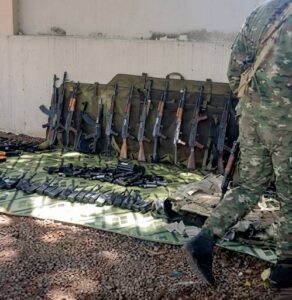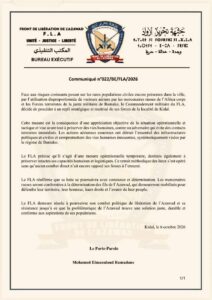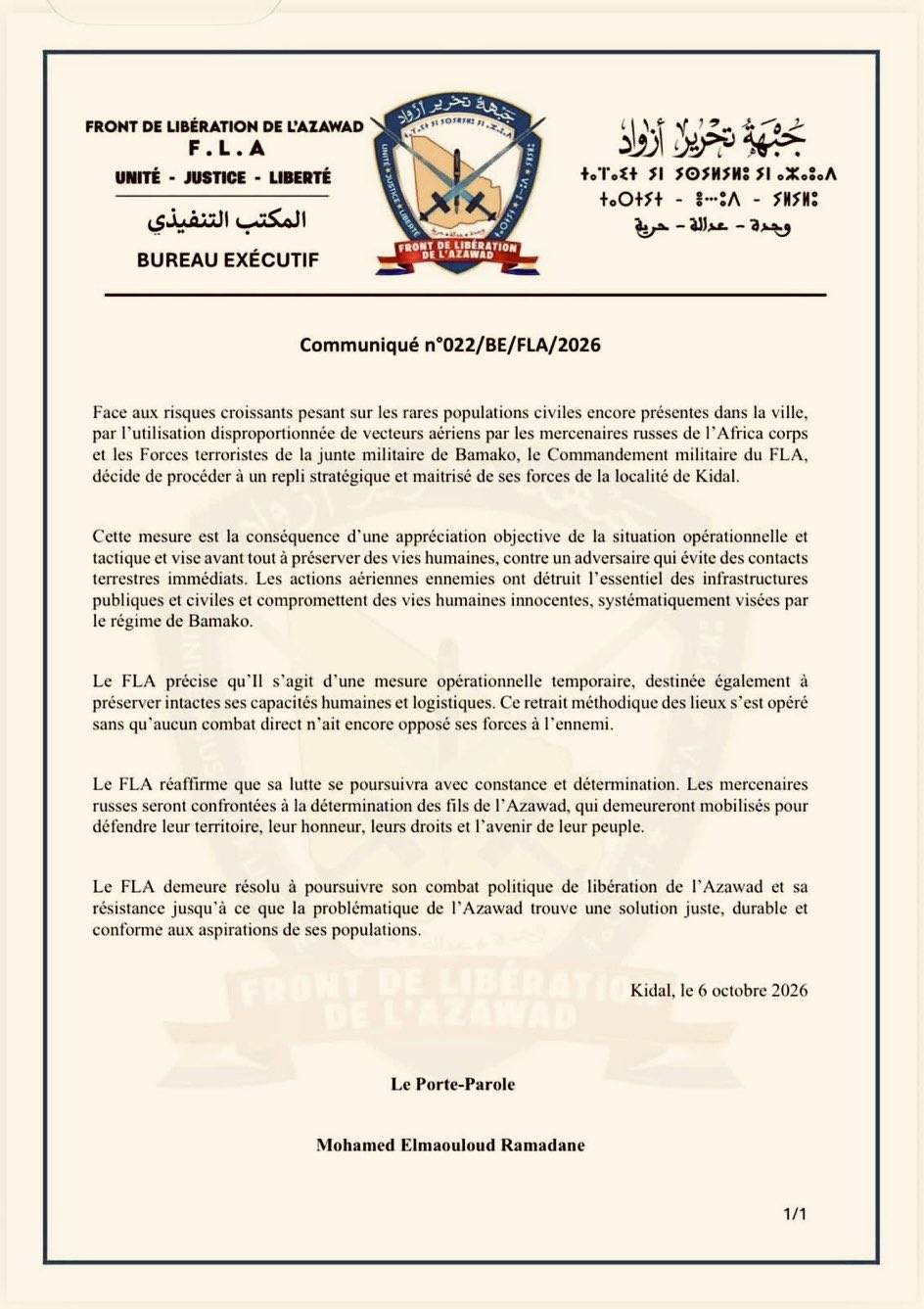
The Front for the Liberation of Azawad (FLA) has executed a carefully orchestrated withdrawal from Kidal, a strategic city in northern Mali that has long been a flashpoint in the nation’s protracted conflict. The militant group claims this move is a deliberate military repositioning, not a surrender, raising critical questions about the future trajectory of the war.
Kidal: The Battleground That Defines the War in Mali
Few locations in Mali carry as much historical and symbolic weight as Kidal. Nestled in the far north, the city has been a focal point of Tuareg rebellions for decades, serving as both a political and military linchpin. Its control has oscillated between government forces, Russian-backed paramilitaries, and separatist factions, each claiming legitimacy in the region’s contested narrative.
In November 2023, Malian troops, supported by Wagner Group operatives under the Africa Corps banner, reclaimed Kidal. The victory was hailed as a major step toward restoring national sovereignty. Yet, the FLA—an offshoot of the CSP coalition—had already withdrawn, framing its departure as a tactical move to preserve its fighters amid overwhelming firepower.
A Reversal of Fortunes: The FLA’s Comeback
By April 2026, the balance of power had dramatically shifted. The FLA launched a coordinated offensive across multiple regions, seizing Kidal once again. This time, Africa Corps units were forced to evacuate under duress, with reports indicating the withdrawal of at least 400 Russian paramilitaries to Tessalit. The fluidity of the conflict underscores a troubling pattern: no territorial gain is permanent in northern Mali.
Why Repositioning Is Not Surrender
The FLA’s latest withdrawal from Kidal is framed as a calculated strategic retreat—a tactic long employed by separatist factions to avoid direct confrontation while preserving combat capacity. The desert terrain offers rebels mobility, deep local knowledge, and the ability to disperse and regroup, making traditional military logic less effective.
This approach mirrors past maneuvers. After the 2023 recapture of Kidal by Malian and Wagner forces, rebel groups justified their retreat by citing the need to avoid heavy losses. Today, the FLA’s retreat may reflect a different calculation: consolidating forces for future offensives rather than acknowledging defeat.
The Cost of Holding Territory in the Azawad
The battle for Kidal and other northern strongholds has exacted a devastating toll. Historical offensives, such as the 2014 Malian army campaign, ended in rebel victories despite heavy military losses. Official figures at the time reported 20 soldiers killed, while rebel groups claimed over 100 fatalities. A later UN report confirmed at least 33 Malian military deaths and eight civilian casualties, though the true scale remains disputed.
The 2024 battle of Tinzaouatène serves as a stark reminder of the risks. A joint Malian-Russian column, including Wagner operatives, was ambushed by Tuareg fighters near the Algerian border. Sandstorms compounded the chaos, leading to catastrophic losses. Rebel sources claimed 84 Wagner deaths and 47 Malian soldiers killed, figures never officially confirmed by either Bamako or Moscow. The army initially reported only two fatalities but later acknowledged “significant” losses without providing specifics.
Russia’s Evolving Role: From Wagner to Africa Corps
The transition from Wagner Group to Africa Corps has not altered the challenges faced by Russian-backed forces in Mali. Superior technology and heavy weaponry often falter against the unpredictability of the Sahel’s terrain. Mobility, local intelligence, and intimate knowledge of the landscape remain decisive factors—elements where traditional military doctrine struggles.
The April 2026 withdrawal of Africa Corps from Kidal underscored this vulnerability. Even as Malian troops and Russian allies regrouped, the FLA’s ability to reclaim and then abandon Kidal revealed a persistent weakness in counter-insurgency efforts. The subsequent recapture of Anéfis in July 2026 by government forces highlights just how fluid the conflict remains.
What’s Next for Kidal—and the War?
The FLA’s withdrawal from Kidal is not an endpoint but a strategic pivot. The city’s significance transcends military value; it embodies the historical heart of Azawad’s independence movement and the enduring divide between Bamako’s central authority and Tuareg separatists.
For the FLA, preserving fighters and logistics may take precedence over holding ground. For Malian forces and their allies, every territorial loss is a propaganda opportunity for their adversaries. With a history of “strategic retreats” preceding larger offensives, the current withdrawal could signal a lull—or the calm before another storm.
The question now is twofold: Where will the FLA concentrate its efforts next? And more critically—is this retreat the beginning of a broader withdrawal or a calculated maneuver to lure Mali’s forces into a trap? In a war where frontlines shift with the wind, Kidal’s future remains as uncertain as Mali’s path to peace.