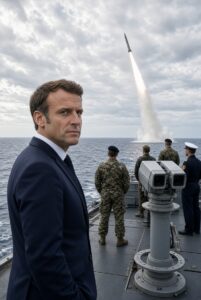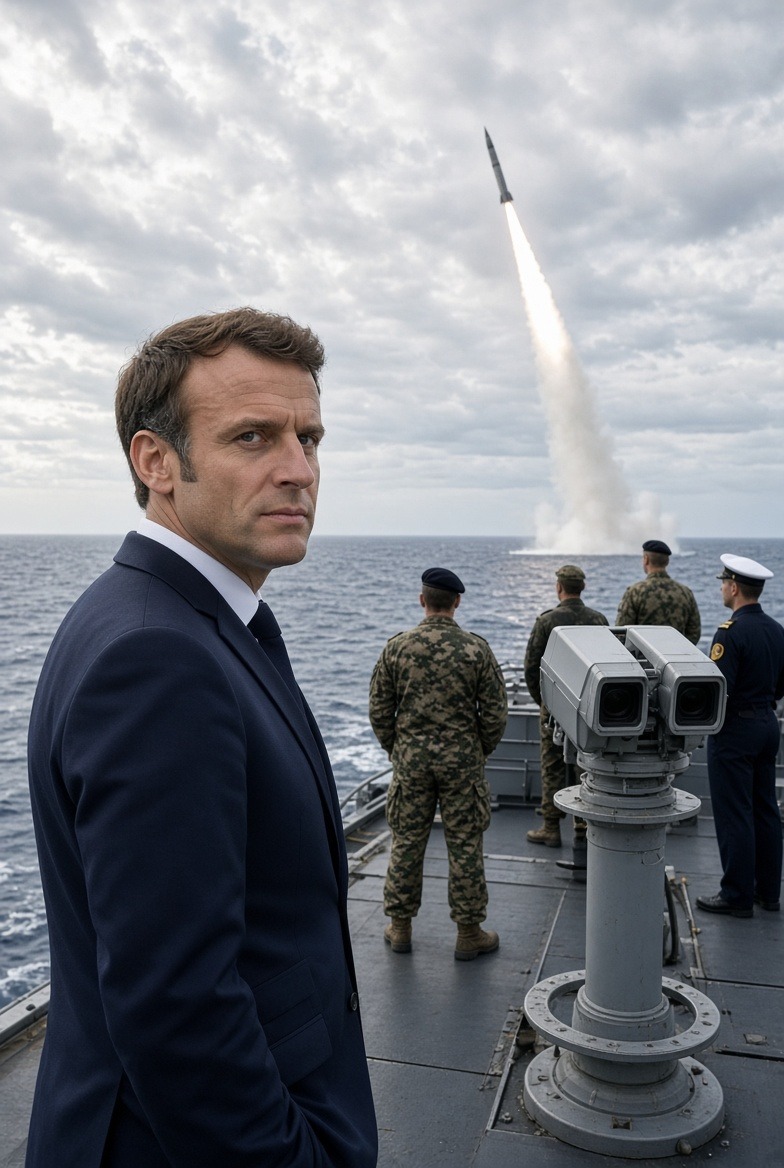
In a Europe gripped by heightened military tensions and an increasingly volatile security landscape, France has taken a decisive step to reinforce its nuclear deterrent. The strategic test launch of the M51.3 missile from the nuclear-powered submarine Le Vigilant was not merely a technical validation—it was a calculated message to allies and adversaries alike about the durability and credibility of France’s nuclear posture.
Why this missile test matters more than ever
The October 2026 M51.3 launch off the coast of Brittany marked the first acceptance test of the upgraded ballistic missile from a deployed French submarine. Conducted without a live warhead and monitored by the armed forces’ test and evaluation fleet, including the Monge, the mission underscored a critical capability: the ability to maintain a survivable second-strike force in an era where anti-missile defenses are rapidly evolving.
The M51.3, operational since 2025, enhances range, precision, and penetration capabilities—key attributes in countering advanced air defense systems. This upgrade reflects a broader modernization effort, one that positions the French nuclear deterrent not as a Cold War relic, but as a relevant and adaptable instrument for 21st-century security challenges.
Russia’s shadow over European skies
The decision to proceed with the test comes amid a series of provocations that have reshaped Europe’s threat perception. Since Russia’s full-scale invasion of Ukraine in 2022, the continent has witnessed a surge in hostile actions: incursions into NATO airspace, drone incursions over Poland and Romania, and repeated interceptions of Russian military aircraft in the Baltic and Finnish Gulf.
In a particularly concerning incident, an Italian fighter jet operating under NATO command shot down a drone in Lithuanian airspace—likely of Russian origin—after it breached sovereign borders from Belarus. Such events extend beyond Ukraine’s borders, signaling a shift from battlefield tactics to a broader campaign of destabilization across the continent.
NATO’s response has been swift. The alliance’s 2025 Eastern Sentry initiative marked a turning point, integrating fighter jets, missile defense systems, and maritime surveillance to fortify the eastern flank. By 2026, this evolved into a more cohesive air defense architecture—one designed to counter a spectrum of threats, from ballistic missiles to unmanned aerial systems.
Beyond deterrence: a modernized defense for a modern threat environment
Yet the stakes are not limited to nuclear readiness. Europe now faces a new generation of threats—hybrid warfare, cyber operations, and maritime drone strikes—that challenge traditional notions of conflict. Earlier this month, a merchant vessel flying the Togolese flag sank off the Bulgarian coast following a suspected drone attack, with another vessel struck the previous day. While attribution remains unconfirmed, the pattern aligns with broader Russian hybrid tactics observed in the Black Sea.
This transformation demands more than just upgraded missiles. France is doubling its defense budget over a decade, investing not only in next-generation ballistic missiles but also in hypersonic and maneuverable systems for its air-based deterrent. President Emmanuel Macron has framed this modernization as essential to preserving strategic autonomy—a reminder that France’s nuclear force is not just a treaty obligation, but a sovereign guarantee of national survival.
The philosophy behind the missile
At the heart of France’s approach is a simple yet powerful principle: to remain free, one must be feared. And to be feared, one must be strong. This doctrine rests on two pillars: credibility and endurance. The M51.3 is designed to ensure that even after a first strike, France retains the capacity to respond—its submarine-based leg remains undetectable, unassailable, and always ready.
This test was not about escalation. It was about resilience. It was a declaration that France will not be deterred from defending its vital interests—whether through conventional strength, allied cooperation, or autonomous nuclear capability. In a continent where hybrid incursions blur the line between peace and conflict, the message is clear: deterrence is not a relic. It is a living, evolving strategy for peace through strength.
What comes next for Europe’s security
As the conflict in Ukraine grinds on, the risk of unintended escalation remains a shadow over Europe. But Paris is making a strategic bet: that by maintaining a credible nuclear deterrent while deepening defense integration with allies, France can help prevent crises from spiraling into open war.
The M51.3 test signals that Paris is not waiting for threats to materialize—it is actively shaping the future of deterrence. And in doing so, it is sending a message to Moscow, Beijing, and every capital watching from the sidelines: France will not be the weak link in Europe’s defense chain.