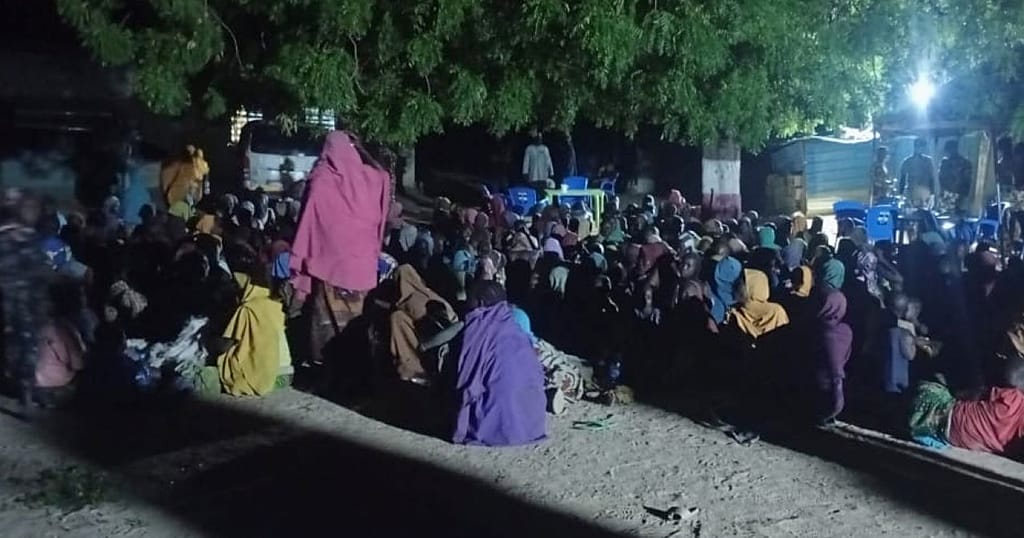
A massive group of women and children, previously seized by Boko Haram insurgents earlier this year, returned home this weekend following months of captivity in northeastern Nigeria.
Abductions, frequently carried out to extort ransoms, have become a cornerstone of the tactics used by militants during their seventeen-year conflict against the Nigerian state, primarily concentrated in the northeast region.
Samaila Kaigama, who heads the Borno South Youth Alliance, announced that his organization successfully facilitated the return of 416 individuals, specifically women and children, who had been taken from the Ngoshe area.
The group was granted their freedom on Saturday, according to details shared by Kaigama. Senator Mohammed Ali Ndume, representing Borno State, also confirmed the release of the victims.
While the exact mechanics of how their freedom was secured remain undisclosed, the survivors had been held under brutal conditions. The victims were snatched from various communities, with the majority coming from the Ngoshe district.
Tragedy amidst the rescue
Despite the successful release, the ordeal was not without loss. Presidential spokesperson Daniel Bwala noted that two infants tragically lost their lives due to physical exhaustion caused by the long period of captivity and the unforgiving terrain of the hideouts.
Military reports indicate that security forces had been gathering intelligence and implementing psychological strategies designed to create internal friction among the insurgent groups before moving into the final phases of the operation.
The militants had initially demanded payments totaling millions of nairas for the Ngoshe captives. While official government stances consistently deny the payment of ransoms, it is widely suggested that such transactions are a frequent occurrence involving both public authorities and the families of those taken.
A persistent security crisis
The town of Ngoshe is situated less than 10 kilometers from the border with Cameroon, nestled within the Gwoza hills. This area is a known stronghold for Boko Haram and has been the target of frequent violent incursions. Various armed groups, including insurgents and criminal gangs, have fueled a kidnapping epidemic across the country that has generated millions of dollars in illegal revenue over the past year.
Since the initial uprising in 2009, the conflict in Nigeria has evolved into a complex crisis involving multiple armed factions. This prolonged instability has resulted in tens of thousands of fatalities and forced millions of citizens to flee their homes.