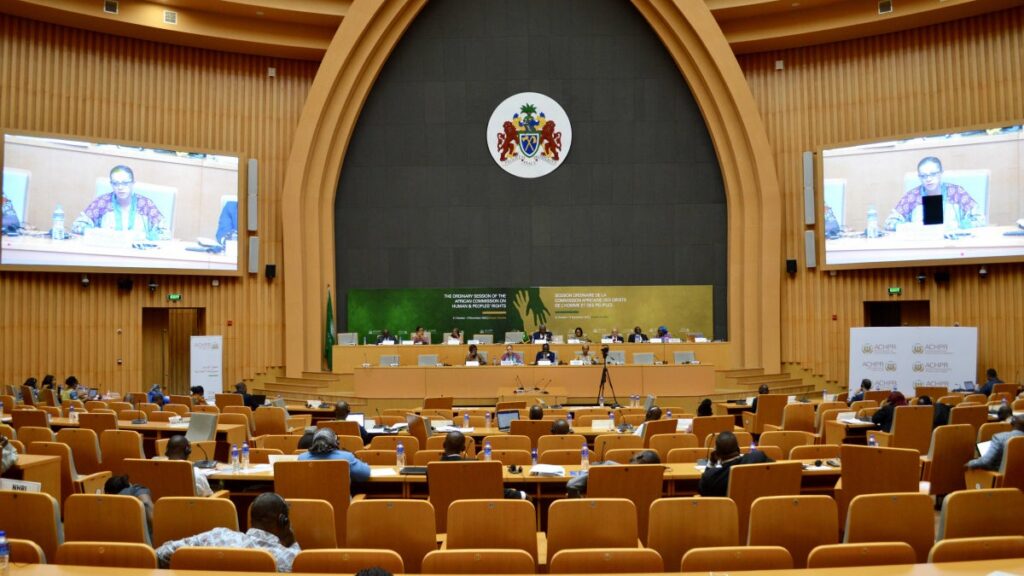
The African Commission on Human and Peoples’ Rights (ACHPR) must prioritize the most pressing human rights challenges facing Burkina Faso during its upcoming review of the country, scheduled for October 23, 2024. The Burkinabè government faces urgent calls to safeguard civilians caught in the armed conflict, maintain civic space for activists, journalists, and political opponents, and ensure accountability for grave abuses.
key issues at stake during the ACHPR review
The State reporting procedure, a mechanism under the African Union, evaluates member states’ compliance with the African Charter on Human and Peoples’ Rights. Burkina Faso’s last report, submitted in May 2023 and covering 2015–2021, fails to adequately address critical human rights concerns. These include widespread abuses by security forces and Islamist armed groups linked to the conflict, restrictions on fundamental freedoms, and pervasive impunity.
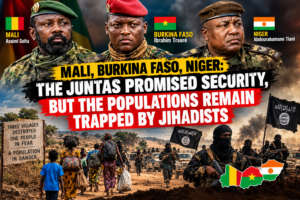
The Burkina Faso government has struggled against insurgencies by the Group for the Support of Islam and Muslims (GSIM), an Al-Qaeda affiliate, and the Islamic State in the Greater Sahara (ISGS) since their 2016 invasion from Mali. The country has also experienced two military coups since 2022.
security forces’ alleged atrocities and lack of accountability
Human Rights Watch has documented extensive abuses by Burkinabè security forces during counterinsurgency operations, including extraordinary violence and forced disappearances of civilians accused of collaborating with armed groups. Since 2016, soldiers have allegedly committed crimes against humanity, including mass killings and unlawful detentions.
Despite the government’s claims of reforms—such as establishing specialized terrorism prosecution units and military discipline brigades, and training security personnel in human rights and international humanitarian law—accountability remains rare. The 2023 report mentions training programs but provides no details on investigations or prosecutions related to abuses by state forces during the covered period.
escalating violence by armed islamist groups
Armed Islamist groups have also perpetrated grave crimes, including summary executions, sexual violence, abductions, and looting. These groups continue to besiege towns and villages across the country, exacerbating the humanitarian crisis.
In response to a suspected military massacre in the village of Karma (Yatenga Province) in April 2023, the ACHPR issued a statement urging authorities to investigate and protect civilians. Similarly, in November 2023, the ACHPR’s Working Group on Extrajudicial Killings and Forced Disappearances called for an inquiry into an attack on civilians in Zaongo (Namentenga Province).
shrinking civic space and repression of dissent
The Burkinabè authorities have systematically restricted civil and political rights since 2017, intensifying repression after the 2022 coup. Human Rights Watch has recorded cases of illegal conscription used to silence critics, as well as forced disappearances and abductions targeting government opponents, activists, and journalists.
In December 2023, the ACHPR expressed concern over the abduction of prominent human rights defender Daouda Diallo, citing intimidation, judicial harassment, and reprisals against rights defenders. In July 2024, the Commission condemned the suspected forced disappearance of three journalists and demanded their immediate release and location disclosure—without response from authorities.
urgent recommendations for the ACHPR
The ACHPR, which has not conducted an official visit to Burkina Faso in years, should:
- Demand transparency from Burkinabè authorities regarding investigations and prosecutions of abuses by both state forces and armed groups;
- Call for the protection of human rights defenders, journalists, and political opponents, ensuring they can operate without fear;
- Urge an official visit to assess the human rights situation firsthand and publish a comprehensive report.
« The ACHPR has a critical opportunity to hold Burkina Faso accountable for widespread violations and demand meaningful reforms, » said Allan Ngari, Africa Advocacy Director at Human Rights Watch. « It must push for justice, protect civic freedoms, and ensure the protection of civilians in line with international law. »