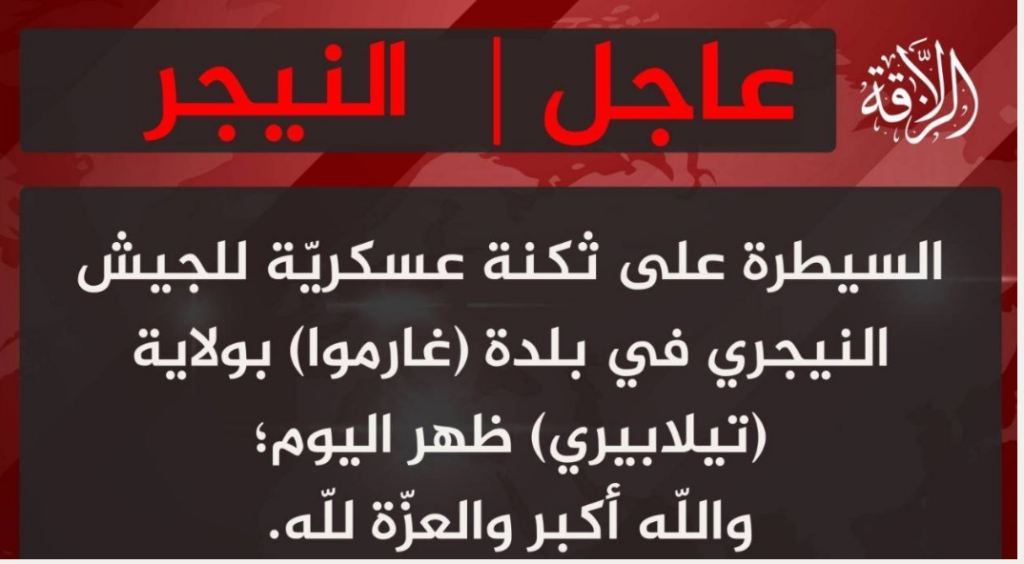
The early hours of Thursday, May 14, 2026, were shattered by one of the deadliest assaults in recent memory near the Mali border. An elite engineering unit of the Nigerien Armed Forces stationed in Garbougna, within the Tillabéri region, became the target of a meticulously planned attack attributed to the Group for the Support of Islam and Muslims (JNIM). The assault, unfolding under the cover of dawn, left at least 67 people dead, including soldiers and civilians, marking a grim escalation in the region’s ongoing security crisis.
An ambush designed to inflict maximum damage
The attack began just after 5 a.m., when armed fighters, moving swiftly on motorcycles and pickup trucks, launched a coordinated assault on the military camp. The assailants, identified as members of the JNIM—an Al-Qaeda-affiliated group—employed heavy weaponry and explosives to overwhelm the initial defenses. Despite a fierce counterattack by the Nigerien troops, the overwhelming numbers and element of surprise allowed the attackers to breach the perimeter, turning the site into a battleground.
A tragic toll on soldiers and civilians alike
The human cost of the attack is devastating. Among the 67 confirmed fatalities, a significant number were civilians, including local workers, equipment operators, and villagers who collaborated daily with the military on infrastructure projects. Many of the injured, some in critical condition, were airlifted to hospitals in Niamey and surrounding areas, while search teams scoured the surrounding bushland for any missing individuals.
Targeting progress: terror strikes at the heart of development
This was no ordinary military operation. The engineering unit was deployed in Garbougna to complete a critical bridge project, a vital infrastructure meant to break the region’s isolation, boost local trade, and spur economic revival in an area crippled by years of insecurity. By striking this unit, the JNIM has sent a chilling message: to sabotage the Nigerien state’s efforts to restore stability and connectivity in Tillabéri. For these armed groups, disrupting infrastructure and instilling fear are key tactics to maintain their grip over vulnerable communities.
The volatile three-border zone
The Garbougna attack underscores the persistent fragility of the three-border region, where Niger, Mali, and Burkina Faso converge. Despite intensified joint military operations and strengthened defenses, armed groups continue to exploit porous borders, launching deadly raids before retreating across frontiers. The assault has sent shockwaves through Niamey, with authorities vowing that the lives lost will not be in vain and that national reconstruction efforts will press on as a tribute to the fallen.
The tragedy in Garbougna signals a troubling shift in the fight against terrorism in Niger. By intertwining security with economic revival, the soldiers of the engineering unit embodied a beacon of hope for the people of Tillabéri. The loss of 67 lives serves as a stark reminder that the battle against insurgency in the Sahel extends beyond military confrontation—it is also a struggle to reclaim stability, connectivity, and prosperity. The resilience of the Nigerien people will once again be tested in the face of this horrific assault.