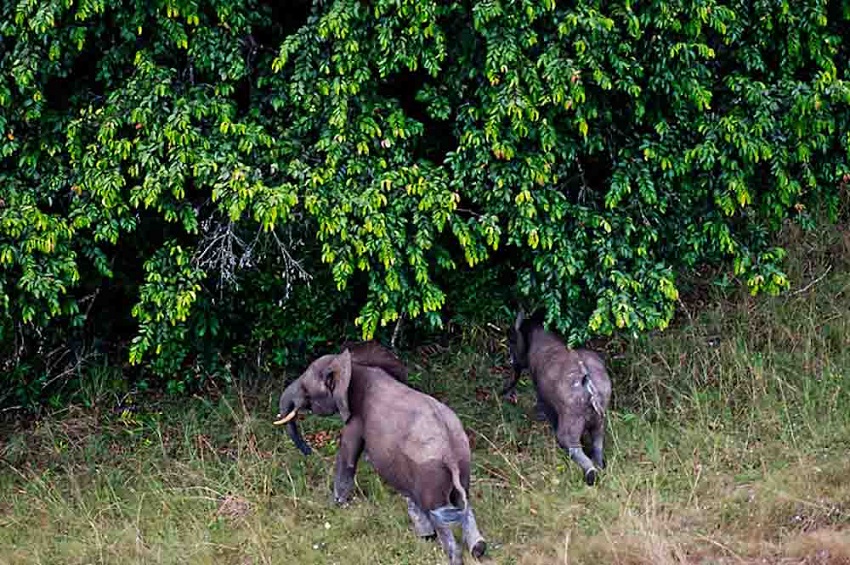
An aerial view of a heard of African elephants in the Wonga Wongue presidential reserve, Gabon. The Wildlife Crime Story - from Africa to Asia: Sudanese Janjaweed militiamen believed to be responsible for the massacre of hundreds of elephants earlier this year are on the move again in Central Africa. Intelligence sources say they are headed back to Cameroon with the intent to shoot more elephants for their valuable ivory tusks. This time, however, Cameroon's special forces will be waiting at the border. Governments like Cameroon are becoming increasingly alarmed by the use of wildlife trafficking as a source of funding for insurgents. Rebel groups, drug syndicates and even terrorist networks have seen an opportunity to profit from what has until now been a low risk, high reward criminal enterprise. Populations of rare animals like elephants, tigers and rhinos are plummeting as a result. The products sourced from this bloody business are nearly unrecognizable on the other end of the trade chain where they are being sold in up-scale, air conditioned Asian boutiques. Intricate carvings, jewelry and medical tonics made from endangered species are becoming more and more popular in places like China, Thailand and Vietnam. Economic success has thrust swaths of people in to the middle class, and many have come with the desire to possess things that used to be out of reach to all but the highest elites. Although they are illegal, they are easily obtainable by anyone with internet access and a big enough bank account. Consumers of illegal wildlife products may not know that their money is being used by militias to purchase guns and bribe government officials. Militias like the one run by a man called 'Morgan' who led an attack on a wildlife refuge in Democratic Republic of the Congo in June. Morgan's crew shot dead seven people and took others as hostages and sex slaves. The destruction brought about by illegal wildlife trade has its roots in Asian demand. But poaching is ab
Gabon targets global leadership with national park certifications
Libreville, July 1, 2026 — As global climate priorities reshape economic and environmental strategies worldwide, Gabon is taking decisive action by initiating Forest Stewardship Council (FSC) certification for all 13 of its national parks. This bold move underscores the country’s commitment to positioning its protected areas as a benchmark for international environmental governance.
Spearheaded by the National Agency for National Parks (ANPN), this initiative aims to harmonize biodiversity conservation with sustainable development while unlocking access to green financing. By aligning with stringent global standards, Gabon seeks to transform its natural heritage into a strategic asset in the fight against climate change and economic transformation.
Certification as a tool for environmental credibility
ANPN recently convened stakeholders from the Forest Stewardship Council Africa alongside project consultants to outline the certification process. The meeting focused on aligning with international requirements, clarifying roles, and establishing operational deployment methods. While FSC certification is traditionally linked to sustainable forest management, its application to protected areas signals a significant shift.
This certification demands rigorous compliance with governance, natural resource management, transparency, local community engagement, and ecosystem preservation criteria. For Gabon, it represents a critical step toward building international credibility. As investors and financial institutions increasingly prioritize environmental, social, and governance (ESG) criteria, certified natural spaces become a strategic advantage.
Leveraging biodiversity for sustainable growth
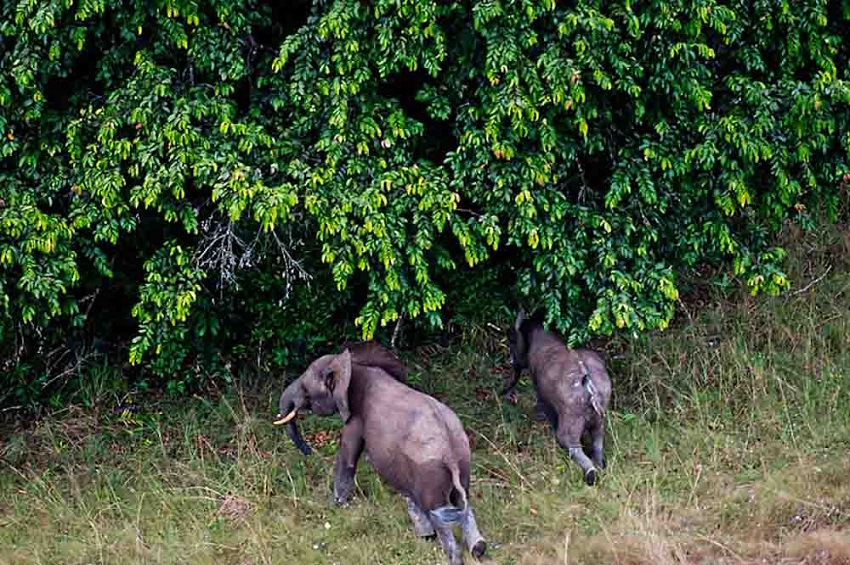
Gabon’s national park network spans nearly 11% of the country’s territory, hosting some of Africa’s richest biodiversity. From forest elephants to gorillas and thousands of endemic plant and animal species, these protected areas are ecological treasures.
The certification process goes beyond conservation—it aims to enhance the economic value of these ecosystems through sustainable frameworks. Discussions with FSC Africa explored monitoring mechanisms, evaluation tools for protected areas, and opportunities tied to ecosystem services. These services, central to modern environmental policies, recognize the tangible economic benefits of forests, wetlands, and protected spaces—such as carbon sequestration, climate regulation, water resource protection, and ecotourism development.
Certification acts as a gateway to international financing mechanisms that support conservation policies, reinforcing Gabon’s role as a leader in environmental stewardship.
A continental ambition with global implications
Beyond its national scope, Gabon’s initiative carries regional significance. By certifying all 13 national parks, the country positions itself as a pioneer among African nations in protected area certification. This aligns with broader efforts across the continent to modernize environmental governance models and meet international commitments under the Paris Agreement and biodiversity protection goals.
The strategic partnership between ANPN and FSC marks a new chapter in Gabon’s conservation management. It reflects the government’s determination to strengthen conservation efficiency while enhancing the country’s appeal to international partners.
In an era where natural resources are a geopolitical cornerstone, Gabon recognizes its biodiversity as one of its greatest assets. By aligning its national parks with the world’s most rigorous standards, the country isn’t just safeguarding its natural heritage—it’s laying the groundwork for an environmental diplomacy that positions conservation as a driver of influence, financing, and sustainable development.