“SEEG must be restructured if we want a lasting solution to the problem,” the president declared firmly during his annual state of the nation address before deputies and senators gathered in congress.
This statement amounts to an admission that the current model has failed, as water and electricity cuts have persisted in Gabon for years.
The presidential project rests on two pillars: separating water management from electricity management, and unbundling production, distribution, and commercialisation. According to the head of state, this structure would allow for more efficient and accountable management.
“Today, when there is a water leak, it sometimes takes three months before it is repaired. If the sector’s revenues depend directly on the quality of water service, interventions would be much faster,” he explained, rejecting the argument that the water sector could not survive without electricity revenues.
The dysfunctions stem from “poor governance” of the public company. “This moment of truth also forces me to be frank with you. Beyond the problems, the ongoing blackouts are due to the fact that SEEG does not pay its operators,” the president continued.
But responsibility is also shared with users. The head of state denounced “the incivility of users,” listing harmful practices: non-payment of bills, burying meters, fraud, cable theft, sabotage of transformers, and direct connections.
The technical assessment is alarming. “No major investment has been made in the last twenty years,” estimated the interim administrator of SEEG, Steve Saurel Legnongo, in early 2025, while energy consumption needs have nearly doubled between 2010 and 2024.
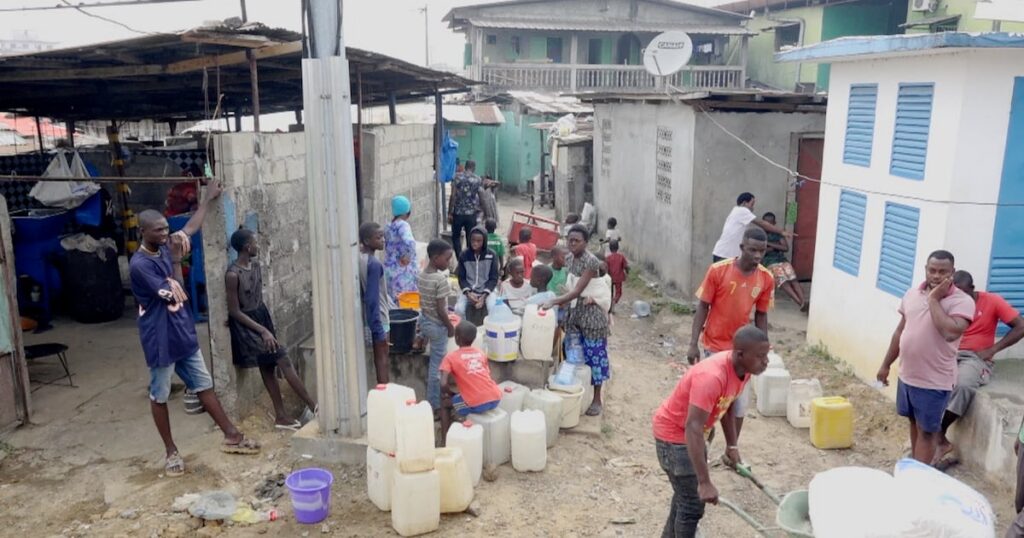
The consequences are dire for the population. The capital is regularly deprived of electricity under a rotating load-shedding system, while water cuts last for months in some areas.
When asked, SEEG subscribers express mixed opinions. Mariam Yama, a subscriber, views the separation of the two sectors favourably: “If water and electricity are separated, that would mean two entities for service efficiency. I believe so.”
Nicole Esso is more cautious: “This is not a new problem. Water and electricity cuts are legion in Gabon. Because equipment renewal has not kept pace. I think we are impatient and pessimistic for nothing. The head of state is working, we must let him do it.”
Patrick Ruffin, a retired military officer, points to financial mismanagement: “The management of SEEG must be reviewed.”
Cédric Pango, a company executive, raises a major reservation: “Within SEEG, people know that electricity activity is more profitable than water. The water activity is neglected without investment. That is how I understand the head of state’s approach. However, if we separate the two activities with a water sector that is not profitable, we risk facing more difficulties than before.”
In recent years, authorities have already taken measures to “relieve the distress of the Gabonese people regarding this energy problem.”
In February 2025, the state signed a protocol with the Turkish company Karpowership to supply 150 megawatts via two floating power plants to serve Greater Libreville. That same month, Gabon and Equatorial Guinea interconnected their electrical grids.
For Brice Clotaire Oligui Nguema, who came to power through a coup d’état in August 2023 before being elected with 94.85% of the vote in April 2025, restoring the electrical network is a key issue of credibility.
The announced reform must now be translated into concrete actions, as residents of Libreville and the rest of the country await tangible results.
Between technical challenges, financial stakes, and the fight against fraud, the task is colossal. But for the population, the question is simple: will the coming weeks finally mark the end of repeated cuts, or will it be a new episode in a chronic public service crisis?