The ambition is bold, but it has become a cornerstone of Gabon’s current economic blueprint.
As the nation strives to significantly cut its reliance on food imports and halt the influx of foreign poultry by 2027, the real struggle is occurring far from bustling marketplaces. Instead, the front line is located within the experimental fields of the National Center for Scientific and Technological Research in Kougouleu.
Scientific innovation at the heart of national development
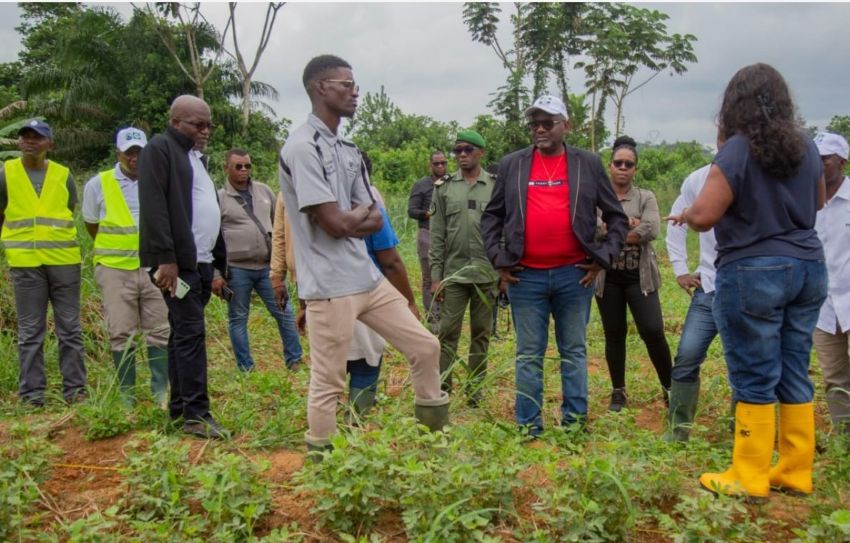
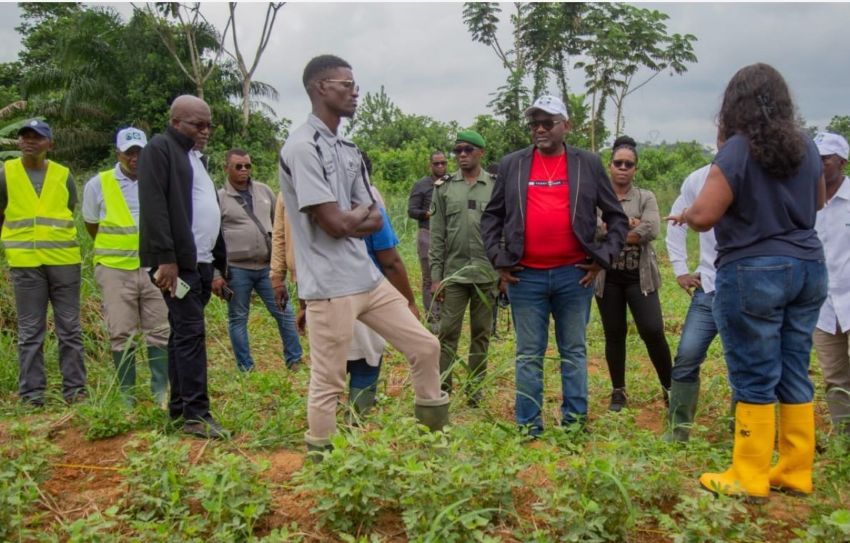
A recent visit by Charles Edgar Mombo, the Minister of Higher Education and Scientific Research, to this vital facility represents much more than a routine check. It signals a strategic pivot where scientific inquiry is being deployed as a direct instrument for economic change and a pillar of national sovereignty.
In a country where food imports still drain a substantial portion of foreign reserves, establishing the local production of raw materials for livestock is now viewed with the same strategic importance as the mining or energy sectors.
Building an integrated poultry industry
The government’s objective is transparent: to develop a poultry sector capable of satisfying domestic demand while systematically phasing out imports. Central to this mission is the challenge of animal nutrition. Corn and soy are the primary ingredients for industrial poultry feed; as long as these remain imported, the sector’s independence remains precarious.
At the Kougouleu site, CENAREST researchers are tackling this specific problem. They are currently managing experimental programs for eleven different corn varieties to determine which seeds are best suited to the unique soil and climate conditions of Gabon.
This initiative goes beyond simple agricultural output. The goal is to identify high-yield varieties that can consistently support a growing national poultry industry. Simultaneously, scientific teams have launched trials for eleven soy varieties introduced through international collaboration with research centers in Malawi. Further testing is being carried out in the Nyanga province, specifically in Tchibanga, to assess performance across the country’s diverse ecosystems.
A shift toward operational research
This strategy reflects a major evolution in policy. Once viewed as a field disconnected from immediate economic needs, research has been repositioned as an active participant in national development. The logic is to produce essential livestock inputs locally to lower production costs and improve the competitiveness of Gabonese farmers.
This vision aligns with broader trends across Africa, where many nations are fighting rising food costs. International experts often cite import dependency as a primary source of economic vulnerability for the continent. Gabon, however, possesses significant advantages: fertile land, plentiful water, and a climate favorable to diverse crops.
Minister Charles Edgar Mombo noted that the progress on the ground already showcases the nation’s potential. He praised the dedication of the scientific community and highlighted how the higher education system is actively supporting the strategic goals established by President Brice Clotaire Oligui Nguema.
The path to total food sovereignty
While the current progress is promising, significant hurdles remain. Researchers emphasize the need to expand experimental acreage to refine testing quality and boost production volumes. Moving from laboratory success to industrial-scale farming is often the most complex phase of the process.
Funding also remains a critical factor. Modernizing the agricultural sector requires substantial investment, improved infrastructure, accessible financing for local producers, and more efficient value chains. However, Gabon finally appears to be implementing a cohesive plan that links research, agriculture, and industry with economic sovereignty.
The ministerial visit to Kougouleu represents a fundamental change in perspective. Under the current leadership, food independence is no longer seen as just a matter of administrative policy or spending, but as a goal to be achieved through laboratories and scientific innovation. By 2027, Gabon aims to prove that food sovereignty is built through the combined efforts of both researchers and farmers.