Gabon is making significant strides toward its goal of becoming Central Africa’s premier industrial and mining hub by 2030. The nation’s economic strategy is shifting from planning to execution with the launch of a major infrastructure initiative designed to bolster national development.
A milestone for Gabonese infrastructure
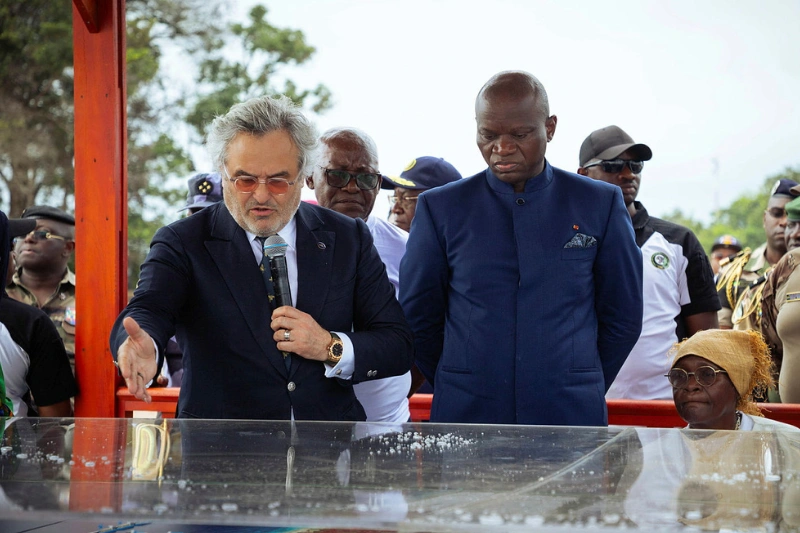
On Monday, June 8, 2026, President Brice Clotaire Oligui Nguema officially initiated the construction of the Kobe-Kobe deep-water port by laying the foundation stone. This ceremony follows the recent signing of a strategic agreement with Africa Global Logistics (AGL) to bring this massive project to life.
The ambitious development is designed as an integrated complex. It will feature a specialized mineral terminal, a multipurpose quay, a dedicated railway loop, and a residential district. Additionally, the site will include extensive cargo storage facilities and administrative offices. Through this initiative, Gabon is asserting its intent to process raw materials locally, building economic sovereignty alongside international partners from across the globe.
A new model of industrial growth
During the ceremony, the vision for the country’s future was made clear: every stakeholder, from those in the iron and mining sectors to those in processing plants, must contribute to a cohesive result. The focus is on moving beyond simple infrastructure to establish a development model rooted in industrialization and local value creation.
The Kobe-Kobe project is recognized as one of the five most significant mining developments currently underway worldwide. According to project leadership, the port is scheduled to begin its export operations in April 2031. To support these operations, a 550 km rail corridor will be established, linking production centers to the coastal terminal in an estimated travel time of just eight hours.
Economic impact and human development
The scale of the Kobe-Kobe port project brings substantial economic expectations. It is projected to generate over 100,000 jobs and increase Gabon‘s Gross Domestic Product (GDP) by more than 50%. The annual economic value is estimated to exceed 10 billion dollars.
Beyond the financial figures, the project emphasizes human capital. While technical studies are already in progress, AGL has committed to sending young Gabonese citizens for specialized training, ensuring the local workforce is at the heart of this industrial transformation.
By positioning itself as a strategic logistics hub in Central Africa, Gabon is turning its industrial ambitions into a concrete reality that promises to reshape the regional economic landscape.