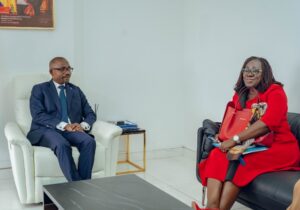
In Gabon, a former minister from the transitional government led by President Brice Clotaire Oligui Nguema has been released from custody. This development follows six months of preventive detention and the payment of ten billion CFA francs. The ruling, issued by the Libreville chamber of accusation, also extends to several co-accused individuals implicated in the same proceedings for alleged embezzlement of public funds. This outcome prompts critical questions regarding the direction of the anti-corruption campaign initiated after the August 2023 coup.
ten billion FCFA secures release, fueling debate
This particular case highlights a practice that has become increasingly common in post-transition Gabon: financial restitution as a prerequisite for release. To secure their freedom from Libreville’s central prison, the former government official and their co-defendants agreed to remit a total sum of ten billion CFA francs, equivalent to approximately fifteen million euros. This arrangement, which is neither a conventional fine nor a standard bail, operates more like an unofficial judicial settlement.
The individuals involved were initially apprehended and detained as part of an investigation into the misappropriation of public funds, an offense now falling under the purview of the new Special Court established by the transitional authorities. Their preventive detention spanned a period of six months, during which extensive interrogations were conducted by both the investigative brigade and examining magistrates. Despite these releases, the substantive legal proceedings in the case remain active.
operation scorpion: oligui’s anti-corruption strategy under scrutiny
Since the ousting of Ali Bongo Ondimba on August 30, 2023, President Brice Oligui Nguema has consistently positioned the restoration of sound public finances as a cornerstone of his political agenda. The initiative, dubbed “Operation Scorpion,” launched shortly after the assumption of power, led to the arrest of numerous officials from the previous administration. More recently, however, it has also targeted individuals who briefly served the transitional government. This latest case, with its partial resolution, falls into this latter category, presenting a more delicate challenge for the current leadership.
Superficially, the resolute stance adopted in Libreville has garnered approval from some international donors and regional observers. Yet, the increasing frequency of releases from detention contingent upon financial settlements prompts serious questions about the true objective of this system. Is it primarily a mechanism for asset recovery, aimed at replenishing a depleted national treasury, or does it represent a form of selective justice, adaptable to an individual’s financial capacity? This fundamental question now dominates public discourse across Gabon.
Several legal experts within Gabon point out that these types of financial transactions are not explicitly outlined in the Gabonese penal code, particularly concerning severe economic crimes. Their implementation stems from a “prætorian practice,” tacitly accepted by the public prosecutor’s office and subsequently endorsed by the chamber of accusation. However, the conspicuous absence of a public tariff structure or objective criteria for these settlements fuels suspicions of arbitrary application, even among some members of the CTRI, the Committee for the Transition and Restoration of Institutions.
ambiguous signals for investors and partners
For Gabon’s economic partners, particularly within the Central African Economic and Monetary Community (CEMAC), this situation sends a mixed message. On one hand, authorities appear to demonstrate their effectiveness in recovering significant sums from implicated individuals, reinforcing a narrative of fiscal discipline. On the other hand, the crucial legal predictability required for long-term investment decisions is undermined by the opaque nature of these amicable settlements.
This context is especially sensitive as Libreville has embarked on several strategic projects, notably in the mining sector, processed timber, and port infrastructure. Ongoing negotiations with international corporations inherently demand a transparent and understandable legal framework. Each case resolved through such quiet arrangements contributes to obscuring this clarity, even as Gabon strives to emerge from the political sanctions imposed by certain regional organizations following the coup d’état.
Domestically, the release of the former minister risks reigniting public debate concerning equality before the law. Numerous less affluent detainees remain incarcerated at the central prison without any clear path to resolution. The stark disparity in treatment between ordinary citizens facing justice and those from ruling circles presents, in the medium term, a significant political challenge for the new government expected to emerge from the April 2025 elections.