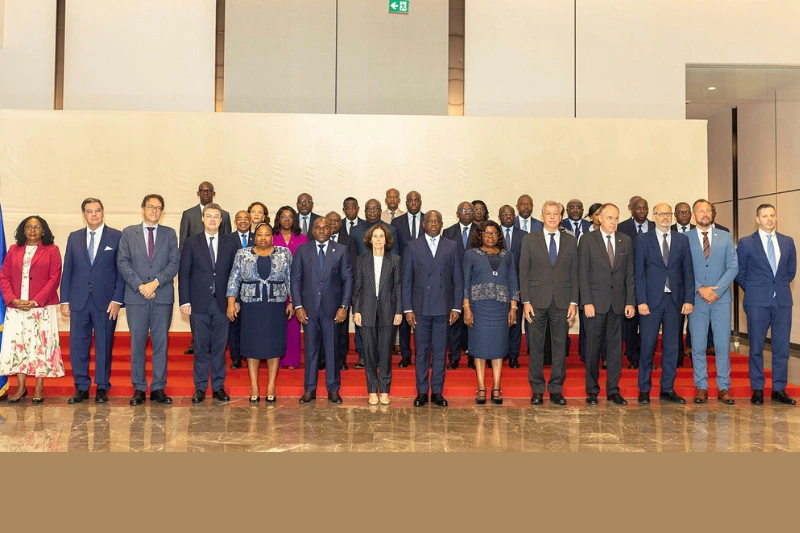
The Palais des Congrès Omar Bongo Ondimba in the Cité de la Démocratie hosted the second session of the strategic partnership dialogue between Gabon and the European Union. This high-level meeting was led by Hermann Immongault, the Vice-Prime Minister, alongside Cécile Abadie, the EU Ambassador to Gabon, building on the foundations laid during their initial discussions in October 2024.
This collaborative framework is rooted in the Samoa Agreement, which serves as the legal pillar for relations between the EU and members of the African, Caribbean, and Pacific (ACP) states. Hermann Immongault emphasized that this partnership aims to be more balanced and operational, focusing on delivering tangible results through public policy and strategic investments.
Key pillars of the partnership
The working session focused on four primary sectors: political reform and governance, economic development prospects, environmental protection and resource management, and regional and multilateral cooperation.
During the sessions, both delegations reviewed the institutional reforms implemented during Gabon’s current transition period. Open discussions also covered human rights and fundamental freedoms. Hermann Immongault noted that no topic was off-limits, ensuring that all concerns were addressed with full transparency and clarity.
Economic growth was a major talking point, specifically structural reforms aimed at enhancing the business environment to attract more foreign capital. The European Global Gateway strategy was highlighted as a key tool for these economic ambitions, promising to bolster infrastructure and connectivity.
Environmental and regional priorities
Ecological issues were central to the agenda. Both parties found common ground on sustainable forest management and explored future cooperation in areas such as sustainable fishing, renewable energy, and waste processing.
Finally, Gabon and the EU reaffirmed their commitment to multilateralism, showing strong alignment on international issues like maritime security and regional integration. Moving forward, both partners intend to strengthen their bond and continue working on these shared priorities within an atmosphere of mutual trust and transparency.