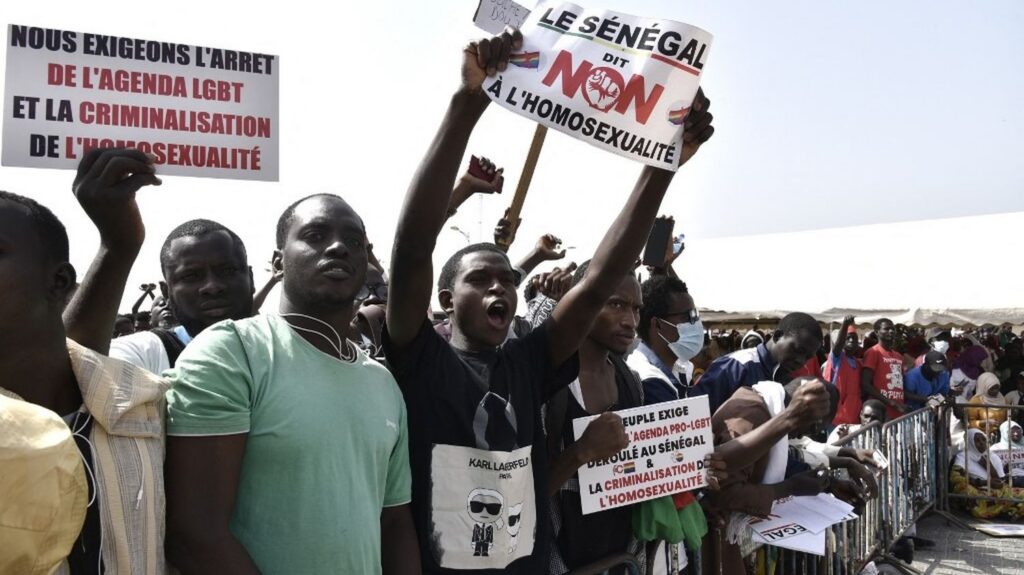
In response to Senegal’s recent adoption of severe anti-LGBTQ+ legislation, French activists and elected officials are stepping up to provide critical support to persecuted individuals. The new law, passed in March, imposes five to ten-year prison sentences for same-sex relationships, sparking widespread concern among human rights advocates.
STOP Homophobie, a leading French advocacy group, is currently assisting 68 detainees in Senegal, while also sheltering several refugees in the Paris region and facilitating the relocation of over fifty individuals to France. The association has set up a dedicated hotline, which has been overwhelmed by an unprecedented volume of calls.
“Until just two weeks ago, we had reached 3,000 calls, and our system was struggling to handle the demand,” reveals Terrence Khatchadourian, secretary-general of STOP Homophobie. The group’s efforts underscore the urgency of the situation, as LGBTQ+ individuals face escalating risks under the new legal framework.
France’s response falls short, activists argue
Despite these initiatives, critics argue that France’s response remains insufficient. Jean-Luc Romero-Michel, a prominent activist and former deputy mayor of Paris, emphasizes the dire need for more action: “Every message we receive highlights the failure of the French government to issue humanitarian visas. While condemning the situation in Senegal is important, it is far more meaningful to provide refuge for those fleeing persecution.”
In a bid to address the crisis, Ian Brossat, a Paris city councilor, has proposed allocating temporary housing for Senegalese LGBTQ+ individuals seeking asylum in France. “Expressing outrage is one thing, but creating pathways to safety is another,” Brossat asserts. His proposal will be presented during Tuesday’s municipal council meeting, signaling a potential shift in local support policies.
a growing movement for solidarity
The mobilization extends beyond advocacy groups and local officials. Across France, citizens and organizations are rallying to demand stronger protections for Senegal’s LGBTQ+ community, calling on their government to take decisive action. The calls for solidarity reflect a broader movement to hold institutions accountable while offering tangible help to those in need.