East DRC residents refuse separation from nation despite occupation
The President of the National Assembly, Aimé Boji Sangara, has praised the resilience of populations affected by armed conflicts in eastern Democratic Republic of Congo (DRC), while firmly reaffirming the House’s stance on national unity and territorial integrity.
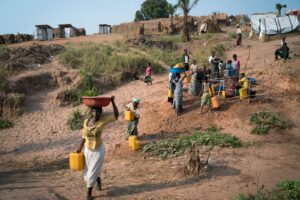
During his address on Monday, June 15, 2026, closing the March 2026 ordinary session, he first paid tribute to internally displaced persons and refugees, whose humanitarian situation remains dire. Addressing communities in North Kivu, South Kivu, and Ituri provinces, he conveyed a message of solidarity and hope amid conflict-related hardships.
“This is an opportunity to salute the remarkable resilience of our internally displaced and refugee compatriots. Their suffering remains at the heart of the National Assembly’s concerns. I wish to convey a message of solidarity and hope to our brothers and sisters in North Kivu, South Kivu, and Ituri, who continue to demonstrate resilience and resistance against the trials imposed by Rwandan troops and their allies, the AFC/M23,” he stated.
Speaking in Swahili and French, the Speaker reaffirmed the unbreakable bond between eastern DRC and the rest of the country, asserting that the occupation cannot be permanent.
“North Kivu, South Kivu, and Ituri are and will forever remain integral parts of the Democratic Republic of Congo—a blessed gift and sacred legacy from our ancestors. We firmly believe that the illegal occupation of our eastern territories is neither permanent nor irreversible. Like all unjust situations in history, this barbaric occupation will come to an end.”
Addressing those advocating for the country’s balkanization, Aimé Boji Sangara warned against any attempt to undermine national unity or the citizenship of populations in occupied zones. He emphasized the unbroken connection among Congolese people, despite the current security crisis fueled by the AFC/M23 insurgency, allegedly backed by Rwanda.
“This is the time to tell all those who believe our brothers and sisters in occupied territories can renounce their national belonging or conspire against the nation that they are mistaken. We stand in perfect communion with them and will relentlessly defend our national unity, territorial integrity, and sovereignty. Indeed, our greatest weapon against adversity is not merely military—it is our deep patriotism, national unity, and resilience,” he declared.
He rejected any attempt to divide or manipulate communities in eastern DRC, reaffirming the indivisibility of the country and the institutions’ determination to defend every inch of its territory.
“Let the dark forces attacking our nation in the east and attempting to mislead our compatriots in occupied areas know that we will oppose them with an unbreakable wall of solidarity. The Democratic Republic of Congo is one, indivisible, and plural. Whether you are in Goma, Muanda, Gemena, or Lubumbashi, the blood flowing in the east is ours. National unity is not an empty phrase—it is the foundation of our survival and greatness. Let them understand that we will defend every square inch of our territory,” he affirmed.
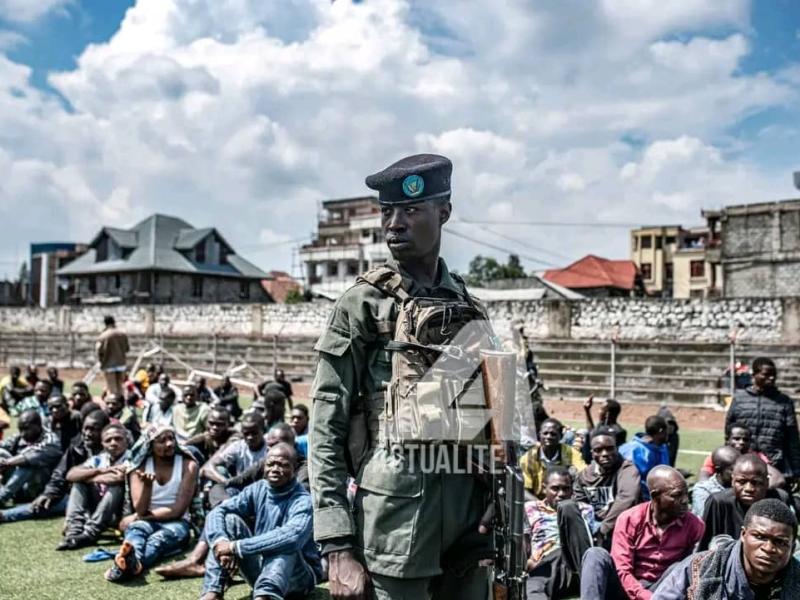
The security situation in eastern DRC continues to deteriorate. Despite the Washington Agreement, brokered under U.S. auspices, and the Doha Process, led by Qatar with African Union support—along with ongoing evaluation meetings—the security and humanitarian crisis in eastern DRC remains alarming. Civilian populations across the country bear the brunt of violence and forced displacement, exacerbating an already catastrophic humanitarian situation amid declining international funding for aid.
In response, voices at national, regional, and global levels continue to urge stakeholders to honor their commitments under peace initiatives. Yet, these appeals have thus far yielded little progress. The gap between diplomatic progress on paper and ground realities persists, as each party interprets agreement terms to suit their own narrative, making implementation increasingly uncertain. By Clément Muamba