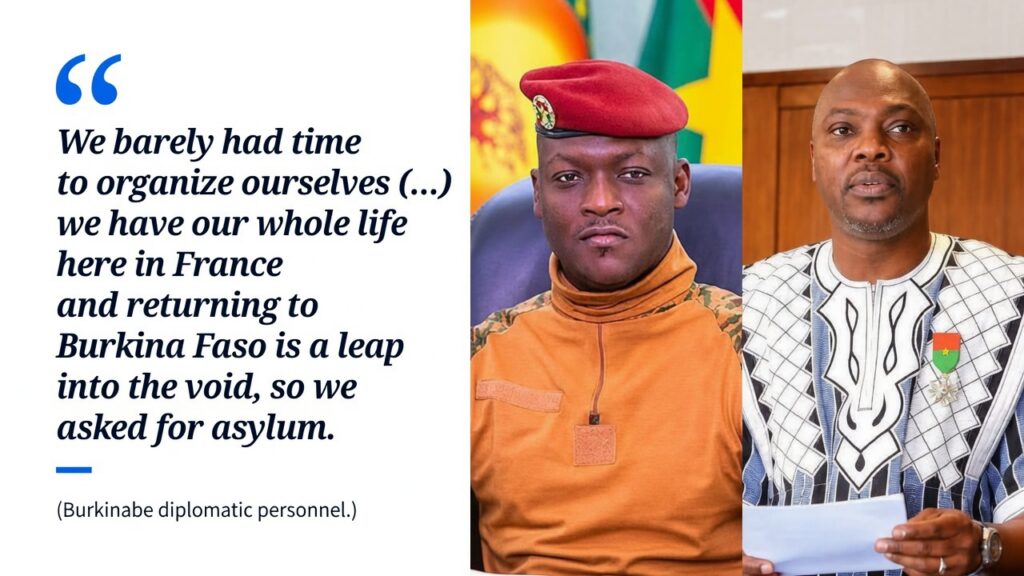
A significant diplomatic challenge has emerged for Burkina Faso’s transitional authorities following an unprecedented move by embassy staff in Paris. Several members of the Burkinabè diplomatic corps stationed in France have formally applied for political asylum, citing personal safety concerns and a deteriorating national climate as primary motivations.
This development coincides with a broader pattern of administrative restructuring within Burkina Faso’s diplomatic network. Recent months have seen numerous diplomatic personnel recalled from overseas posts, a process officially described as a routine reorganisation. However, for those affected, this forced repatriation carries far greater implications than a mere reassignment.
In their official statement, the diplomats articulated their reasons with striking clarity. The essence of their message underscores the gravity of their decision:
« After years of building our lives in France—establishing our families, educating our children, and advancing our careers—returning to Burkina Faso under current conditions feels like stepping into the unknown. Asylum represents the only viable path forward. »
Their words reveal deep-seated uncertainty. Many of these individuals have spent significant portions of their careers abroad, creating professional and personal ties that cannot be severed without substantial disruption. The fear of an uncertain future upon repatriation appears to outweigh their professional obligations to the State.
security concerns amplify diplomatic exodus
The timing of these asylum requests cannot be divorced from Burkina Faso’s ongoing security crisis. The country continues to grapple with persistent threats from armed groups, prompting the transitional government to implement sweeping measures to bolster national resilience. While these initiatives aim to strengthen collective security, they have also sparked widespread apprehension among civilians, including diplomatic personnel.
Reports from human rights organisations and firsthand accounts detail growing unease regarding the state’s emergency mobilisation policies. Some individuals critical of government actions or subject to requisition orders have alleged being deployed to high-risk zones with inadequate preparation or support. Though authorities dispute these claims, the perception of heightened risk persists, further eroding confidence in the safety of returning to Burkina Faso.
centralised governance criticised for human cost
Analysts suggest this diplomatic exodus reflects broader criticisms of Burkina Faso’s highly centralised governance model. The transitional leadership, led by Captain Ibrahim Traoré, has faced accusations of implementing sweeping administrative changes with little consideration for the human impact on affected individuals and their families. The sudden recall of diplomats stationed abroad for years is viewed by critics as an abrupt disruption devoid of transitional support or adequate planning.
This episode carries profound symbolic weight. When diplomatic representatives—who are entrusted with upholding their nation’s image abroad—choose to seek protection from another state rather than return home, the implications extend far beyond administrative protocol. It signals a crisis of confidence in the very institutions these individuals were once tasked with serving.
Political asylum requests from diplomats remain exceedingly rare, often serving as a barometer of systemic instability within a nation. For Burkina Faso’s transitional government, this situation presents a formidable reputational challenge. Despite its stated commitment to restoring national sovereignty and public trust, such high-profile defections among its own representatives cast doubt on the stability of the domestic environment and the security guarantees extended to state employees.
Beyond the political and diplomatic ramifications, this affair illuminates the human dimension behind administrative decisions. The testimonies emerging from the Paris embassy reveal the personal sacrifices embedded within diplomatic service. Families uprooted from familiar surroundings, children forced to abandon their education, and careers placed on hold—these are the tangible consequences of policies drafted in distant corridors of power. The episode serves as a stark reminder that governance decisions, no matter how strategically sound, can have profound and lasting effects on the lives of those tasked with executing them.