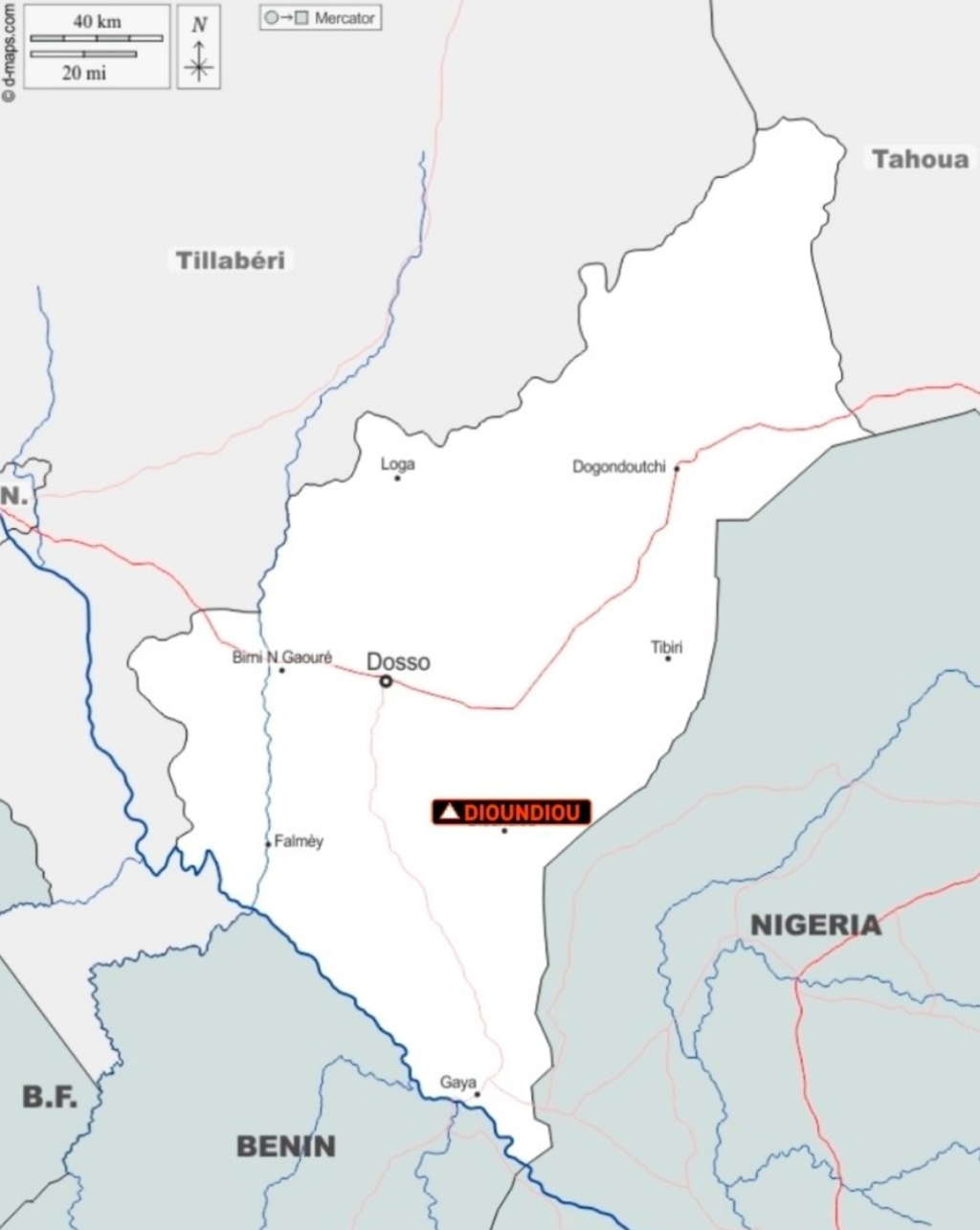
The southwestern region of Dosso, Niger, has been struck by a wave of unprecedented violence as two villages in the Dioundou area faced coordinated assaults within a single week. The communities of Libo I and Libo II now bear the scars of these brutal raids, which have left six civilians dead and entire livelihoods reduced to ashes.
devastating assaults leave villages in ruins
It began in the early hours of May 25, 2026, when armed men stormed Libo I and Libo II under the cover of darkness. The attack was swift and merciless, leaving six residents dead and plunging the remaining survivors into deep despair. The assailants, operating with chilling precision, targeted civilians without hesitation.
Just three days later, on May 28, the attackers returned—this time with a calculated strategy of total annihilation. They torched what little remained of the villages, burning homes and destroying vital grain stores that had once provided food security. To compound the tragedy, the attackers seized nearly all livestock, stripping the communities of their only economic lifeline.
suspicions fall on issP lakurawa
Local accounts and field observations strongly suggest the involvement of the ISSP Lakurawa, an armed faction linked to the Islamic State’s Sahel Province. This group, known for its brutal tactics and expanding influence across the region, has increasingly targeted vulnerable communities along Niger’s porous borders.
Their signature methods—nighttime raids, extrajudicial killings, systematic looting, and the destruction of essential infrastructure—have become a grim pattern in the region. For the people of Dioundou, who had previously enjoyed relative safety compared to the volatile “three-border zone,” these attacks mark a terrifying escalation, spreading fear and uncertainty across the region.
military junta’s failure to protect civilians
The recent violence highlights the National Council for the Safeguard of the Homeland (CNSP)’s inability to deliver on its core pledge: restoring peace and security nationwide. Since the 2023 coup, the security situation has worsened, with rural populations bearing the brunt of the crisis.
The government’s shift from Western allies to new strategic partners, including Russian and regional forces, has yet to translate into tangible protection for civilians. Joint patrols and newly announced defense strategies have failed to shield rural communities, leaving them vulnerable to highly mobile, heavily armed groups.
a growing national security crisis
The tragedy in Dioundou is part of a broader and deeply concerning trend: the intensification of armed violence across Niger. Recent months have seen a dangerous shift, with attacks expanding beyond remote villages to strike critical infrastructure previously considered secure.
Airports, vital logistical hubs, and military installations—once thought impenetrable—have become targets. If such fortified locations are no longer safe, how can isolated villages like Libo I and Libo II hope to defend themselves? The expanding reach and tactical dominance of terrorist groups underscore a severe breakdown in national security.
call for urgent action
Libo I and Libo II now stand as symbols of devastation, with survivors displaced and struggling to rebuild. The loss of six lives and the destruction of livelihoods serve as a stark reminder of the crisis gripping Niger.
Empty slogans of sovereignty and political rhetoric offer little comfort to those living in fear. Without a fundamental reassessment of current military strategies and a real commitment to protecting civilians, the country risks deeper instability. The unchecked advance of groups like ISSP Lakurawa threatens to drag entire regions into chaos, demanding immediate and decisive action.