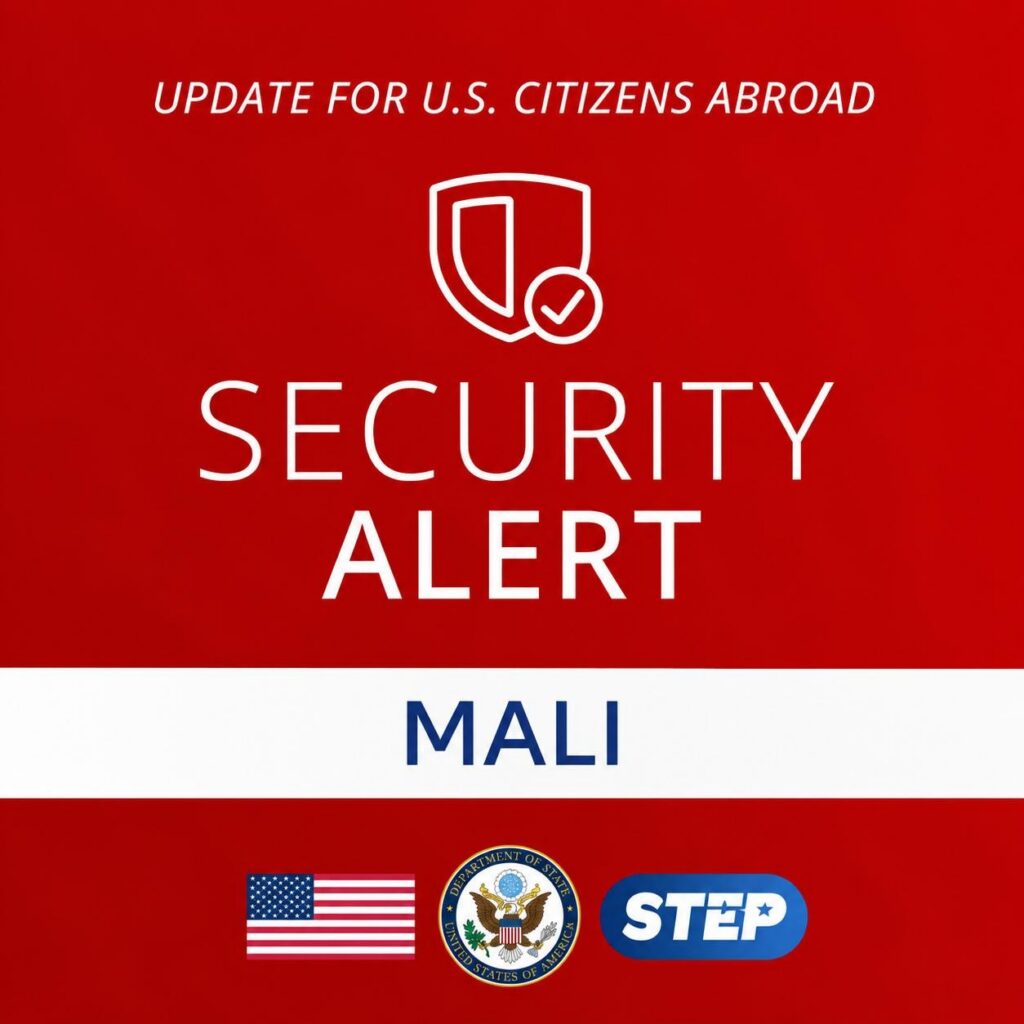
In an unexpected move, the United States Embassy in Mali has issued a stringent security alert, advising American citizens in Bamako to avoid all non-essential travel this weekend. The advisory, which takes effect on Saturday, May 30, 2026, reflects a sharp escalation in perceived threats, prompting immediate speculation among security analysts about the nature of the intelligence behind the decision.
Why this weekend matters for Bamako’s security
The timing of the alert is particularly striking. While the embassy’s communiqués are typically measured, this one carries an unmistakable urgency. American nationals and diplomats are urged to remain indoors, steer clear of public gatherings, and minimize movement across the city—especially in districts with a high concentration of expatriates. Such directives are rarely issued without compelling evidence, suggesting that U.S. intelligence has detected credible indicators of potential threats, whether through intercepted communications, surveillance, or operational signals.
Terrorist threats loom closer to the capital
The Jama’at Nusrat al-Islam wal Muslimin (JNIM), the dominant Al-Qaeda-affiliated militant group in the Sahel, has repeatedly demonstrated its ability to stage sophisticated attacks in Bamako and its outskirts. Recent years have seen high-profile assaults on military installations and critical infrastructure, leaving lingering concerns about the group’s capacity to infiltrate urban centers. Adding to the pressure, the Cadre Stratégique Permanent—a coalition of armed factions operating in northern and central Mali—has intensified harassment campaigns, often in coordination with splinter groups like the Front de Libération de l’Azawad (FLA).
The combination of these threats has stretched the Malian Armed Forces (FAMa) thin, with security forces struggling to dismantle sleeper cells and neutralize improvised explosive devices (IEDs) on a near-daily basis. The U.S. Embassy’s alert underscores the persistent asymmetric nature of these dangers, where even well-defended zones like Bamako remain vulnerable.
Road blockades: A crippling economic weapon
Beyond direct attacks, militant groups have weaponized supply chains, imposing severe blockades on key highways linking Bamako to other regions. Fuel tankers and commercial convoys are frequently targeted, disrupting the flow of essential goods and stoking panic among residents. These road closures serve a dual purpose: they cripple the national economy while highlighting the state’s inability to secure critical transit routes. For the U.S. Embassy, the proximity of these blockades to the capital raises the specter of collateral incidents, further justifying its restrictive measures.
A gap between local reassurance and global caution
The Malian transitional authorities have countered the embassy’s alert by reinforcing security patrols and tightening checkpoints at city entry points. Yet, Western embassies appear less convinced by these efforts. Their approach reflects a data-driven assessment of risk, relying on advanced intelligence tools to preempt threats before they materialize. This disparity between public-facing confidence and private-sector vigilance highlights the fragility of the current security landscape.
As the weekend begins, Bamako is bracing for heightened scrutiny. Security forces have already ramped up identity checks and vehicle inspections in strategic neighborhoods, signaling a proactive stance—but one that may not fully alleviate concerns.
A stark reminder of Mali’s enduring crisis
This weekend’s security alert serves as a sobering reminder of Mali’s precarious position. Between the ever-present threat of JNIM’s asymmetric strikes and the economic stranglehold imposed by road blockades, Bamako remains trapped in a cycle of crisis management. As the situation unfolds, all residents—locals and expatriates alike—are urged to exercise extreme caution, hoping that the alert will prove precautionary rather than predictive.