A $414 million bet that changes everything
The scale of the American commitment to the Dasa project — a $414 million injection — stands in stark contrast to the free fall of SOMAÏR, the historic Aïr mining company long run by France’s Orano. Taken together, the two stories have triggered a wave of reactions across Niger and beyond, and they raise a single, uncomfortable question: what comes next for a country whose uranium sector is being rebuilt from the ground up?
Why SOMAÏR ran aground
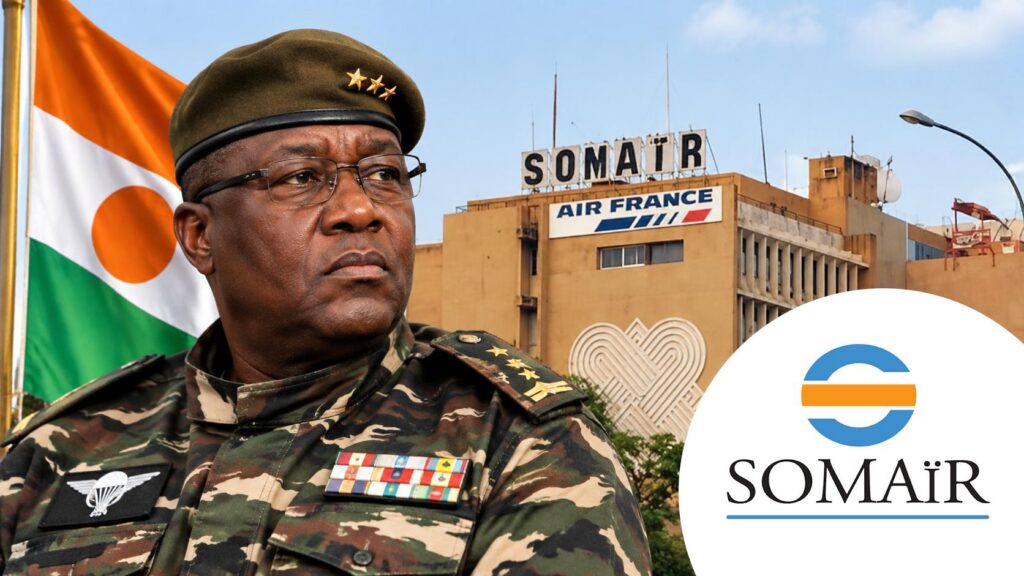
SOMAÏR’s output has collapsed dramatically, at times dropping more than 80 percent below its nominal capacity. The causes are logistical and political in equal measure. Export corridors are blocked, the border with Benin remains closed, and there is simply no viable route to move uranium concentrate — yellowcake — to the port of Cotonou.
That stranglehold pushed Orano to suspend operations, and Niamey’s transitional government eventually revoked the permits and took control of the site. For the authorities, SOMAÏR embodied an old, neocolonial model they wanted to break with — even at the cost of an almost total shutdown of one of the country’s flagship mines.
Dasa steps into the breach
While SOMAÏR’s uranium sits stranded or under-exploited, the Dasa project, led by Canada’s Global Atomic, is emerging as Niger’s new mining backbone. The deposit holds some of the highest uranium grades in the world, and its output is meant to offset much of what SOMAÏR can no longer deliver to international markets.
Washington’s pragmatism is on full display. The $414 million from the U.S. International Development Finance Corporation signals that where French players such as Orano are paralysed or squeezed out by political disputes with the junta, the United States is locking in future supply through financial structures and North American firms that Niamey regards as more neutral.
Fallout at home: a debate that will not fade
The contrast has not gone unnoticed. Analysts, civil society voices and ordinary Nigeriens are asking whether trading one foreign partner for another really amounts to sovereignty — or simply a change of patron. The government’s insistence on a purely military approach to security has, in practice, left it dependent on European and American capital it once denounced.
For households and businesses, the stakes are concrete: jobs at the Aïr site, revenue flowing to the treasury, and the credibility of Niamey’s promise to renegotiate the terms of its resource extraction. The coming months will show whether Dasa can truly fill the gap left by SOMAÏR — and whether the public accepts the price of that transition.