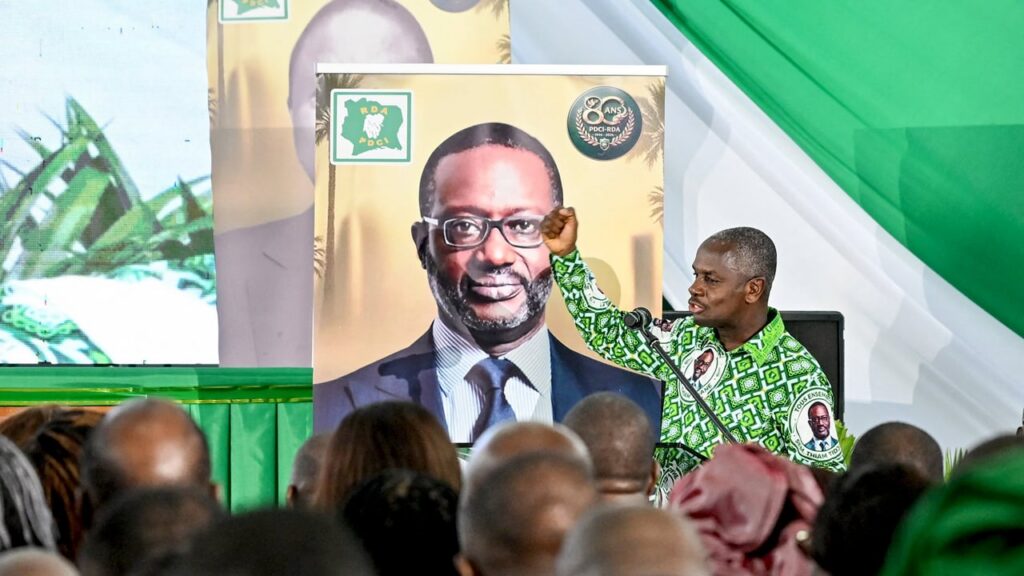
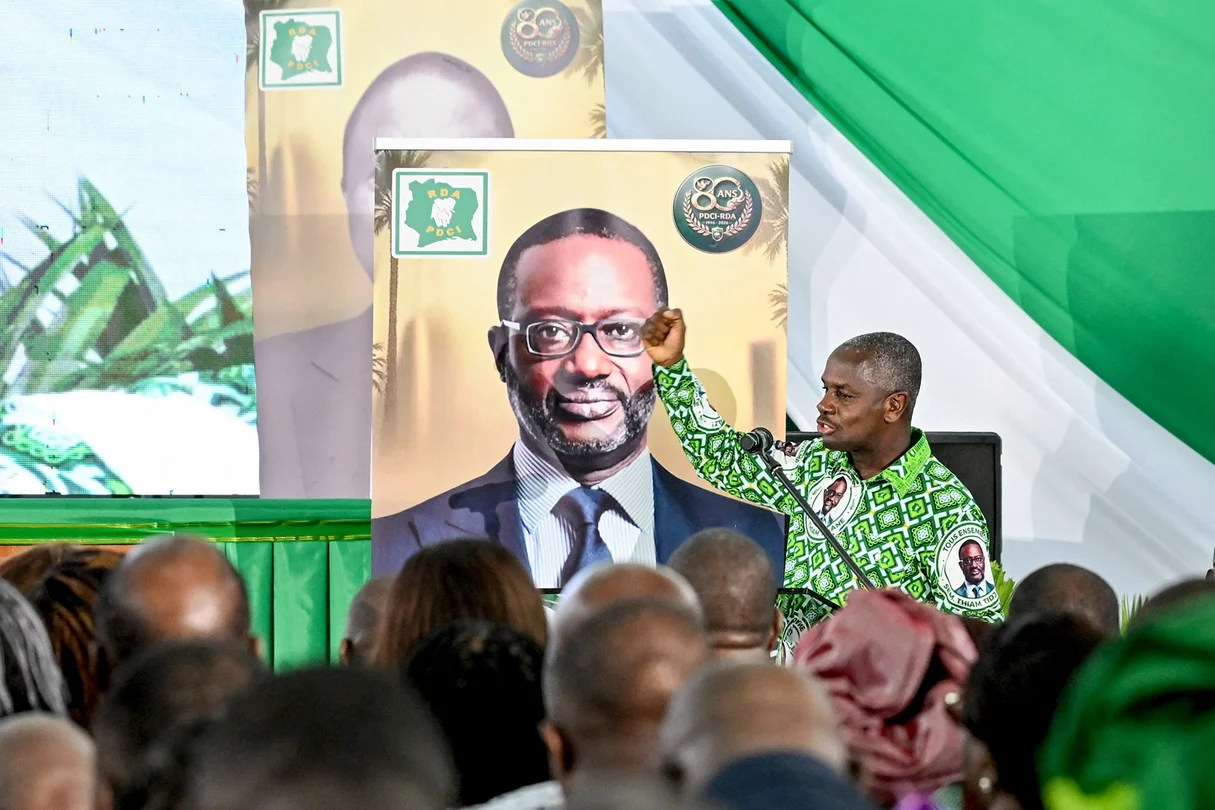
The political landscape in Côte d’Ivoire is witnessing renewed friction as the ruling party, RHDP, intensifies pressure on the historic opposition party, PDCI, led by Tidjane Thiam. Internal dynamics within the PDCI are visibly strained, with key figures like Calice Yapo Yapo—party secretary general—facing mounting challenges.
The RHDP’s strategic maneuvers appear designed to destabilize the PDCI’s cohesion ahead of critical electoral deadlines. Observers note a pattern of calculated moves aimed at weakening the opposition’s unity and influence. These developments have sparked concerns among PDCI supporters about the party’s future direction and its ability to withstand external pressures.
Internal divisions deepen within the PDCI
The PDCI, one of Côte d’Ivoire’s oldest political institutions, is grappling with internal fractures that threaten its traditional stronghold. Tidjane Thiam, a prominent figure in Ivorian politics, is navigating a complex environment where loyalty and strategy often clash. Recent celebrations marking the party’s 80th anniversary highlighted both resilience and underlying tensions.
Calice Yapo Yapo, a central figure in these internal discussions, has become a focal point for both supporters and critics. His role in navigating the party through turbulent times has drawn attention, yet it has also exposed vulnerabilities within the PDCI’s leadership structure.
Strategic implications for Côte d’Ivoire’s political future
The escalating conflict between the RHDP and PDCI carries significant consequences for Côte d’Ivoire’s political stability. With the opposition party facing unprecedented pressure, the balance of power in the country’s democratic processes hangs in the balance. Analysts warn that prolonged instability could undermine public trust in institutions and delay critical reforms.
The RHDP’s approach, while assertive, risks polarizing the political environment further. Meanwhile, the PDCI is under pressure to either adapt to shifting dynamics or risk marginalization in future elections. The coming months will be decisive in determining whether the party can regroup and counterbalance the ruling party’s influence.
Key takeaways for stakeholders
- Party cohesion: The PDCI must address internal divisions to present a united front against growing external threats.
- Electoral readiness: Both parties are likely to intensify preparations for upcoming elections, with strategies centered on voter mobilization and policy differentiation.
- Public perception: The handling of this conflict will shape how citizens view the credibility and transparency of Côte d’Ivoire’s political institutions.