Côte d’Ivoire stands as West Africa’s economic engine within UEMOA, outpacing AES nations
With a thriving domestic market, cutting-edge infrastructure, and a strategic port hub, Côte d’Ivoire solidifies its position as the leading economy in the West African Economic and Monetary Union (UEMOA). Its unmatched investment capacity and robust growth indicators position Abidjan as a continental economic powerhouse, surpassing regional peers in both scale and ambition.
- politics

Côte d’Ivoire’s commitment to public investment—exceeding 4,195 billion West African CFA francs—cements its role as the primary economic driver of UEMOA. This financial commitment dwarfs those of neighboring countries, enabling the nation to advance multiple large-scale initiatives in infrastructure, transportation, energy, and urban development. The latest budgetary figures underscore this commitment, with Abidjan’s allocation nearly doubling the combined public investment plans of Mali, Burkina Faso, and Niger, which total around 2,100 billion CFA francs.
Within the broader UEMOA framework, Côte d’Ivoire’s dominance is even more pronounced. The country commands nearly 44% of the union’s total public investment budget, a figure nearly three times greater than Benin’s allocation and over four times that of Senegal. Guinea-Bissau’s investment budget, by comparison, is several dozen times smaller. This disparity highlights Côte d’Ivoire’s unparalleled financial capacity to shape regional economic development.
Economist Nouvou Berté, specializing in political economy and international finance, attributes this advantage to Côte d’Ivoire’s expansive domestic market, robust tax revenues, and access to international financial markets. These factors enable the country to fund critical economic transformation programs across key sectors. On a per-capita basis, Côte d’Ivoire allocates approximately 116,500 CFA francs per citizen to public investment—surpassing Togo and Benin. The gap is particularly stark when compared to Senegal, Mali, Burkina Faso, and Niger.
While expenditure volume is a key performance indicator, it is not the sole measure of success. Togo and Benin, for instance, allocate a higher proportion of their budgets to investment. This underscores the importance of not just funding, but also the efficiency and execution of public projects. Well-planned infrastructure—such as roads, ports, universities, and industrial zones—only yields tangible benefits when executed with precision and aligned with economic needs.
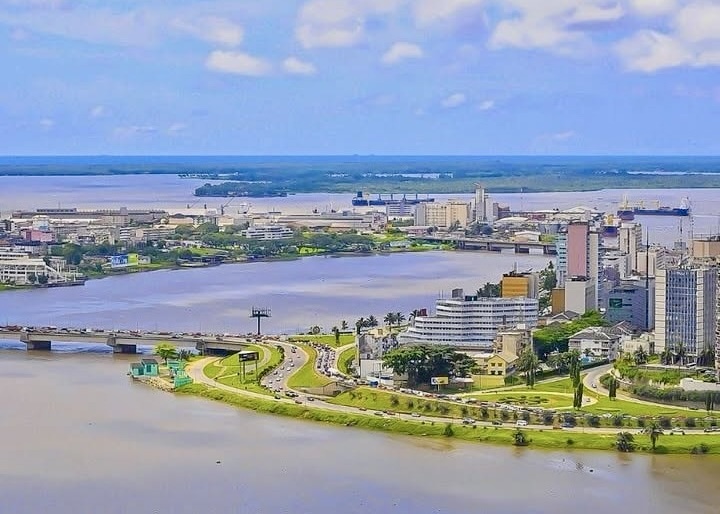
Looking ahead, Côte d’Ivoire’s economic trajectory remains strong. Projections by the Centre for Economics and Business Research (CEBR) anticipate significant growth over the next 15 years, with the country’s GDP poised to more than double by 2040. This optimism stems from Côte d’Ivoire’s diversified economy, anchored by a thriving industrial sector, robust agro-industry, and key exports like cocoa, gold, and energy. The Port of Abidjan further cements the nation’s role as West Africa’s premier logistics hub, facilitating trade across the subregion.
These indicators paint a clear picture: Côte d’Ivoire now possesses the financial resources, infrastructure, and production capabilities to exert outsized influence within UEMOA. The next challenge lies in translating this economic strength into sustainable gains for businesses, job creation, and improved living standards for its people.