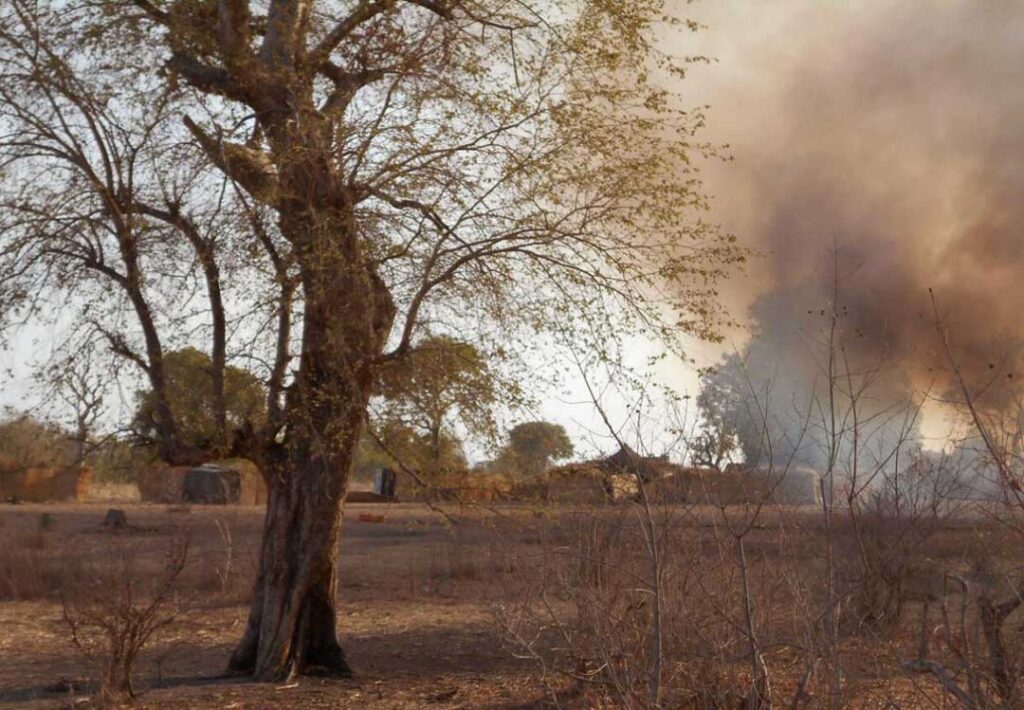
The once-thriving Sambisa Forest, sprawling across 60,000 square kilometers in Nigeria’s Northeastern region, has transformed from a biodiversity haven into a battleground where two militant factions vie for dominance. Once teeming with wildlife and a magnet for tourists, the forest now bears the scars of relentless conflict between armed groups and the military operations tracking them down.
Since Boko Haram’s 2009 uprising, its insurgency has spilled across borders, engulfing Cameroon, Niger, and Chad. The violence has claimed over 40,000 civilian lives and displaced more than two million people, according to United Nations estimates. Within this regional crisis, the Sambisa Forest has emerged as a critical flashpoint, particularly since the group’s 2016 split into two rival factions: the Sunni Group for Preaching and Jihad (JAS) and the Islamic State’s West Africa Province (ISWAP).
Strategic stronghold fuels fierce rivalries
The dense canopy and vast expanse of Sambisa make it an ideal hideout for militants planning attacks and controlling smuggling routes. The forest’s strategic value has only deepened the animosity between JAS and ISWAP, which have engaged in escalating clashes since their split. Insurgents from both factions have repeatedly targeted Nigerian and multinational forces, including the Multinational Joint Task Force, in a bid to secure control over the region.
Zagazola Makama, a Borno-based security analyst, has documented multiple confrontations in and around the forest, with both sides claiming heavy casualties. While unverified, their assertions underscore the growing ferocity of the rivalry, which has evolved into a parallel conflict alongside their broader insurgency against state forces.
Diverging tactics shape militant strategies
The Sunni Group for Preaching and Jihad has built a reputation for kidnappings, looting, and deadly raids, while ISWAP focuses on territorial control, taxation, and establishing de facto local governance—albeit with brutal disregard for human life. The Sambisa Forest and Lake Chad’s islands have long served as their primary strongholds, offering both groups sanctuary and operational bases.
Makama notes that despite sustained counter-terrorism pressure, insurgents maintain active communication networks and operational capabilities within these enclaves. The clashes between the two factions are increasingly seen as both a challenge and an opportunity: a challenge due to the unpredictability they introduce, and an opportunity because they could weaken the overall cohesion of insurgent forces in the region.
Security strategies must adapt to evolving threats
Taiwo Adebayo, a Boko Haram specialist at the Institute for African Security Studies in South Africa, argues that security strategies need recalibration. He warns that the Nigerian military and multinational forces, currently focused on countering ISWAP’s offensives against military installations, have inadvertently allowed JAS to regroup in the relative calm.
Adebayo stresses, “Security approaches must recognize JAS not as a weakened rival of ISWAP but as an independent and adaptive threat that demands targeted responses.”
Malik Samuel, a senior researcher with Good Governance Africa, predicts a prolonged stalemate between the two factions. He highlights the difficulties ISWAP faces in accessing JAS’s Barwa stronghold, where its leader is based, complicating any direct operation to eliminate its leadership. Meanwhile, the proximity of their territories in the islands ensures inevitable confrontations as both groups compete for dominance and resources.
“Outside these island strongholds, JAS struggles to match ISWAP’s numerical strength, territorial reach, and operational experience,” Samuel explains. “The presence of foreign terrorist fighters further tilts the balance in ISWAP’s favor.”