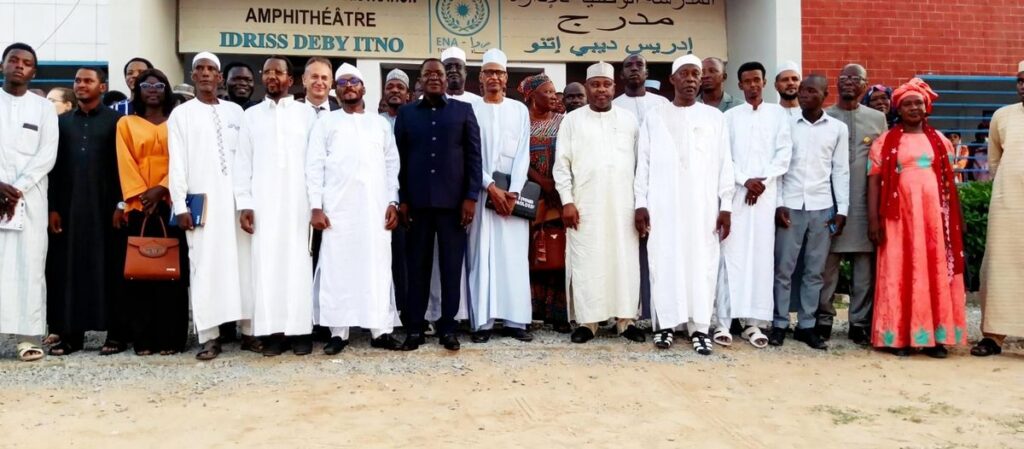
In a thought-provoking conference held at N’Djamena’s National School of Administration, former Prime Minister and current Senator Albert Pahimi Padacké delivered a sharp critique of Chad’s centralized governance. The event, which drew a diverse audience of policymakers, students, and political figures, centered on the critical role of provincial councils in the country’s institutional reform.

Provincial councils: the missing link in Chad’s development
Albert Pahimi Padacké, leader of the RNDT-Le Réveil party and a prominent voice in Chadian politics, did not mince words during his two-hour address. While acknowledging the theoretical benefits of decentralization, he highlighted a harsh reality: Chad’s legal framework for regionalization remains largely unimplemented. « A decentralization that doesn’t empower local governments is nothing more than an administrative mirage, » he emphasized, underscoring the urgency of structural change.
For Pahimi Padacké, transferring decision-making power to provincial councils is not just a policy option—it’s a necessity. He argued that only through genuine autonomy can local authorities respond effectively to the needs of their communities, particularly in areas like education, healthcare, and infrastructure. « Development cannot flow from the top down, » he stated. « It must rise from the ground up, with those closest to the people leading the way. »
The central government’s grip: a barrier to progress
The senator reserved his strongest criticism for what he described as the « iron grip of vertical centralization. » Despite laws on the books, the central administration continues to resist relinquishing control over resources and decision-making. Provincial councils, he noted, are often left without the financial means to implement their own policies, effectively rendering them powerless. « You cannot decentralize power while keeping the purse strings in the capital, » Pahimi Padacké asserted, calling this imbalance a fundamental flaw in Chad’s governance model.
His analysis painted a stark picture: a country rich in potential but held back by a system that stifles local initiative. The conference’s attendees, many of whom are future civil servants, engaged in lively debate, reflecting the widespread concern over Chad’s institutional stagnation.
A call for bold reforms
Pahimi Padacké concluded his remarks with a plea for urgent reforms. He urged the central government to trust local leaders, arguing that provincial councils should be transformed into engines of economic growth rather than mere extensions of the capital’s bureaucracy. « The future of Chad depends on whether we have the courage to break free from this outdated model, » he declared. The audience’s response suggested that the debate over decentralization is far from over—and that the stakes could not be higher.