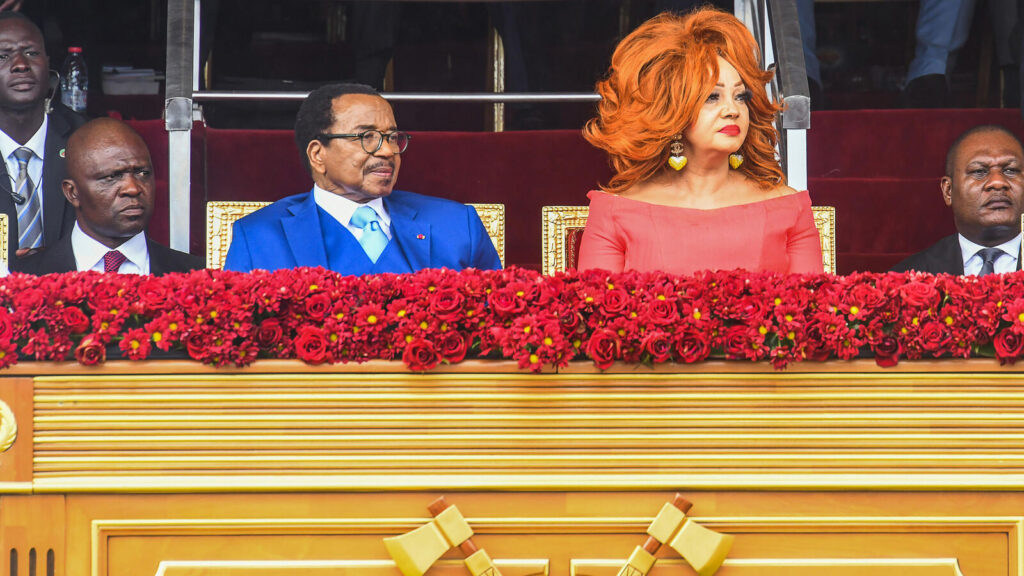
(260520) -- YAOUNDE, May 20, 2026 (Xinhua) -- Cameroonian President Paul Biya (3rd R) watch a civilian parade during the National Day celebrations in Yaounde, Cameroon, on May 20, 2026. Cameroon on Wednesday marked the 54th anniversary of its National Day with military and civilian parades held across the country. (Xinhua/Kepseu)
The question lingers: who truly steers Cameroon’s affairs from Geneva? For over sixty-five consecutive days, President Paul Biya has remained in Switzerland, marking an unprecedented absence since his forty-three-year tenure began. This prolonged stay has ignited debates about his capacity to govern from afar and raised doubts among citizens and opposition figures alike.
Swiss hospitals have become the backdrop to this political limbo. Reports suggest the president is receiving medical attention there, yet official announcements remain scarce. Meanwhile, government assurances about his health and ability to lead have done little to quell the growing unease across the country. Critics argue that the lack of transparency surrounding his condition only fuels speculation about his future.
Silence from Yaoundé: a vacuum in leadership
Cameroon’s capital, Yaoundé, finds itself in an unfamiliar position—without its long-standing leader. Decrees are issued in Biya’s name, yet the absence of a public appearance or clear communication has left many questioning the legitimacy of these actions. Opposition voices demand answers, while the public grapples with uncertainty about the country’s direction.
The government maintains that Biya remains in charge, but the lack of visible leadership has sparked conversations about succession and the potential scenarios that could unfold. Analysts note that prolonged absences without sufficient explanation can erode public trust, especially in a nation where political stability has often been fragile.
Health rumors and the weight of legacy
Speculation about Biya’s health has intensified, with some suggesting that his advanced age and extended stay in Switzerland may indicate serious concerns. At 88 years old, the president has been a fixture of Cameroon’s political landscape since 1982, and his prolonged absence has prompted reflections on his legacy and the future of the regime he has overseen.
While state media occasionally releases statements about his condition, they offer minimal detail, leaving room for interpretation. The opposition has seized on this ambiguity, calling for greater transparency and raising the possibility of a power transition—however unlikely it may seem under current circumstances.
What comes next for Cameroon?
The coming weeks will be critical in determining whether Biya’s absence is temporary or a sign of deeper shifts within the country’s leadership. For now, the government continues to function under the assumption of his continued presidency, but the longer the silence persists, the harder it becomes to ignore the questions swirling around his ability to remain at the helm.
One thing is certain: the longer Cameroon’s leader remains absent from its soil, the more the nation’s political landscape feels unsettled, and the more urgent the calls for clarity become.