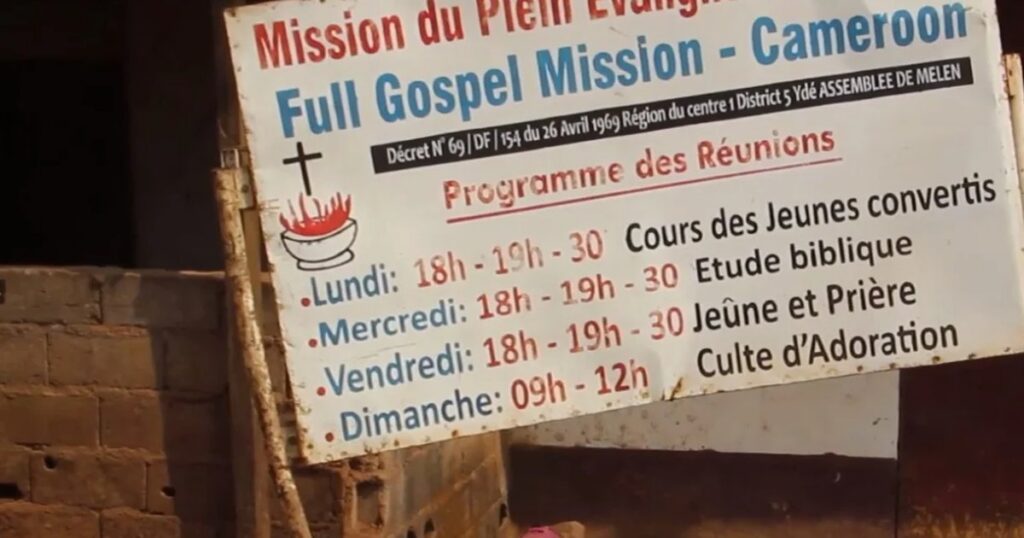
Cameroon’s Minister of Cults, Paul Atanga Nji, announced on July 8, 2026, the impending closure of 1,400 new churches across the nation. The decision stems from what he described as “persistent irregularities” in their administrative compliance.
The minister had previously mandated in 2024 that all new churches register with his department. However, a significant number have yet to fulfill this requirement. “The period of tolerance has now expired,” Minister Atanga Nji affirmed during a meeting with leaders of the “Vie et Paix” revival church. This particular meeting was convened following the late June murder of an 11-year-old girl by a 22-year-old adherent of the church. The young victim was tragically stabbed 17 times, with the perpetrator claiming to have acted under the instruction of the Holy Spirit.
This shocking incident, which has deeply resonated throughout Cameroon, follows a similar heinous crime committed in March. In that instance, another 11-year-old girl was murdered under circumstances that remain undisclosed.
The Cameroonian government has been actively addressing the proliferation of new churches since 2006. In 2008, the authorities officially recognized 81 associations, Christian churches, and religious institutions, including 46 Protestant and Pentecostal denominations, all operating within the established legal framework.
Mirroring trends in other African nations, the rise of Christian sects in Cameroon saw a significant surge beginning in 1994. This growth was influenced by both the law on freedom of association and the devaluation of the CFA franc. The economic hardships resulting from this devaluation often pushed vulnerable populations towards various preachers and religious movements.
In 2025, the Cameroonian government took action by closing nearly 200 new church worship sites, primarily citing noise disturbances. At that time, unregistered new churches were explicitly warned to “begin closing and pack up their belongings.”