The African Football Confederation has officially acknowledged the joint declaration of interest submitted by Burkina Faso, Mali, and Niger for hosting the 2032 Africa Cup of Nations. While this marks a symbolic milestone for the three Sahelian nations, their journey has only just begun as they now face the critical task of proving their readiness—both in terms of infrastructure and safety—to meet the CAF’s stringent requirements.
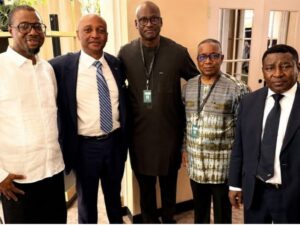
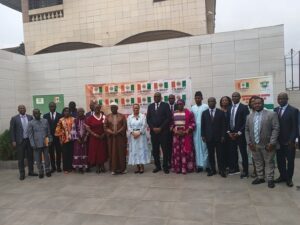
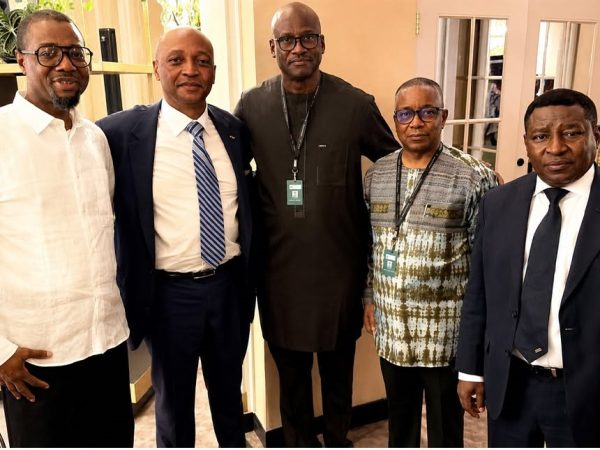
The landmark meeting took place in New York on July 18, where leaders from the three federations—Colonel Oumarou Sawadogo of Burkina Faso, Mahamadou Cissé of Mali, and Issaka Adamou of Niger—secured confirmation that their bid had been formally recorded. The announcement, made public two days later by the Nigerien Football Federation, has since resonated across the region, underscoring the strategic significance of this collaborative effort.
An initial step, not a guarantee
While the CAF’s validation is a necessary administrative step, it falls far short of an outright endorsement. Under Article 7.3 of the CAF’s candidacy regulations, the trio has merely satisfied the preliminary requirement of submitting a joint declaration of interest. This clears the way for their bid to advance to the next phase but does not ensure eventual success. According to the Nigerien Football Federation, this formal recognition is merely the first checkpoint in a rigorous selection process that will scrutinize every aspect of their proposal.
Simultaneous bids: a long-term vision
The CAF’s decision to simultaneously invite bids for the 2028, 2032, and 2036 editions reflects a deliberate strategy to foster stability and continuity in African football. By providing federations with extended timeframes, the governing body aims to encourage the development of robust, well-prepared bids. However, for the Sahelian alliance, the road to 2032 remains uncertain. The CAF has yet to finalize its timeline, and the feasibility of the project will hinge on a comprehensive assessment of the region’s infrastructure, hospitality, and transportation networks.
This evaluation will be pivotal in determining whether the trio can meet the high standards expected of a continental tournament host. The challenges are substantial, particularly given the persistent security concerns and logistical hurdles that have long characterized the region.
A proven model to emulate
This is not the first time the CAF has entertained a tripartite hosting arrangement. Kenya, Uganda, and Tanzania are already set to co-host the 2027 edition, a precedent that could serve as a blueprint for the Sahelian bid. By pooling their resources, the three African nations demonstrated how shared infrastructure and collaborative governance can alleviate the burden of hosting a major tournament. For Burkina Faso, Mali, and Niger, such a model could be equally transformative, enabling them to present a unified front while mitigating individual weaknesses.
The CAF’s president has previously praised the initiative for its emphasis on regional cooperation, emphasizing that compliance with established procedures remains non-negotiable. A statement issued by the Nigerien Football Federation on July 20, 2026, underscored this message, reinforcing the message that the bid’s success will depend on meticulous preparation and adherence to CAF guidelines.
Football as a tool of regional diplomacy
The joint bid is more than a sporting ambition; it is a strategic move within a broader geopolitical narrative. Since severing ties with the Economic Community of West African States (ECOWAS), the military regimes in Ouagadougou, Bamako, and Niamey have pursued a series of collaborative initiatives to assert the autonomy of the Sahel bloc. From monetary policy to foreign affairs, these nations are forging a path independent of regional norms. A successful bid for the CAN 2032 would offer the Alliance of Sahel States an unprecedented global platform at a time when the region continues to grapple with escalating insecurity. Just days before the bid was validated, the African Union condemned fresh attacks in Niger and Mali that resulted in significant loss of life.
The CAF’s evaluation will thus extend beyond logistical considerations to encompass the broader context of stability and security. In the coming months, the federation will assess not only the readiness of stadiums, hotels, and transportation networks but also the overall climate of safety and governance in the three countries. These factors will weigh heavily in determining whether the Sahelian bid can compete on equal footing with other potential candidates.
What’s next for the Sahelian bid?
The July 18 validation was a symbolic victory, but the road to 2032 is long and fraught with challenges. The trio has cleared a critical administrative hurdle, yet the true test lies in the technical and logistical realities of hosting a tournament of this magnitude. Burkina Faso, Mali, and Niger have pledged to work closely with their governments to refine their technical proposals, ensuring compliance with the CAF’s stringent criteria. However, the final outcome remains uncertain, as the bid will be evaluated against the backdrop of other competing proposals and the CAF’s evolving priorities.
Should the Sahelian alliance succeed, the CAN 2032 could transcend the realm of sports, becoming a testament to the region’s capacity to convert political unity into a tangible international showcase. For now, the focus remains on turning ambition into action, as the three nations prepare to face the scrutiny of the CAF and the world.