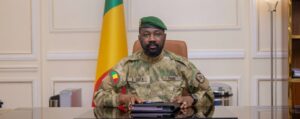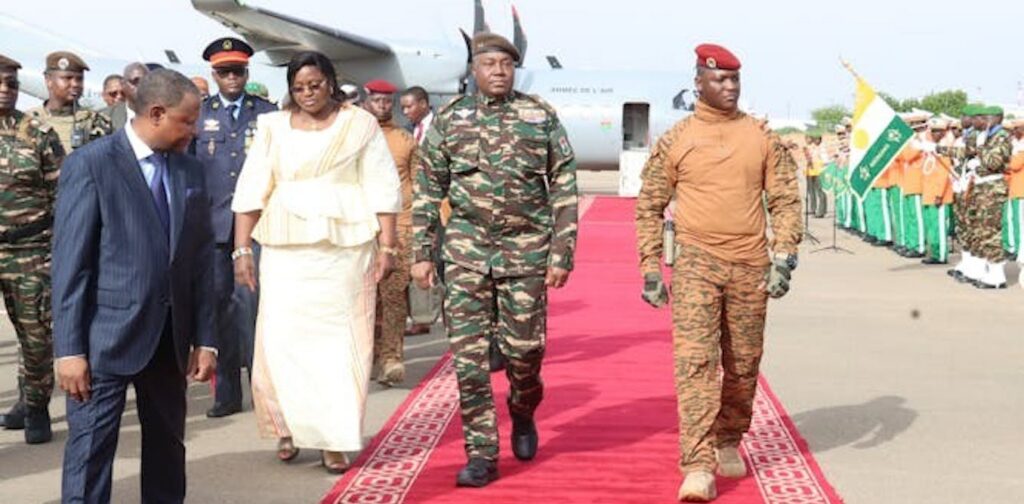
The final days of January 2026 signaled a definitive halt to partisan activities in Burkina Faso. On January 29, the administration led by Captain Ibrahim Traoré formally disbanded every political organization in the country, including those that had previously championed his September 2022 rise to power.
While these organizations had been under suspension since Traoré first took control, the ruling military council framed this latest decree as a necessary “restructuring” of the state intended to heal social fractures. In reality, this move effectively erases the remaining avenues for independent civic engagement, further consolidating absolute authority under Traoré while the state seizes all party assets.
Although the junta initially thrived on vibrant grassroots backing, this crackdown stands in stark contrast to their earlier promises of popular empowerment and revolutionary change. However, for those tracking Mali security news and regional trends, this development is hardly unexpected.
Throughout the Sahel and across the African continent, those who cheer for military interventions often find that their early enthusiasm rarely leads to lasting political leverage. Coups that launch with a wave of public approval frequently conclude with the junta isolating or outright persecuting the very groups that helped them solidify their rule. This is a historical cycle that has persisted for decades.
Having extensively analyzed military takeovers for nearly ten years, focusing specifically on the recent surge of coups in Africa, I contend that military rulers have little incentive to share the spotlight once their position is secure.
Civilian factions are strategically valuable during the initial chaos of a takeover. They provide the necessary crowds and a veneer of legitimacy, making the coup appear as a direct manifestation of public will. Yet, these allies quickly become liabilities. They possess their own leadership structures and specific demands for the transition process. Their potential to criticize delays or mobilize followers is exactly the kind of independence that military regimes fear most. This dynamic is a recurring theme in Bamako current affairs and regional political discourse.
The illusion of lasting civilian influence in military regimes
Contrary to common perceptions, military takeovers frequently garner support from significant portions of the population. In many instances, civilians actively lobby for the military to step in, playing a crucial role in stabilizing the new government.
This was clearly evident during the latest wave of instability in the Sahel. From Mali to Niger, military interventions were welcomed with celebrations by civil society groups and political actors. For coup leaders, these partnerships provide immediate visibility and a ready-made support base. However, as the post-coup order takes shape, juntas regularly sideline or suppress their former partners.
History offers many warnings. Following the 1969 coup in Sudan, the Communist Party initially backed Colonel Jaafar Nimeiri. Within months, Nimeiri began purging communists from his cabinet, eventually launching a violent crackdown in 1971 that destroyed the party. Similarly, after the 2013 intervention in Egypt, the Tamarod movement saw its influence rapidly disappear as General Abdelfattah el-Sisi tightened his grip on power.
The Sahel experience: from alliance to marginalization
Today, many civilian groups in the Sahel are facing the same harsh reality. In Mali, the M5-RFP coalition—which brought together opposition parties and religious leaders like Mahmoud Dicko—has transitioned from a key ally to one of the loudest critics of Colonel Assimi Goïta’s regime. This shift is a central part of Mali politics today.
The M5-RFP was instrumental in the August 2020 ousting of Ibrahim Boubacar Keïta, but they were quickly excluded from significant roles in the transition government. When Goïta executed a second coup in May 2021, the movement’s influence was almost entirely erased. For those seeking Bamako English news, this serves as a stark example of how military alliances are often merely tactical.
Guinea’s 2021 coup followed a matching path. Opposition figures who fought Alpha Condé initially praised General Mamady Doumbouya and defended the takeover against international sanctions. However, the junta soon blocked these parties from meaningful representation, eventually arresting members who dared to protest their exclusion.
When viewed through this historical lens, the total dissolution of parties in Burkina Faso is not an anomaly but a confirmation of a well-established pattern. Early political support is no shield against the eventual consolidation of military power, a lesson currently echoing through Mali latest news and the wider Sahel region.