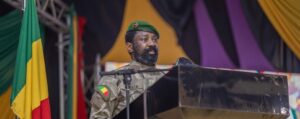
The ascension of Captain Ibrahim Traoré to power in Burkina Faso has positioned him as a prominent figure in the continent’s sovereignist movement. Through aggressive public relations campaigns and a dominant presence on digital platforms, the national authorities are propagating a narrative of imminent economic revitalization, aimed at reshaping both domestic and international perceptions of the country’s trajectory.
This carefully curated discourse has found resonance among influential panafricanist voices and digital campaigners such as Nathalie Yamb, Franklin Nyamsi, and Kemi Seba. These advocates consistently portray Burkina Faso as a pioneering model of autonomous development, emancipated from traditional foreign dependencies. Their online activism reinforces the official storyline, presenting the nation as a beacon of innovative economic sovereignty.
Yet, a growing cohort of economists, analysts, and independent observers questions the substance behind the official claims. They argue that several of the achievements highlighted in state communications are more indicative of a deliberate political narrative than of tangible, measurable economic transformation. This skepticism is not without merit: a number of projects presented as groundbreaking initiatives were, in fact, initiated prior to the current administration, while others remain mere declarations awaiting concrete implementation.
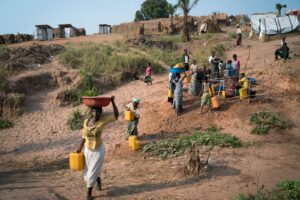
Proponents of the government’s economic vision frequently cite accelerated industrialization, revitalization of domestic production, expansion of processing facilities, and claims of renewed economic sovereignty as evidence of progress. Critics, however, counter these assertions by pointing to persistent insecurity, humanitarian challenges, and deep-rooted social inequalities that continue to undermine the country’s development prospects. They also highlight inconsistencies between official announcements and verifiable outcomes, particularly in sectors such as agriculture, mining, and infrastructure.
A further point of contention lies in the financing mechanisms employed to support the national agenda. In line with the authorities’ patriotic mobilization drive, a 1% levy on the incomes of select professionals and various voluntary contributions have been introduced to fund state priorities. While government supporters view these measures as acts of civic duty in exceptional circumstances, trade unions, civil society organizations, and independent observers demand full transparency regarding the allocation and utilization of these funds. They insist on the publication of detailed financial reports and the conduct of independent audits to ensure accountability and restore public trust in state institutions.
Skeptics also challenge the veracity of several economic assertions circulating on social media and in official communications. Notably, claims that Burkina Faso has voluntarily relinquished over one billion dollars in foreign aid in the name of sovereignty are dismissed as misleading. These critics argue that such statements obscure the continued role of international partners—including Japan, whose development assistance programs in Burkina Faso remain active and substantial—contradicting the narrative of a complete break from external funding sources.
The disparity between the projected image of Burkina Faso as an emergent economic powerhouse and the lived realities of its citizens underscores a broader debate: the fine line between strategic communication, ideological mobilization, and objective evaluation of public policy outcomes. While the government’s narrative seeks to inspire national pride and international admiration, the absence of verifiable economic indicators raises legitimate questions about the sustainability and authenticity of this proclaimed economic miracle.
Ultimately, this discussion invites a critical examination of how political messaging is constructed, disseminated, and perceived—particularly in contexts where economic transformation is as much a matter of perception as it is of measurable progress.