A strategic medical mission to the United States
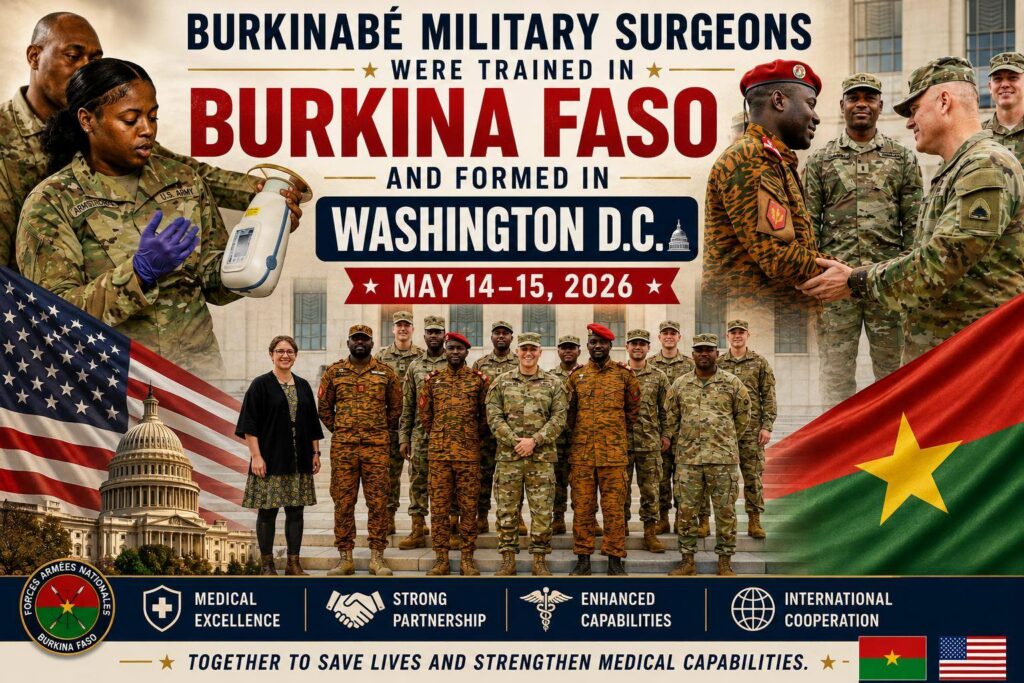
While the political landscape in the Sahel suggests a pivot away from Western influence, practical military requirements are fostering unique international collaborations. In mid-May 2026, a delegation of specialist surgeons from the Burkina Faso Armed Forces traveled to Washington D.C. for a high-level professional exchange. This mission was conducted under the auspices of the State Partnership Program (SPP), a long-standing initiative that pairs the expertise of the United States National Guard with partner nations.
Over the course of two days, medical officers from Burkina Faso worked alongside their American counterparts to refine techniques in battlefield trauma management, war surgery, and emergency response in high-risk environments. For a nation currently navigating a complex and demanding security crisis, this direct transfer of life-saving skills is a critical asset for the survival of personnel deployed on the front lines.
The pragmatism behind the sovereignty rhetoric
This engagement in the United States highlights a fascinating duality within the current geopolitical strategy of the Alliance of Sahel States (AES). While the official stance of the regional bloc—comprising Burkina Faso, Mali, and Niger—often critiques Western involvement in the region, technical cooperation remains very much alive. The presence of senior Burkinabè officers in the heart of the American capital demonstrates that operational necessity often outweighs ideological positioning.
Despite the public discourse emphasizing a break from traditional partners, the maintenance of these technical channels suggests that Burkina Faso is prioritizing the immediate needs of its defense forces. In the high-stakes environment of modern conflict, the ability to provide elite medical care to wounded soldiers is a priority that transcends political messaging.
Why specialized medical training favors traditional partners
Since shifting its strategic focus, Ouagadougou has significantly increased its cooperation with Russia, particularly regarding military hardware, aerial assets, and tactical instruction. However, when it comes to the highly specialized field of combat medicine, the traditional Western model remains the preferred choice. The United States National Guard, through the SPP, offers a framework for military medicine that is globally recognized and extensively documented through decades of field experience.
Furthermore, there is a historical continuity in medical protocols. The training of Burkinabè doctors, the specifications of their equipment, and the existing evacuation procedures are largely aligned with international standards often championed by Western institutions. While Russia provides robust support in terms of hard security and tactical strikes, its current offerings in specialized surgical training are not yet as integrated or accessible for the specific needs of the Burkinabè military medical corps.
Discreet diplomacy and national interest
For the authorities in Burkina Faso, including the leadership under Captain Ibrahim Traoré, these discreet interactions serve as a clear signal that the country is not seeking total isolation. By engaging with the best available resources from different global powers, the government is effectively leveraging diverse partnerships to strengthen its internal capabilities. This approach allows Burkina Faso to maintain its sovereign stance while ensuring its troops benefit from world-class expertise.
Ultimately, the medical exchange in Washington serves as a reminder that the realities of the ground war in the Sahel are governed by pragmatism. In the effort to protect lives on the battlefield, the choice of a training partner is based on clinical excellence and operational compatibility, proving that health diplomacy follows its own set of rules in the broader theater of international relations.