In response to Burkina Faso’s decision to dissolve 118 NGOs and associations, Ousmane Diallo, Senior Researcher on the Sahel at Amnesty International’s West and Central Africa Regional Office, issued a stark warning:
« The alarming erosion of freedom of association cannot be ignored. Burkina Faso’s Constitution explicitly safeguards this right, and no constitutional amendment has ever undermined it. Yet these dissolutions blatantly contradict these protections, while also violating the country’s international obligations under the African Charter on Human and Peoples’ Rights and the International Covenant on Civil and Political Rights, both of which Burkina Faso has ratified.»
Far from isolated, these dissolutions are part of a deliberate strategy to silence civil society through repressive measures, including abusive laws, intimidation, arbitrary detention, and harassment of human rights defenders.
Ousmane Diallo, Senior Researcher on the Sahel at Amnesty International’s West and Central Africa Regional Office
Civil society organisations are vital pillars in upholding human rights and the rule of law. Authorities must immediately reverse these dissolutions and ensure these groups can operate without fear of retaliation. Continuing down this path only deepens concerns about Burkina Faso’s commitment to democratic values and international human rights standards.
« The international community must not remain silent. These actions threaten the very foundations of a free and open society,» Diallo added.
Understanding the broader crackdown on civic space in Burkina Faso
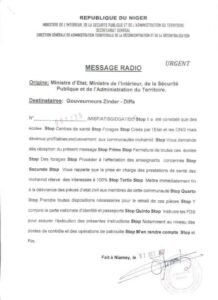
On April 15, 2026, Burkina Faso’s Ministry of Territorial Administration and Decentralisation announced the dissolution of 118 NGOs and associations, citing compliance with existing laws—but provided no further explanation. This follows a pattern of escalating restrictions on civic freedoms.
In January 2026, all political parties were dissolved after being suspended for three years, further narrowing the political landscape.
As early as November 2025, a presidential decree required all national and international NGOs to close their bank accounts with commercial institutions and transfer funds to a newly established state-controlled bank under the Treasury. This move raises serious concerns over potential arbitrary fund freezes, financial surveillance, and targeted sanctions.
Burkina Faso has been under military rule since two coups in January and September 2022. The planned democratic transition, originally set for July 2, 2024, was extended by five years in May 2024, prolonging the military’s grip on power.