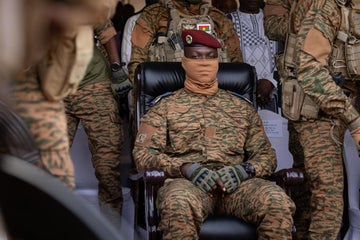
After several years of increasingly cold relations, the military regime in Burkina Faso decided on Friday to sever diplomatic ties with France, accusing Paris of “incessant activism” against its interests.
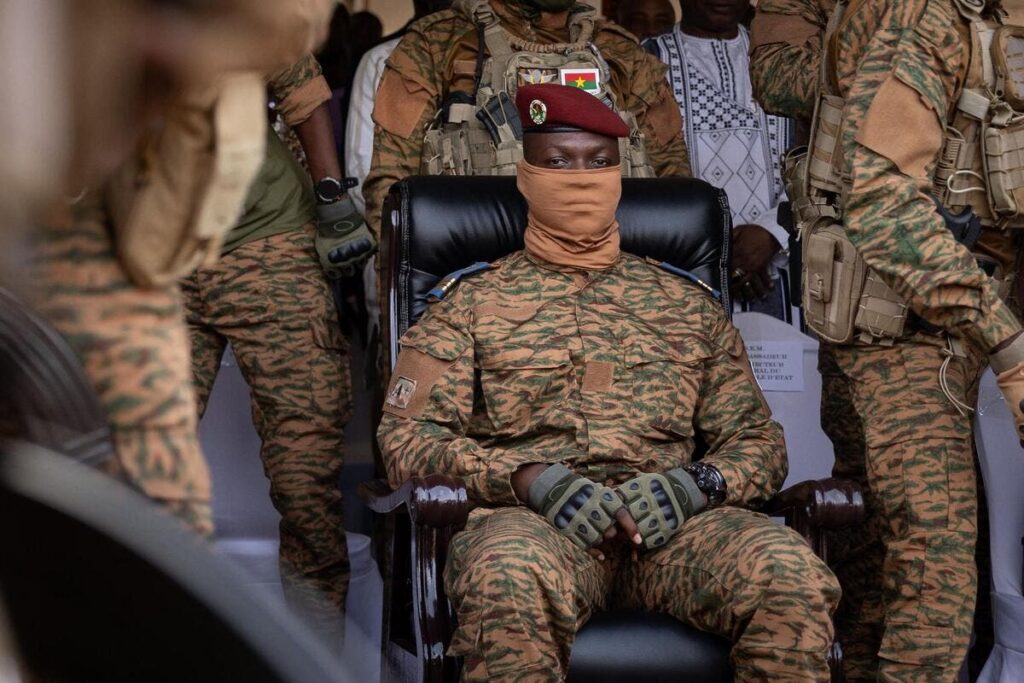
Relations between Ouagadougou and the former colonial power have deteriorated sharply since Captain Ibrahim Traoré seized power in a coup in September 2022.
Since then, the military government has pursued a sovereignist policy, repressing dissenting voices and adopting a hostile stance toward Western nations, especially France.
Ouagadougou denounces “incessant activism”
“The government of Burkina Faso informs national and international public opinion that it has decided to break off its diplomatic relations with the French Republic as of this 26 June 2026,” a statement read on national television announced.
The military junta condemns “the incessant activism of the current regime in France against the interests of Burkina Faso, its openly neo-colonial ambitions, and its active support for subversive networks and the terrorists who bring mourning to (our) country and the Sahel.”
According to the official statement, this decision “only targets the institutional framework of relations between the two states at the diplomatic level.” It “in no way calls into question the historical, human, cultural and social bonds that unite the Burkinabe and French peoples,” the government added, while “reaffirming its commitment to ensure the protection of nationals.”
Paris expresses regret and firmness
France reacted swiftly, saying it “regrets” a decision it called “hostile and unfounded” by the military authorities. This move “illustrates the worrying drift of the Burkinabe authorities,” the French foreign ministry added, stating that “the necessary reciprocal measures are being examined.”
According to the ministry, more than 2,000 French nationals are registered in the consular registry in Burkina Faso, while over 6,000 Burkinabe citizens live on French soil.
The announcement comes as this landlocked Sahelian country has been plagued for a decade by deadly jihadist violence carried out by armed groups linked to Al-Qaeda and the Islamic State.
Earlier this week, the European Union ambassador to Burkina Faso, Philippe Bronchain, had already been summoned to Ouagadougou after the European Parliament passed a critical resolution.
Political clampdown and new allies
As early as 2023, Burkina Faso demanded the recall of the French ambassador, Luc Hallade, denounced the defense agreements, and secured the departure of French army special forces involved in the anti-jihadist fight.
Several French-language media outlets have also been suspended, either temporarily or permanently. In response, France suspended its development aid, budget support, and the issuance of visas for students from Burkina Faso, Mali, and Niger.
These three countries, all led by juntas, left the Economic Community of West African States (ECOWAS) to form the Alliance of Sahel States (AES) confederation and have turned to new military partners, mainly Russia, Turkey, and Iran.
Domestically, Ibrahim Traoré’s junta continues its authoritarian crackdown. Journalists, judges, and civil society activists who are critical of the regime are regularly subjected to abductions or forced conscription to the front lines.
On Thursday, a further tightening of controls was announced: all Burkinabe students wishing to study abroad must now obtain prior approval from their supervising ministry.