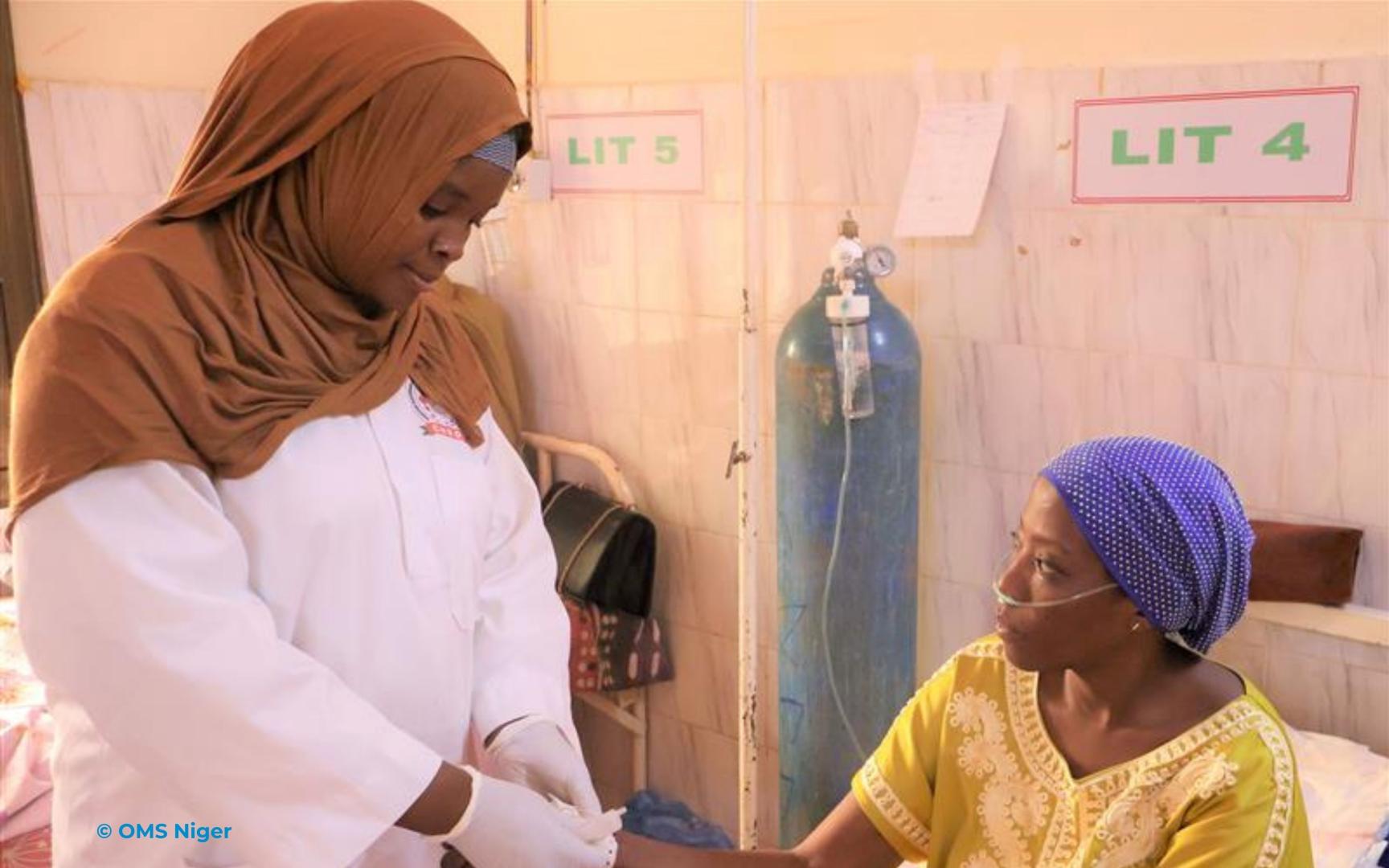
breaking the silence on sickle cell disease in Niger to save lives
What if a straightforward blood test before marriage could fundamentally alter a life’s trajectory?
“Upon taking the helm at the National Reference Center for Sickle Cell Disease (CNRD), a particular story left a profound impression on me: that of a parent, driven by extreme poverty, forced to abandon their child with sickle cell disease at the center, unable to afford the vital medications,” shared Colonel Mariam Boureima Djibo, Director of the CNRD.
This poignant account highlights the silent suffering endured by countless families and underscores the urgent necessity for enhanced medical and social support to prevent such tragic circumstances.
In Niger, thousands of infants are born annually with sickle cell disease, a painful genetic condition that remains largely misunderstood. Yet, this devastating reality is often preventable. Despite the absence of comprehensive national statistics, alarming indicators across various regions have spurred the CNRD to intensify its efforts to reverse this trend. The disease manifests when a child inherits the defective gene from both parents (homozygous SS form). The high prevalence of carriers, many unaware of their status, explains the persistent occurrence of new cases. Consequently, premarital screening and genetic counseling are crucial tools for preventing transmission. The CNRD plays a pivotal role in advocating for these services nationwide, empowering at-risk couples to make informed decisions for their future.
“This experience solidified my conviction that access to healthcare must be a universal right, irrespective of financial standing. It has guided our actions toward tangible solutions, including advocating for the free provision of certain medications, strengthening social assistance, and establishing support mechanisms for vulnerable families,” the director elaborated.
Among the significant initiatives, a pilot neonatal screening program was launched at the Issaka Gazobi Maternity Hospital. This program has successfully identified affected newborns early, paving the way for prompt and appropriate care.
As Dr. Marie Ousseini, a pediatrician involved in the project, emphasized: “Detecting sickle cell disease in the first days of life offers these children a genuine opportunity to live better, longer, and with reduced suffering.”
This early detection strategy is an integral part of a broader prevention approach, which also encompasses community awareness campaigns, training for medical professionals, and psychosocial support for families. Additional measures undertaken include regular medical monitoring, medication subsidies, therapeutic education, psychological counseling, and collaboration with patient associations.
Under the leadership of Dr. Mariam, the CNRD has achieved remarkable progress. These advancements include the establishment of an intensive care unit, the recruitment of specialized personnel (psychologist, epidemiologist, resuscitation specialist), the acquisition of cutting-edge equipment, heightened awareness efforts, and free screening for over 2,000 young individuals in 2024.
Upcoming projects feature the expansion of premarital screening across all regions, improvements to the health information system, enhanced psychosocial support, the integration of sickle cell disease into national policies, the construction of a new center in Niamey, and the rotating organization of World Sickle Cell Day events.
Sickle cell disease is not an insurmountable fate. Concrete and accessible solutions exist, provided that all social stakeholders actively participate. The fight against this condition hinges on several critical levers: preventive screening for young people before marriage, parents educating their children, community sensitization by local leaders, and the commitment of policymakers to implement inclusive and sustainable health policies.
The World Health Organization (WHO) stands as a vital partner to the CNRD. On World Sickle Cell Day, observed on June 19, 2024, WHO generously donated a significant consignment of medications and medical consumables to the center. This contribution, widely praised by beneficiaries and health authorities, has substantially bolstered patient care. Ms. Asmaou Salifou, a mother of eight with three children affected by sickle cell disease, expressed her deep gratitude for this life-saving assistance.
Beyond this material support, WHO is committed to strengthening the CNRD’s capabilities. During an official visit on January 28, 2025, the interim WHO Representative in Niger, Dr. Casimir Manengu, commended the center’s existence and proposed its decentralization: “This center, specifically dedicated to the reception and management of sickle cell disease, deserves to be decentralized to reach all those in need across the national territory.”
According to Dr. Batouré Oumarou, WHO also intends to support the mobilization of technical and financial partners, conduct advocacy actions on behalf of the CNRD, and facilitate scientific studies to inform better decision-making. These prospective support initiatives reflect WHO Niger’s unwavering dedication to sustainably reinforce the fight against sickle cell disease within the country.