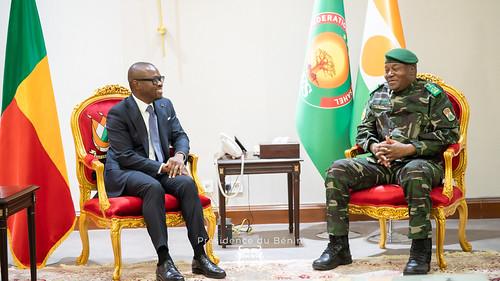
Cotonou hosts pivotal meeting to mend fractured ties with Niger
The tarmac of Cotonou International Airport buzzed with diplomatic energy this week as a high-level Nigerien delegation landed under full protocol, signaling the resumption of critical bilateral talks. Far from a mere ceremonial exchange, this encounter represents a tangible breakthrough in restoring dialogue between two West African neighbors whose relationship had reached a breaking point.
The meeting follows a historic summit in Niamey where the leaders of both nations acknowledged the need to move past their differences. Behind closed doors, teams of technical experts, career diplomats, and military officials from both sides spent two intense weeks refining their positions, addressing mutual grievances, and laying the groundwork for today’s discussions. The overarching goal is clear: forging a lasting agreement to reopen the closed border that has choked both economies since the political upheaval in Niger’s capital.
Observers describe the atmosphere in Cotonou as a blend of gravity and constructive momentum. The weight of expectations from populations and business communities on both sides of the border looms large over negotiators, who appear determined to shift away from hostile rhetoric toward pragmatic solutions.
Economic stranglehold drives urgency for resolution
The prolonged closure has taken a severe toll on both nations, revealing just how deeply their economies are intertwined. For landlocked Niger, the disruption to trade through Cotonou’s port—a lifeline for imports and exports—has triggered a cascading crisis. Transport costs have skyrocketed as supply chains reroute through distant, often treacherous corridors, pushing consumer prices in Niamey to unsustainable levels. Inflation, already exacerbated by international sanctions, has eroded purchasing power and strained households across the country.
On the Bénin side, the economic fallout is equally devastating. The Cotonou-Niamey corridor is the backbone of the country’s trade network, generating substantial customs revenue and supporting thousands of jobs. The sudden halt in cross-border traffic has crippled port activity, disrupted logistics firms, and plunged informal workers—from street vendors to truck drivers—into financial ruin. What began as a political standoff has metastasized into a humanitarian and economic emergency for millions.
Security concerns remain the ultimate hurdle
While economic desperation pushes negotiators toward compromise, security imperatives continue to cast a long shadow over the talks. The Nigerien transitional authorities have made it clear: no economic concession will come at the expense of national security. Their concerns center on two critical fronts: the Niger River, a natural border prone to infiltration, and the porous land frontier vulnerable to incursions by armed groups active in the Sahel.
To address these fears, the Bénin delegation is proposing robust joint surveillance mechanisms, including real-time intelligence-sharing protocols. The challenge is monumental: crafting a border management model that is both impermeable to asymmetric threats and traffics while ensuring seamless legitimate trade. Success hinges on balancing sovereignty with the economic survival of communities on both sides.
A cautiously optimistic path forward
This crisis has exposed the fallacy of assuming that ideological posturing could override geopolitical and geographic realities. The sanctions imposed after Niger’s regime change may have triggered the rupture, but the prolonged closure proved that neither nation could thrive in isolation. Yet a return to the pre-crisis status quo is unlikely. Any agreement will likely be underpinned by heightened vigilance, stricter controls, and lingering mistrust—but it will also reflect a hard-won recognition that cooperation remains indispensable.
Beyond the bilateral relationship, the outcome of these negotiations carries weighty implications for regional stability. The Cotonou-Niamey axis is a linchpin of West African economic integration, and its resolution will serve as a litmus test for the region’s ability to prioritize collective prosperity over political divisions. As weary populations await tangible action, the question remains: will these talks translate into swift, concrete relief, or will lingering doubts continue to stall progress?