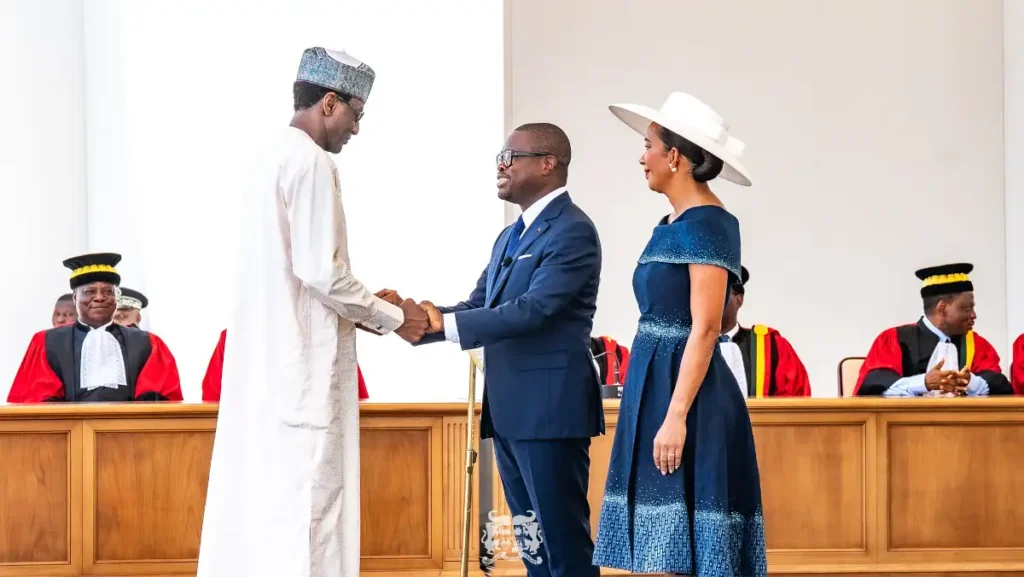
Cotonou witnessed a landmark moment on May 24, 2026, as the nation gathered for the official swearing-in of President Romuald Wadagni. Beyond the ceremonial aspect, the event’s guest list sent a powerful signal about the potential for internal reconciliation. Political rivals, former heads of state, and representatives from neighboring West African nations joined the inauguration, suggesting a possible turning point in Benin’s political landscape.
Among the most notable attendees were former Presidents Nicéphore Soglo and Boni Yayi, whose presence underscored a commitment to institutional stability. Though once vocal critics of the previous administration, their attendance—particularly Soglo’s, who had actively campaigned against Wadagni—sent a clear message of reconciliation. The sight of these figures sharing the stage with the new president marked a stark departure from years of political confrontation.
The event also highlighted symbolic exchanges between political figures from opposing camps, sparking immediate debate. While protocol played a role, the broader significance lay in the message of unity it conveyed. This gathering came after years of escalating tensions, fueled by disputes over institutional reforms, election conditions, and partisan system changes. The opposition’s participation in the ceremony reflected a willingness to prioritize dialogue over conflict, signaling a potential shift toward normalization in Benin’s political climate.
Political analysts suggest President Wadagni inherits a vastly different context from his predecessor, Patrice Talon, who took office in 2016. A respected technocrat and former Minister of Economy and Finance, Wadagni’s background in economic governance and administrative reform has fostered a more consensus-driven perception, even among critics of the outgoing administration.
Regional diplomacy takes center stage
The inauguration drew strong diplomatic representation from across West Africa, including delegations from the Alliance of Sahel States (AES)—Niger, Burkina Faso, and Mali—as well as Nigeria and Togo. This show of regional support was no coincidence. It followed a period of strained relations between Benin and its Sahelian neighbors, amid broader security challenges and political transitions in the region.
Benin’s northern regions have faced growing security threats, making cooperation with neighboring states essential. The attendance of AES representatives at the ceremony signaled a potential thaw in diplomatic relations, emphasizing the need for collective security efforts. While internal political fractures remain, Benin’s perceived stability in a volatile region was further reinforced by this display of regional trust.
From symbolism to lasting change
Despite the optimism surrounding the event, analysts caution that reconciliation cannot rely solely on symbolic gestures. President Wadagni faces the dual challenge of maintaining economic progress while rebuilding trust between institutions, opposition groups, and civil society. The inauguration succeeded in reuniting long-divided political actors, but the true test lies in translating this moment into sustained dialogue and reform.
In a West Africa grappling with institutional crises and democratic backsliding, Benin’s unity around its presidential transition stands out as a rare positive signal. Whether this marks the beginning of a new era of political healing remains to be seen—but the foundation has been laid.