The first Poultry Expo Salon opened in Cotonou with the Béninese government setting a clear goal: produce 100,000 tonnes of poultry products by 2033. With a structural deficit of 80,000 tonnes filled by massive imports, the stakes go beyond food security—they are deeply macroeconomic. This analysis unpacks a national strategy that aims to turn capital outflow into an engine of local growth.
On Thursday, 25 June 2026, the Palais des Congrès in Cotonou transformed into a command centre for economic recovery. By launching the inaugural Poultry Expo Salon, Béninese authorities did more than open a trade fair—they laid the first cornerstone of a major productive overhaul.
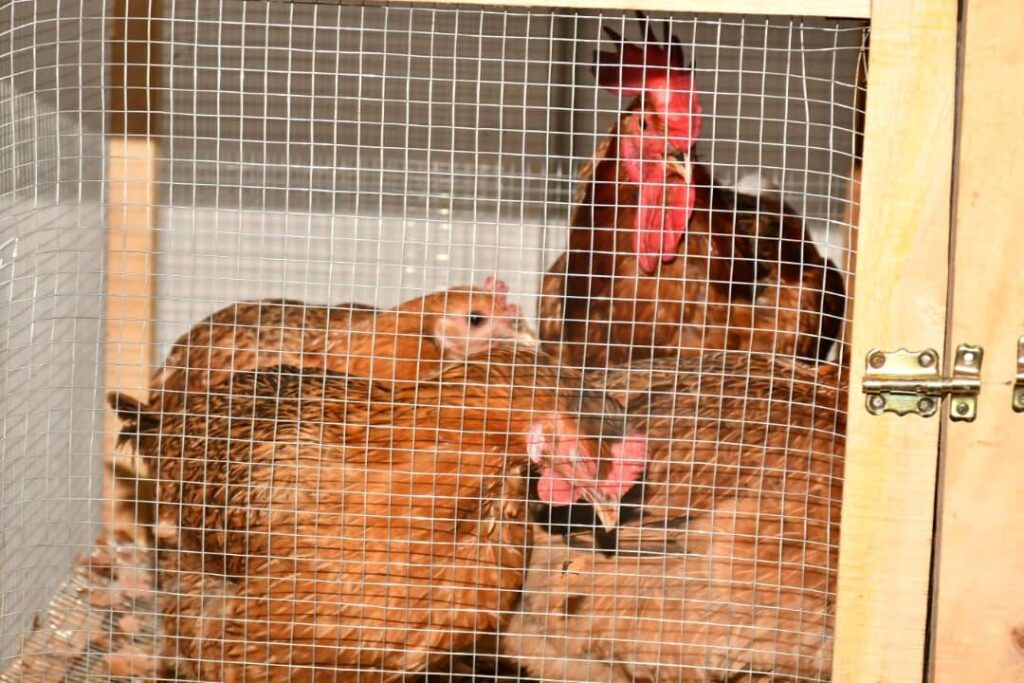
The initial diagnosis, shared by all stakeholders in the sector, comes down to two staggering figures: 100,000 and 20,000. Each year, Béninese consumers consume at least 100,000 tonnes of poultry meat and eggs. Local producers, however, manage only 20,000 tonnes. That gap of 80,000 tonnes is not merely a logistical problem—it is a financial haemorrhage.
Financial stakes: stemming an unsustainable foreign exchange drain
For Bénin, importing four-fifths of its poultry consumption means injecting billions of CFA francs annually into foreign economic circuits. In an era of volatile global commodity prices and strained supply chains, this dependency represents a macroeconomic vulnerability that the state now aims to eliminate.
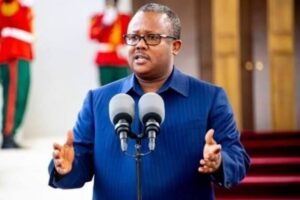
Speaking on behalf of President Romuald Wadagni, the Minister of Agriculture, Livestock and Fisheries, Adin Yeton Bloukounon Goubalan, was direct in his opening address. The flagship objective is to retain these capital flows within the national territory. By relocating production, the government seeks not only to feed the population but also to restructure the country’s trade balance. Every tonne of chicken produced in Bénin is a victory against foreign exchange leakage and a direct investment in the local industrial fabric.
Horizon 2033: pillars of the “Green Bénin” plan
This poultry offensive is part of a long-term roadmap: the Bénin Vert 2033 vision. The programme elevates “protein sovereignty” to a national security imperative. To reverse the trend in less than a decade, the executive knows it cannot act alone.
The strategy relies on vertical integration of the sector, embodied by a large-scale alliance. The state will play the role of facilitator and regulator, but success will depend on the commitment of private investors and financial institutions, often hesitant to fund agriculture.
The minister emphasised a comprehensive approach: “The future of our poultry industry depends on our collective capacity to produce more, process more, and create more value on our territory.”
Beyond the macro-financial balances, the expected return on investment is social. Developing hatcheries, feed mills, and modern processing centres is seen as a massive employment generator, targeting primarily young people and women—the pillars of rural and peri-urban economies.
A united sector rallying around the interprofessional body
The success of this Marshall Plan for Béninese poultry largely hinges on alignment among field actors. That is precisely the purpose of this salon, initiated by the Interprofession Avicole du Bénin (IAB). For the first time, the entire value chain gathered in one space: producers, feed manufacturers, veterinarians, distributors, and researchers.
For Léon Anago, president of the interprofessional body, this salon must serve as a catalyst. The goal is to transform previously scattered initiatives into a structured sector capable of reassuring banks and attracting capital. The challenge is to prove that Béninese poultry farming is no longer a subsistence activity but a highly profitable market and a major lever for economic growth.
The Cotonou-Rabat axis: leveraging expertise transfer
To accelerate this technical and commercial upgrade, Bénin is relying on South-South partnerships, starting with Morocco. The Interprofessional Federation of the Poultry Sector of Morocco (FISA) provided crucial technical and logistical support for organising the event.
The presence in Cotonou of Ahmed El Bouari, Morocco’s Minister of Agriculture, Maritime Fisheries, Rural Development and Water and Forests, underscores the political importance of this axis. Morocco, which successfully modernised its own poultry sector in recent decades, positions itself as a key strategic partner.
Addressing the Béninese professionals, the Moroccan minister praised the structural reforms undertaken by Cotonou. In his view, this cooperation goes beyond diplomatic relations—it lays the foundation for shared prosperity and broader food sovereignty across the African continent.
Towards a new model of African resilience
At the close of the first working sessions, one observation stood out: the battle Bénin is waging for protein self-sufficiency reflects a continental challenge. By seeking to produce what it consumes, the country attempts to escape the traps of import dependency.
The challenge is immense, and the countdown to 2033 has begun. To go from 20,000 to 100,000 tonnes, the Béninese sector will need to multiply its output fivefold in seven years. This ambitious quantitative and qualitative leap, if successful, will demonstrate that rigorous agricultural policy management can become the best macroeconomic shield for a developing nation.