Direct Diplomacy: Benin steers Africa’s security agenda in New York
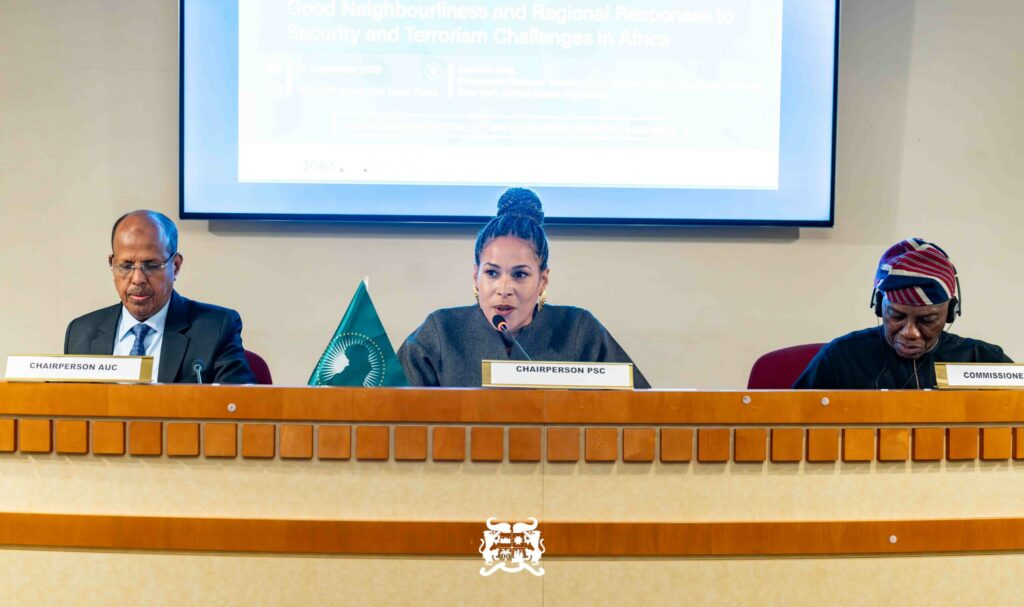
During the high-stakes 81st session of the United Nations General Assembly, Benin led a landmark meeting in New York on September 23, 2026, shaping Africa’s approach to regional security through a bold emphasis on cross-border cooperation. The 1369th ministerial session of the African Union Peace and Security Council (PSC)—chaired by Benin’s Minister of Foreign Affairs, Corinne Amori Brunet—brought together African leaders, regional bodies, and international partners to address the urgent threats of terrorism and insecurity that transcend national borders.
The session, themed “Neighborly Relations and Regional Responses to Security and Terrorism Challenges in Africa,” underscored a pivotal shift: security is not confined within borders but is strengthened through tangible collaboration between neighboring states. This approach reflects Benin’s diplomatic vision, championed by President Romuald Wadagni, which prioritizes dialogue, regional stability, and grassroots engagement as foundational pillars of foreign policy.
Borders as bridges, not barriers: a regional security blueprint
Minister Brunet opened the discussions by framing borders not just as lines of sovereignty, but as vital corridors of life for millions of Africans—spaces for trade, family ties, and cultural exchange. When insecurity takes root, its ripple effects devastate communities on both sides of a frontier. The Beninese strategy counters this by advocating for four core measures:
- State presence: Ensuring that government institutions operate effectively up to and across border areas, providing essential services and security.
- Real-time intelligence sharing: Streamlining the flow of critical security information between neighboring countries to preempt threats before they escalate.
- Joint security and judicial collaboration: Harmonizing law enforcement and legal frameworks to dismantle criminal networks operating across multiple jurisdictions.
- Sustaining legitimate cross-border exchange: Protecting the economic and social ties that bind communities while cutting off illicit flows that fuel instability.
These actions are not theoretical—they are practical steps designed to respond to the realities on the ground, where crises respect no political maps. The Benin-led PSC session challenged participants to move beyond creating new bureaucratic structures and instead optimize existing mechanisms to fit the terrain.
Women at the heart of borderland security
A key outcome of the meeting was the renewed focus on the role of women living in border zones, particularly their unique position to detect early warning signs of tension and prevent conflicts. Their deep ties to local communities offer unmatched insight—whether identifying illegal movements, mediating disputes, or shaping peace initiatives. This emphasis builds on Benin’s earlier commitment, demonstrated at the high-level Swakopmund Women, Peace and Security Ministerial Seminar in Cotonou (September 9–10, 2026), which highlighted women’s critical contributions to peacebuilding.
The New York session extended this momentum, positioning women not as passive beneficiaries of security policies, but as active architects of stability in their regions. By integrating their perspectives, the PSC reaffirmed that sustainable peace begins with inclusive, locally grounded solutions.
Diplomacy in action: turning strategy into results
The Benin presidency of the PSC did not operate in isolation. It followed a series of strategic engagements, including:
- Crisis prevention: Emphasizing early intervention and de-escalation to avoid full-blown conflicts.
- Ground-level realities: Ensuring policies reflect the lived experiences of border communities, not just diplomatic abstractions.
- Enhanced regional partnerships: Strengthening ties with neighboring countries to build a unified, resilient security architecture.
The diplomatic momentum continued on September 28, 2026, when Minister Brunet addressed the UN General Assembly, further solidifying Benin’s role as a regional leader in redefining how Africa addresses security challenges.
What this means for Africa’s future
Benin’s presidency of the AU PSC in New York marks a turning point: it asserts that Africa’s security future is not found in isolation, but in solidarity. By prioritizing neighborly relations, investing in grassroots actors like women, and operationalizing cooperation at the border level, the continent can build defenses that are both robust and responsive to its people’s needs. This is not a call for new institutions—it is a demand for renewed action, practical partnerships, and a shared commitment to securing the continent from the ground up.