Bamako demolition leaves hundreds of displaced families homeless in Faladiè
In Mali, bulldozers leveled the livestock market on the outskirts of Bamako this past Sunday. This operation is the culmination of a policy enacted in September 2024, following attacks by the Jnim jihadist group against the gendarmerie school and other strategic military locations in the capital. Mali authorities ordered the relocation of several livestock markets, suspecting they served as hideouts for insurgents.
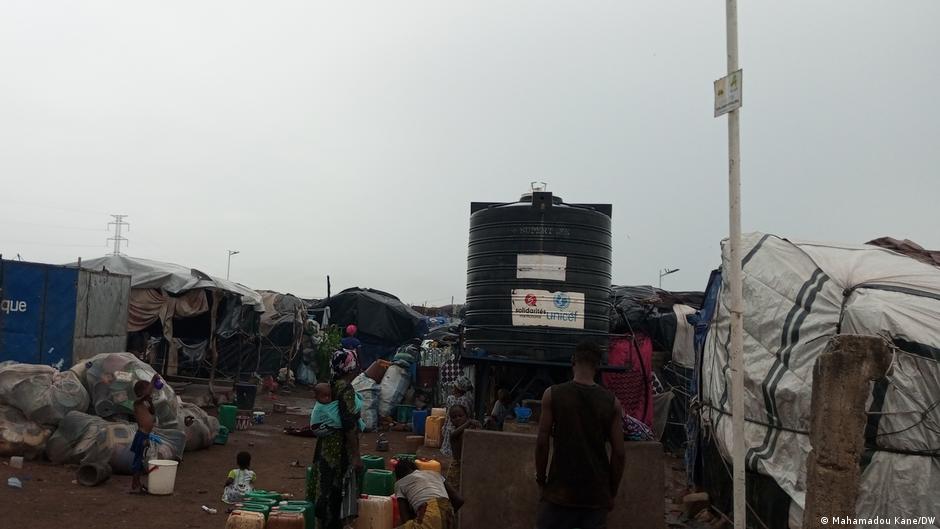
However, the market, known as the Faladiè garbal, also functioned as a camp for internally displaced persons, many of whom arrived from the central regions of the country. This sudden demolition has cast hundreds of families into the streets with no immediate aid.
“It has been six years since we fled our village,” says Dado, a mother in her forties from the Bankass circle in central Mali, who escaped the violence in 2020.
“We believed we were safe here”
“There are seven of us in total: my mother, my two daughters, and my three sons. The conflict forced us to seek refuge in the capital. We always felt that Bamako offered us safety,” Dado explains.
Beyond Dado‘s family, approximately 300 other households residing in the Faladiè camp have been rendered homeless. Over 2,000 people, mostly women and children, are now abandoned in a ruined landscape, facing critical shortages of food and medical supplies.
The move to Sanankoroba deemed impractical
Official plans dictate that those displaced from the Faladiè garbal should be relocated to Sanankoroba, situated 35 kilometers from Bamako. While the state claims to have prepared a site there, several livestock traders have described the location as “non-functional.”
Now, Dado‘s only hope is to find a new place to shelter her family.
“We are being told to leave, and we accept that. We have no other choice. But we are pleading with the authorities to provide us with a proper relocation site,” Dado urges.
“We came here because we were terrified of the war. Before the eviction, we earned a living by collecting waste and food scraps to sell to livestock owners. Today, we have nothing: no water, no food. But the most pressing need is a roof. For someone with nowhere to go, finding shelter is the first priority,” another displaced person explained.
The informal camp at the Faladiè garbal was established in 2019 and had previously received support from both international humanitarian groups and Mali authorities. When contacted, the National Directorate for Social Development stated it was still “too early” to comment on the unfolding crisis.