The remains of the senior officer reportedly remained abandoned aboard a drifting patrol boat for over 24 hours following the incident.
Niamey, April 9, 2026
Captain Maman Ada Sahabi, who commanded the Say gendarmerie group, was tragically killed on the afternoon of Wednesday, April 8, alongside at least two of his men. They were caught in a deadly ambush orchestrated by elements of Jama’at Nasr al-Islam wal-Muslimin (JNIM) on the Niger River. More than a full day after this brutal assault, the vessel carrying the senior officer’s body continued to drift, with authorities reportedly unable to organize its recovery.
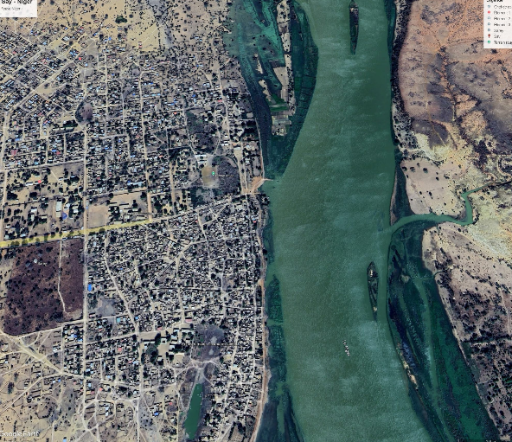
Local security sources indicate that Captain Sahabi was on board a patrol boat with four gendarmes, conducting an intelligence verification mission. This operation coincided with Say’s weekly market day. Around 5 PM, the vessel came under intense gunfire from the riverbanks in a highly volatile area spanning the Tillabéri/Dosso regions.
At least three gendarmes, including the captain, were killed instantly during the attack. The officer’s body remained on the boat, while the bodies of two other soldiers fell into the river and were swept away by the strong current. As of the time of reporting, the patrol craft continued its uncontrolled drift, with security forces in the area hesitant to approach due to fears of improvised explosive devices (IEDs) or a potential secondary ambush.
An experienced officer and a local pillar of security
Captain Maman Ada Sahabi, in his forties, had led the Say gendarmerie group for more than five years. He was widely regarded as a crucial component of the security apparatus within this strategically vital border zone, having been long dedicated to combating the armed terrorist groups (GAT) active across the Liptako-Gourma region.
His death occurs amid a troubling escalation of attacks targeting both riverine and land patrols in the Tillabéri region, a historical hotbed for JNIM and the Islamic State in the Sahel (EIGS).
Outrage over the handling of the fallen
Beyond the immediate tragedy of the ambush, the apparent abandonment of this senior officer’s body for over 24 hours has sparked widespread shock and concern. A lack of clear directives from higher command reportedly prevented any recovery operation from being launched. This situation has proven deeply unsettling for both frontline personnel and the local communities of Say.
“How can one allow their commander’s body to just drift on the river like that? It shows a complete disrespect for those who put their lives on the line,” a security force member shared anonymously.
For many, this incident has become emblematic of a perceived hesitant leadership, seemingly unable to promptly honor its fallen. Critics suggest this practice has become increasingly common since the coup d’état of July 26, 2023.
In transitional niger, what is the value of frontline soldiers’ lives?
This event reignites critical discussions about the perceived value of the sacrifices made by the Defense and Security Forces (FDS) in the ongoing counter-terrorism fight under the current military regime, led by General Abdourahamane Tiani.
Despite regular official statements touting successful operations and “neutralized terrorists,” high-risk zones like Tillabéri, Tahoua, and Dosso continue to experience consistent losses. The persistent nature of riverine ambushes underscores the adaptability of jihadist groups, who expertly exploit porous borders and the mobility offered by the Niger River.
Families of soldiers killed in action, survivors, and residents of the most exposed areas are voicing growing frustration. On one hand, there is the state’s sovereignist rhetoric, and on the other, the stark reality on the ground marked by chronic insecurity and, at times, chaotic operational management.