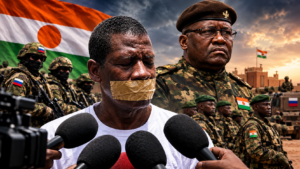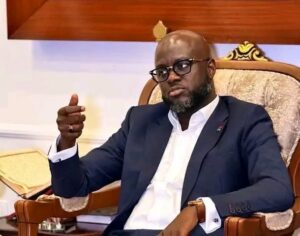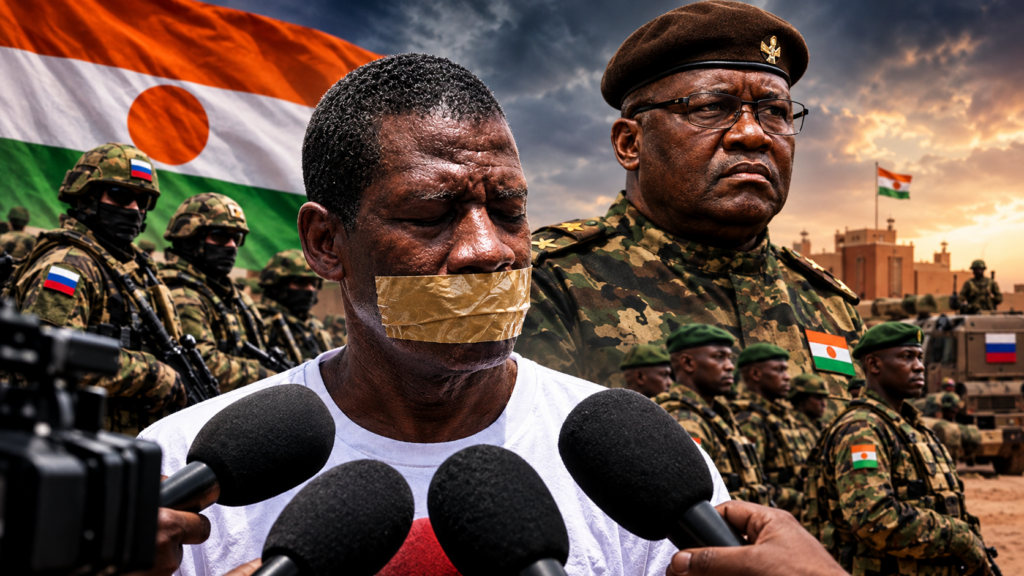
After over a month of uncertainty surrounding the fate of renowned journalist Moussa Kaka, Niger’s authorities have finally confirmed one crucial detail: he is alive and being held in custody. This long-overdue revelation, disclosed on October 6 by the country’s justice minister, still leaves gaping questions unanswered.
The statement provided no clarity on the location of his detention, the specific charges against him, or the legal justification for holding him incommunicado. The absence of these details has intensified concerns among international press freedom organizations, which have called for full transparency regarding Kaka’s circumstances.
Moussa Kaka is no ordinary journalist. A seasoned professional with a distinguished career as a former correspondent for Radio France Internationale (RFI) and as the former director-general of Radio Télévision Saraounia, his work has made him a prominent voice in Niger’s media landscape. His disappearance had already drawn sharp criticism from global press freedom bodies, including the International Federation of Journalists, the International Federation for Human Rights (FIDH), and the World Organisation Against Torture (OMCT), all of which demanded immediate clarification.
What does Moussa Kaka know? The unspoken stakes of his detention
The most pressing question now revolves around the nature of the information to which Kaka had access and whether his detention is connected to sensitive disclosures about the state of the nation. While no official evidence has been presented to substantiate this claim, the timing raises legitimate concerns.
Niger continues to grapple with a volatile security environment, despite government assertions of control. Deadly attacks persist across vast regions of the country, and internal military tensions have surfaced publicly. Reports of soldiers protesting poor equipment and living conditions particularly among frontline units highlight the fragility of the state’s security narrative. In August, a mutiny in Niamey underscored these divisions, further complicating the junta’s claim of restored stability.
The growing influence of foreign actors in Niger’s security apparatus
Another factor complicating the situation is the expanding role of Russia’s Africa Corps within Niger’s security framework. Officially integrated under the Russian Ministry of Defense, this contingent has been actively involved in the country’s security operations, including during the August mutiny. Multiple reports indicate that Russian forces provided critical support to loyalist troops, raising questions about their broader objectives.
Analysts suggest that while the Africa Corps is nominally tasked with counterterrorism efforts, its presence may also serve to bolster the junta’s hold on power. This dual role security assistance versus internal stabilization has fueled speculation about whether Russian involvement prioritizes regime protection over national defense. Observers point to recent military acquisitions made by Niamey, which appear to have been directed primarily toward equipping foreign-aligned units rather than addressing the needs of Nigerien soldiers who continue to face daily casualties.
A test of transparency: can the junta justify its actions?
The detention of Moussa Kaka is no longer an isolated incident. It reflects deeper tensions within Niger’s political and military landscape a crisis of credibility, accountability, and public trust. While the confirmation of his survival is a necessary first step, it falls far short of the transparency Niger’s leadership claims to uphold.
The junta has repeatedly pledged to restore sovereignty, security, and openness. Yet the case of Moussa Kaka a journalist missing for over a month exposes a glaring contradiction. Without clear explanations regarding the grounds for his detention, the narrative of stability rings hollow. The world is watching to see whether Niger’s authorities will uphold their commitments to justice, freedom of the press, and the rule of law or whether they will continue to shroud critical realities in silence.
By Georges Essomba — Journaliste / Rédacteur