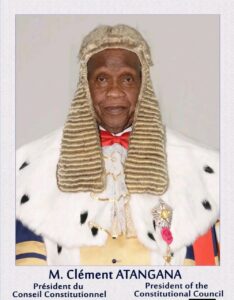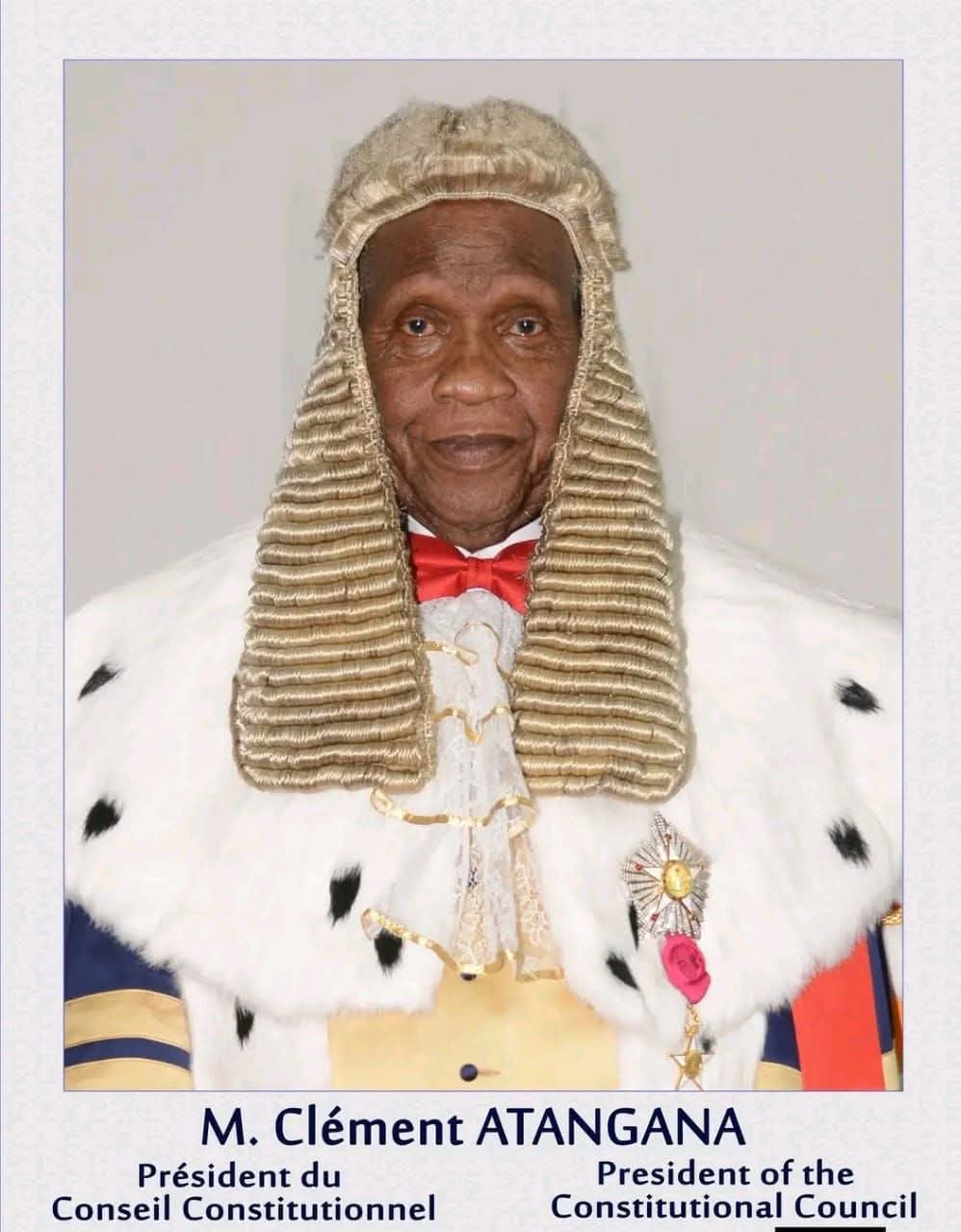
The death of Clément Atangana, the long-serving president of Cameroon’s Constitutional Council, is not merely a story about one man. It is a story about what happens to a country when the institution meant to referee its most consequential political fights runs out of referees — and the public has already lost faith in the game. Atangana died in Paris, where he had been evacuated for medical treatment. He was 85.
Why this loss lands differently for citizens and businesses
For the average Cameroonian, the Constitutional Council is not an abstract institution. It is the body that receives — and, in most cases, dismisses — petitions about presidential election results. Under Atangana’s leadership, that dismissal became so routine that his name and the word “inadmissible” became inseparable in public discourse. That reputation has consequences far beyond politics. When citizens and business owners believe that electoral grievances disappear without a hearing, they also begin to doubt whether other state institutions will treat them fairly. The death of the Council’s president therefore raises a practical question: who will restore public confidence in a body whose credibility was already stretched thin?
The ‘inadmissible’ era and its long shadow
Atangana was born in Ngomedzap, in the Nyong and So’o division, and rose to the rank of magistrate outside the standard hierarchy. He spent the final chapter of his career — and of his life — at the centre of controversy. Appointed to lead the Constitutional Council, he often appeared less like a neutral umpire and more like a participant in the political contests he was supposed to resolve.
The clearest example came during the disputed 2018 presidential election. Under his direction, the Council issued the same verdict — “inadmissible” — to every challenge it received. The public response was swift and blunt: the institution became known as “Inadmissible,” and it has since been widely viewed as subservient to the ruling party and the presidency.
Moments that shaped public distrust
The perception of bias was reinforced by several episodes that circulated widely and stayed in the public memory:
- A video shared after the 2018 results were announced appeared to show Atangana celebrating with his family, describing the incumbent as “your candidate” to those around him.
- In 2025, he took part in a meeting of the Nyong and So’o development committee that produced a motion supporting Paul Biya and calling on him to run again.
- A reporter from a state-run newspaper covered the event, and the story fuelled widespread debate and criticism.
- Atangana insisted he had attended a meeting of a non-political association and had not taken part in the session that produced the support motion — but for many opposition supporters, the damage had already been done.
What this means for electoral justice going forward
The practical stakes are significant. Cameroon is approaching a new electoral cycle, and the Council’s role in validating results will once again be scrutinised. If the next president is seen as an extension of the same political arrangement, public trust — already fragile — could erode further. That, in turn, affects the broader environment in which citizens vote, businesses operate and political actors negotiate. A referee whose impartiality is questioned does not just lose authority inside the stadium; the effects ripple outward.
The bigger picture: institutions, trust and the road ahead
Atangana’s death closes a chapter, but it does not close the debate. The question now is whether Cameroon’s leadership will use this moment to rebuild confidence in the Constitutional Council — or whether the institution will continue to be seen as an instrument of the executive. For ordinary citizens, the answer matters far beyond the walls of the Council. It determines whether their votes, their petitions and their grievances are treated as legitimate claims or as formalities to be waved away.