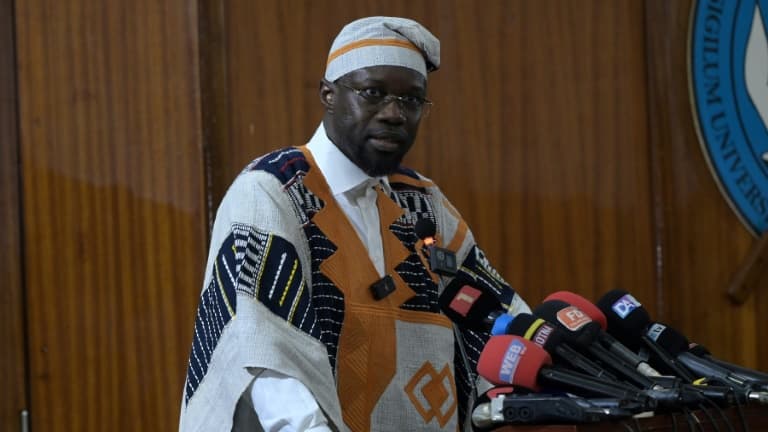
Dakar — The Senegalese Prime Minister has strongly criticized what he describes as Western coercion attempting to force LGBTQ+ acceptance on nations worldwide, including Senegal. Speaking before lawmakers on May 22, Ousmane Sonko condemned the growing homosexuality promotion agenda from Western countries, particularly France, framing it as an ideological imposition rather than a human rights issue.
This stance comes as Senegal enforces a recently amended law that doubles penalties for same-sex relationships, increasing prison sentences to between five and ten years. The legislation, passed in March and signed by President Bassirou Diomaye Faye on March 31, reflects growing concerns over what authorities call the proliferation of homosexuality in the predominantly Muslim West African nation.
The law’s passage has coincided with a surge in anti-LGBTQ+ sentiment and a series of arrests related to alleged homosexual conduct. Critics, including international human rights groups, have decried the measure as regressive, while the Senegalese government remains resolute in its enforcement.
No leniency on the horizon: Sonko dismisses calls for a moratorium
Addressing lawmakers, Prime Minister Sonko dismissed recent calls from a group of thirty African-origin intellectuals—published in a French newspaper—for a temporary halt to the law’s application. The petition cited concerns over a climate of fear and violence following the legislation’s adoption, but Sonko rejected the idea outright.
“There will be no moratorium. Some of our elites suffer from inferiority complexes,” he declared. He further argued that Western nations, despite internal debates on LGBTQ+ rights, wield disproportionate influence through media control, attempting to impose their values globally. “If they have chosen these practices, that is their concern. We do not need their lessons,” he asserted.
Sonko emphasized that the law’s objective is to curb the spread of homosexuality and called for its strict, impartial enforcement. “If the law needs to be strengthened, it will be,” he warned, underscoring the government’s commitment to upholding traditional values.
Political and social tensions rise alongside legal crackdown
Same-sex relations have long been stigmatized in Senegal, where they are widely viewed as a deviation from cultural and religious norms. The government’s hardening stance aligns with campaign promises that resonate strongly with its voter base. However, the new law has intensified debates over human rights, freedom of expression, and Senegal’s international image.
As arrests under the amended legislation continue, the government stands firm against external criticism, framing the issue as one of national sovereignty rather than discrimination. The Prime Minister’s remarks signal a defiant posture, rejecting foreign interference in domestic affairs.