Senegal’s budget showdown enters a high-stakes phase
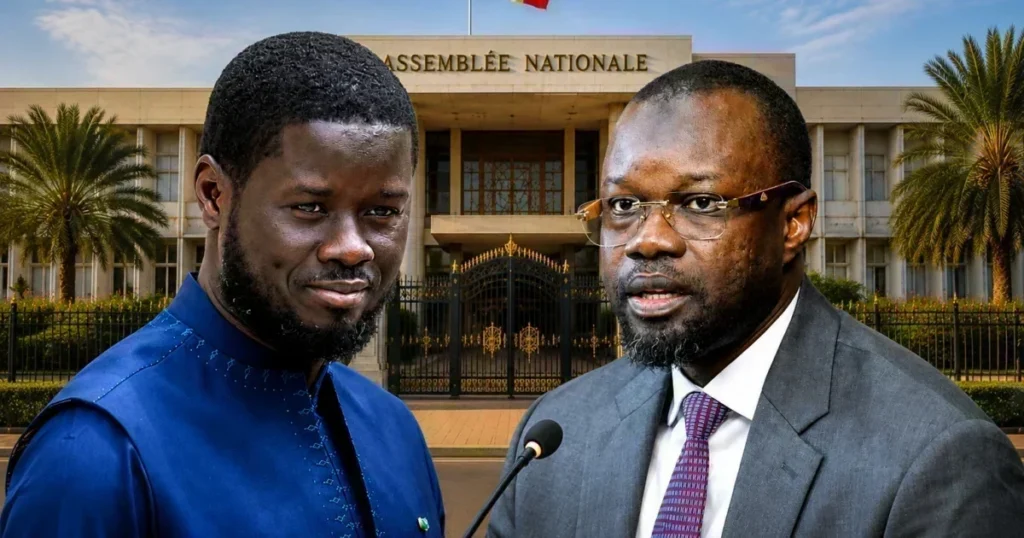
The 2026 rectified finance bill has become the first major battleground in Senegal’s evolving political landscape. With Ousmane Sonko now leading the National Assembly as its president, he wields significant constitutional tools that could reshape—or even derail—Bassirou Diomaye Faye’s budget plans. The stakes couldn’t be higher: the outcome will determine whether Senegal secures IMF approval and navigates its economic pressures.
The three ways Sonko can block or rewrite the budget
Sonko’s party, Pastef, holds 130 of the 165 seats in the Assembly, giving it decisive voting power. Under Senegal’s Constitution, the Assembly alone holds sway over finance laws. This means Pastef could outright reject the bill in a plenary vote. While a direct rejection would clearly signal opposition, it would also place the responsibility for potentially derailing public finances squarely on Sonko’s shoulders—especially as the government finalizes IMF negotiations.
Constitutionally, Sonko’s hands are strengthened by Article 60, which stipulates that any deputy leaving their party automatically loses their seat. This clause ensures strict party discipline, making defections within Pastef nearly impossible. But the Assembly’s toolkit doesn’t end there. Article 82 restricts budget amendments, but allows deputies to cut spending or increase revenue. This means Sonko’s bloc could slash government allocations, particularly those tied to fiscal commitments with the IMF, without outright rejecting the bill. Yet, the government has a counter-move: Article 82 also lets the executive demand a single vote on sections of the bill, forcing deputies to approve or reject the text in its entirety.
The clock is ticking on Sonko’s influence
As Assembly President, Sonko controls the legislative agenda, but Article 84 limits his ability to delay the bill indefinitely. The Constitution sets a 60-day deadline for approving finance laws. The rectified budget, submitted on September 18, 2026, must be approved by mid-November. Missing this deadline would allow the President to enact the budget by decree, incorporating approved amendments. If Sonko drags his feet, Diomaye Faye could push the bill through without parliamentary backing.
There’s a catch, though. The Constitution doesn’t specify whether a decree can be used after an outright rejection. This legal ambiguity could prompt a referral to the Constitutional Council, which can be triggered by as few as one-tenth of deputies. The government holds another card: Article 86 allows the Prime Minister to stake their government’s survival on the budget’s passage. If invoked, the bill is considered approved unless a no-confidence motion, backed by an absolute majority, is passed within 24 hours. With Pastef controlling 83 seats, they could both sink the budget and topple the government—a high-risk move given the looming dissolution deadline.
December 2, 2026: the dissolution trigger
Article 87 of Senegal’s Constitution permits the President to dissolve the Assembly after consulting the Prime Minister and Assembly President. However, early dissolution is barred during the first two years of a legislative term. Since the current Assembly was seated on December 2, 2024, it’s shielded from dissolution until December 2, 2026. Any prolonged budget deadlock could give Diomaye Faye grounds to justify a dissolution, while smooth approval would strip him of this leverage.
The timeline is tight. The 60-day deadline expires just days before the President gains the power to dissolve the Assembly. A prolonged impasse would not only risk public finances but could also escalate into a full-blown political crisis. Sonko, therefore, faces a critical choice: use his constitutional weapons to reshape the budget or risk handing Diomaye Faye a powerful political tool. The coming weeks will test the limits of Senegal’s new cohabitation between the presidency and the legislature.