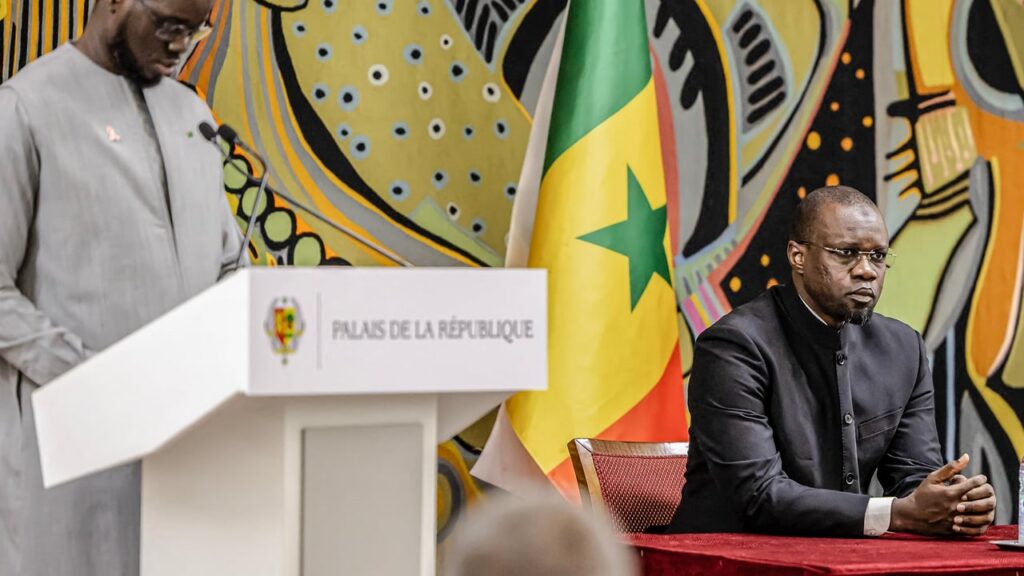

Since taking office, President Bassirou Diomaye Faye has made no secret of his ambition to reshape Senegal’s institutional framework. During a press briefing on National Day last year, he made his position crystal clear: «I want strong CEOs, strong ministers, a super-strong Prime Minister. I refuse to be the kind of president who hoards all the power.» His remarks came just days before the government announced plans for sweeping constitutional reforms—a move that analysts now suggest could significantly bolster the political prospects of opposition leader Ousmane Sonko.
Why the proposed changes could reshape Senegal’s political landscape
The constitutional overhaul under discussion aims to redistribute executive authority more evenly across state institutions. While the president has framed these reforms as a commitment to decentralization and institutional balance, critics argue they may inadvertently tilt the scales in favor of Sonko, whose Pastef party has long advocated for a more balanced separation of powers.
Key provisions being considered include:
- Limiting presidential mandates: A cap on the number of consecutive terms could restrict future presidents’ ability to consolidate power indefinitely, a concern raised during the country’s political crisis of recent years.
- Strengthening parliamentary oversight: Proposals to enhance the National Assembly’s investigative and legislative powers could provide opposition figures like Sonko with greater platforms to challenge government policies.
- Redefining the role of the Prime Minister: By granting the head of government more autonomy, the reforms might dilute the president’s direct control over cabinet decisions—a shift that could dilute Sonko’s marginalization in political decision-making.
Ousmane Sonko: from opposition figure to potential kingmaker
Sonko’s rise from a vocal critic of the previous administration to a central player in Senegal’s political arena has been meteoric. His party, Pastef, emerged as the second-largest force in the 2022 legislative elections, signaling a groundswell of support for his vision of accountable governance. The constitutional reforms, if enacted, could further empower him by:
- Enhancing legislative influence: A more assertive parliament would give Sonko greater leverage to shape laws and hold the executive branch accountable.
- Facilitating coalition-building: By reducing the president’s dominance, opposition blocs—including Pastef—could negotiate more effectively to advance their agendas.
- Encouraging grassroots engagement: Proposals to decentralize certain government functions to regional authorities could align with Sonko’s long-standing calls for greater local autonomy.
The risks and rewards of institutional change
While the reforms promise to modernize Senegal’s governance model, they are not without controversy. Supporters praise the move as a step toward democratization, while skeptics warn it could create a power vacuum or destabilize the delicate balance between branches of government. Sonko, for his part, has cautiously welcomed the proposals—though he insists they must go further to address systemic inequalities in political representation.
What remains clear is that Bassirou Diomaye Faye’s administration is betting big on institutional reform as the cornerstone of its legacy. Whether this strategy ultimately strengthens or undermines his political agenda—and, by extension, Ousmane Sonko’s influence—will depend on how these changes are implemented in practice.