Senegal aims to quadruple palm oil production with Indonesian partnership
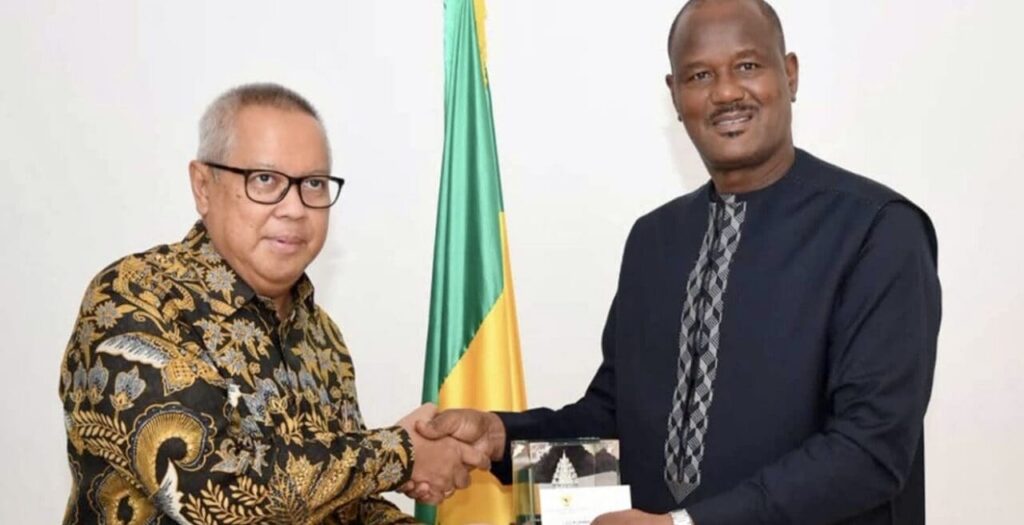
Dakar has taken a decisive step to transform its stagnant palm oil industry by announcing a landmark partnership with Indonesia, the world’s top palm oil producer. The agreement, finalized during a closed-door meeting in Dakar on September 11, outlines plans to develop 60,000 hectares of oil palm plantations across central and southern Senegal—more than five times the current cultivated area of just 12,000 hectares.
The initiative, disclosed by Senegalese agricultural authorities, includes the establishment of a joint technical working group to oversee implementation. While specific timelines and financial arrangements remain undisclosed, the government has framed this as a cornerstone of its food sovereignty strategy to reduce costly imports.
Decade of stagnation leaves Senegal heavily reliant on imports
Senegal’s palm oil sector has suffered from chronic underinvestment, with oil palm cultivation remaining frozen at around 11,800 hectares between 2015 and 2024. This has kept industrial production capped at approximately 14,000 tons annually—a tiny fraction of domestic consumption.
The resulting shortfall has forced Senegal to import an average of 148,100 tons of palm oil annually over the past decade, peaking at 195,937 tons in 2017. The financial burden has been steep, with import costs reaching up to $172 million in 2020 alone. By boosting local production through Indonesian expertise, officials aim to significantly reduce this dependency on foreign supplies.
Indonesia emerges as Senegal’s strategic partner in palm oil revolution
The choice of Indonesia as a partner is strategic. The Southeast Asian nation dominates global palm oil production, with output projected to reach 46.7 million tons for the 2025/2026 season. Its leadership extends from advanced genetic selection and plantation management to efficient industrial processing—areas where Senegal’s industry has lagged.
Beyond expanding acreage, Dakar seeks to leverage Indonesian know-how through technology transfer and workforce training programs. The goal is not merely to increase production but to build a sustainable, high-efficiency value chain that can meet both domestic and regional demand.
African peers pave the way with similar Indonesia collaborations
Senegal is not the first African nation to explore this model. Tanzania signed a cooperation agreement with Indonesia’s Palm Oil Association (GAPKI) in 2025, focusing on technical training and capacity building. Nigeria, Africa’s leading palm oil producer, also forged a 2024 pact with GAPKI to enhance local productivity through shared knowledge and technology adoption.
The success of Senegal’s initiative will hinge on its ability to replicate and adapt these strategies effectively, turning potential into tangible economic and agricultural progress.