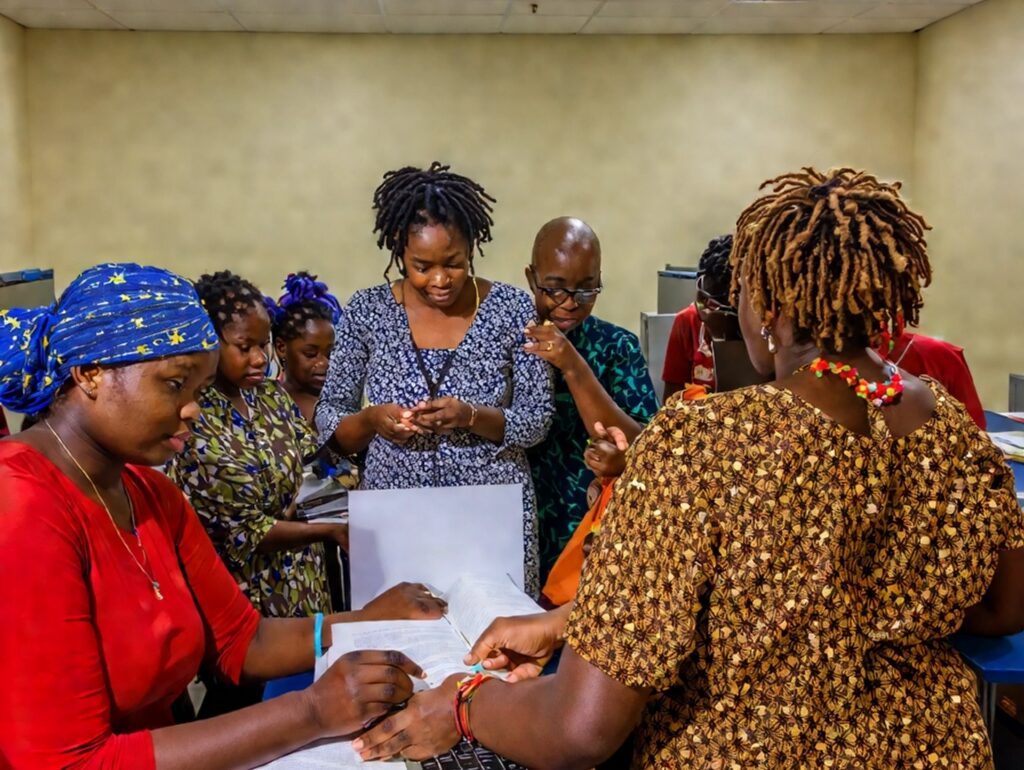
The Réseau des femmes leaders pour le développement (RFLD) made a compelling case in Dakar for urgent action to boost women’s presence in political and institutional leadership positions across Senegal. Speaking at a high-level seminar on women’s political participation, RFLD President Bator Seck emphasized that true democracy cannot take root without full inclusion of women at every level of governance.
« A democracy remains incomplete as long as women continue to be sidelined in decision-making spaces, » declared Seck. « Senegal’s future cannot be built without women—it must be built with them. » The event, organized by the RFLD, drew attention to persistent structural barriers that continue to limit women’s access to political power, despite the country’s progressive legal framework.
The RFLD, a pan-African feminist network active in Senegal, Ghana, Gambia, and Bénin, champions legislative advocacy, community organizing, and grassroots initiatives. Its work extends to defending women’s rights, sexual and reproductive health, civic space protection, and climate justice—all areas where women’s leadership is vital.
a gap between progress and reality
While Senegal is widely recognized as a regional leader in gender equality—thanks to the 2010 parity law, the 2001 Constitution enshrining gender equality, and ratification of key international human rights treaties—Seck pointed out a troubling gap between policy and practice. She highlighted the results of the November 2024 legislative elections, which saw women’s representation in the National Assembly drop from 44.2% to 41%. Even more concerning, only 13% of electoral list heads were women.
She further criticized the limited presence of women in local governance: just 18 out of 558 municipalities are led by women, and only three women preside over the country’s 43 departmental councils. « These figures reveal deep-rooted obstacles—cultural, structural, and financial—that persist in blocking women’s access to power, » she stated.
the indispensable role of women in Senegal’s development
Despite these challenges, Seck acknowledged the vital contributions of Senegalese women to national progress. « Women are the backbone of our economy, education systems, social movements, and peacebuilding efforts, » she noted. Their roles are central to sustainable development, social stability, and good governance.
Echoing this sentiment, Mama Diouf Fall, a senior official from the Ministry of Family, Social Action, and Solidarity, stressed that women’s political participation is not just a right—it is a strategic driver for inclusive growth and resilient institutions. Similarly, Fatoumata Guèye Ndiaye, honorary president of the Senegalese Women Lawyers Association, called for urgent reforms to the parity law, advocating for greater female representation in executive roles and party leadership.