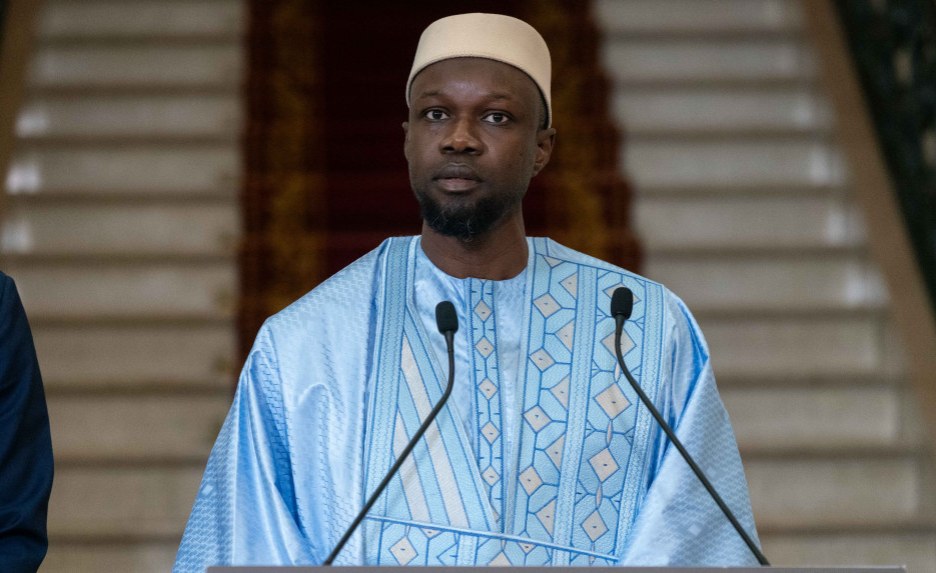
An unprecedented political upheaval has shaken Senegal and the wider West African region. On Friday, May 22, 2026, President Bassirou Diomaye Faye officially terminated the mandate of his Prime Minister and political mentor, Ousmane Sonko. This sweeping decision dissolved the entire government and abruptly ended the dual executive leadership that had steered the nation since the historic political shift of April 2024.
Presidential decree 2026-1128: the legal instrument of separation
The seismic announcement was formalized through a landmark presidential decree signed on the same day. Decree number 2026-1128 invoked constitutional provisions—specifically articles 42, 43, 53, and 56 of the Senegalese Constitution—to legally terminate Ousmane Sonko’s role as head of government. The decree’s first article explicitly states: « The functions of Mr. Ousmane Sonko, Prime Minister of the Republic of Senegal, are hereby terminated. »
Under the second article, the dismissal took immediate effect. In accordance with constitutional succession, all ministers and secretaries of state automatically resigned upon the Prime Minister’s departure. However, the outgoing cabinet was instructed to manage day-to-day affairs until a new government is appointed.
From prison cells to the presidential palace: the unbreakable bond of a political duo
To grasp the magnitude of this rupture, one must revisit the extraordinary alliance that once defined these two leaders. Ousmane Sonko, a charismatic figure and leader of the PASTEF party, had waged a relentless opposition campaign against the previous administration. After facing legal persecution and being barred from the 2024 presidential race by the Constitutional Council, Sonko made a strategic pivot that would reshape Senegalese politics forever.
While both were imprisoned during a wave of political arrests, Sonko designated his trusted ally and general secretary, Bassirou Diomaye Faye, as the substitute candidate for his systemic change platform. The slogan « Diomaye, c’est Sonko » became a rallying cry, channeling popular momentum toward the substitute candidate. Following their release under an amnesty law shortly before the election, the two men launched a lightning-fast campaign, propelling Bassirou Diomaye Faye to a first-round victory on March 24, 2024.
Upon his inauguration on April 2, 2024, President Faye appointed Ousmane Sonko as Prime Minister via decree 2024-921. This marked an historic moment in African governance: a mentor becoming the institutional subordinate of his protégé, creating an unprecedented bicameral leadership structure.
From harmony to friction: the unraveling of a unique partnership
For months, the perfect symbiosis between the two leaders was publicly showcased. Yet beneath the surface, the realities of governance exposed growing divergences. Sonko, a staunch sovereignist and fiery orator, consistently voiced bold positions on international affairs, mining contracts, and relations with traditional partners. Meanwhile, President Faye faced the pragmatic demands of macroeconomic stability, regional diplomacy, and financial market reassurances.
The first visible fractures emerged during the September 6, 2025 government reshuffle, formalized by decree 2025-430. Rather than easing tensions, the restructuring laid bare internal power struggles between Sonko’s inner circle and the technocrats promoted by the President—particularly over key ministerial portfolios. The underlying tension highlighted a delicate balance: a Head of State with constitutional legitimacy but an opposition leader with deep-rooted popular support, creating a fragile equilibrium that ultimately questioned where true authority lay in the Republic.
Senegal at a crossroads: what lies ahead?
This dismissal ushers Senegal into uncharted political waters. By reclaiming full control of the state apparatus, President Bassirou Diomaye Faye has severed the moral tutelage of his former mentor and now assumes the full weight of his presidential mandate. The critical question now is: how will Ousmane Sonko respond?
Will he adopt a conciliatory stance, fade into the background, or return to a confrontational opposition, drawing on his still-robust electoral base? The composition of the new government, expected imminently, will offer vital clues about the direction President Faye intends to chart for the remainder of his term.