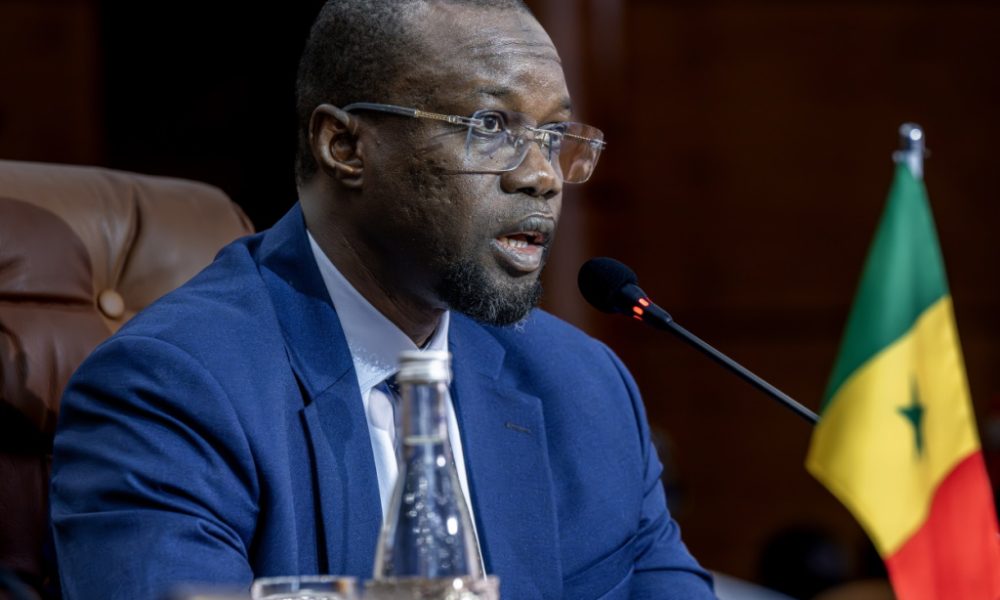
President Bassirou Diomaye Faye of Senegal announced Friday evening the dismissal of Prime Minister Ousmane Sonko, his former ally and one of the most influential political figures in the country. The decision, delivered via a televised statement by presidential secretary-general Oumar Samba Ba, marks the culmination of months of escalating friction between the two leaders who rose to power together in April 2024 under a wave of popular hope.
The president declared he had “terminated the functions of Mr. Ousmane Sonko as Prime Minister, and consequently those of the ministers and state secretaries serving in the government.” The outgoing officials have been tasked with managing only the most urgent matters until a successor is named.
No timeline was provided for the appointment of a new prime minister, leaving the political landscape in Senegal in a state of uncertainty.
a strained partnership
Since assuming office, President Faye had repeatedly warned against the “excessive personalization” of power within the ruling party. In a recent televised interview, he stated: “As long as he remains Prime Minister, it is because he enjoys my trust. When that trust is no longer present, there will be a new Prime Minister.”
The rift between the two leaders deepened as Sonko’s influence grew, particularly within the Pastef party, which secured a landslide victory in the November 2024 legislative elections. The party now holds a dominant majority in the National Assembly, further amplifying Sonko’s political standing.
Ousmane Sonko, a vocal opponent of former President Macky Sall (2012–2024), had been barred from running in the 2024 presidential election due to a defamation conviction that stripped him of his civil rights. He subsequently backed Bassirou Diomaye Faye as his replacement in the race. The pair campaigned under the slogan “Diomaye Moy Sonko”—”Diomaye is Sonko” in Wolof—a rallying cry that galvanized Senegal’s disillusioned youth.
After years of political turmoil, including violent repression of protests against Sall’s potential third-term bid, both leaders were released from prison under an amnesty law aimed at easing tensions. Their partnership promised a new era for the country, though recent events suggest fractures in their alliance.
public reaction and political fallout
Sonko took to social media almost immediately after the announcement, posting: “Alhamdoulillah. Tonight, I will sleep with a light heart in Keur Gorgui,” referring to his residence in Dakar. Supporters flooded the neighborhood, cheering his dismissal in spontaneous celebrations witnessed by journalists.
Earlier that day, Sonko had criticized what he described as Western “tyranny” attempting to impose homosexuality on the world, just weeks after Senegal’s parliament passed a law toughening penalties for same-sex relations in the predominantly Muslim nation.
The timing of the dismissal raises questions about the future direction of Senegal’s government, particularly as the country prepares for local elections in 2027 and the presidential vote in 2029. Sonko’s party has already pushed through electoral reforms allowing him to run in the next election, a move critics argue was designed to benefit him specifically.
The government now faces the dual challenge of addressing an economic crisis—with public debt exceeding 132% of GDP, according to the International Monetary Fund—and managing the fallout from this political upheaval. The new administration inherits a precarious financial situation, compounded by accusations that the previous government concealed the true state of the economy, leading to the suspension of a $1.8 billion IMF aid program in 2024.
The dismissal underscores the volatile nature of Senegal’s political scene, where alliances forged in opposition can quickly unravel once in power.