Sénégal spearheads transformative shift in African Francophonie at Dakar summit
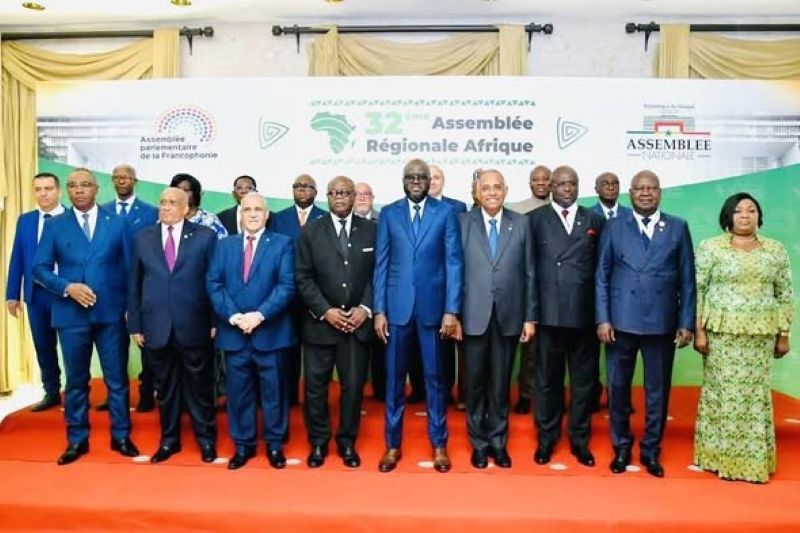
Dakar, May 19, 2026 – A high-stakes gathering reshaped the future of African Francophonie. The 32nd Regional Assembly of the Francophonie Parliamentary Assembly transformed Senegal’s capital into a strategic hub where African legislators redefined continental priorities, security imperatives and diplomatic ambitions.
Over three intensive days, 200 parliamentarians, assembly presidents and institutional representatives from nearly 30 African nations converged in Dakar. Beyond protocol and diplomatic niceties, this was a working laboratory for an African Francophonie demanding greater sovereignty, stronger institutions and a decisive voice in global affairs.
The timing couldn’t have been more critical. As geopolitical fault lines deepen—Sahel security crises, Middle East tensions and great power rivalries—the Dakar deliberations transcended routine parliamentary exchanges. The central question became stark: What strategic role should Francophone Africa play in the 21st century?
The assembly’s chosen theme—“Parliamentary Francophonie Facing Sustainable Development and Democracy Challenges in Africa”—served as the springboard for broader discussions on continental governance, institutional modernization and Africa’s place in a rapidly evolving world order.
El Malick Ndiaye’s sovereignty manifesto
The most electrifying moment came when Senegal’s National Assembly President, El Malick Ndiaye, delivered a politically charged address. His call for “asserted African sovereignty” crystallized a new political doctrine—one that rejects a Francophonie reduced to cultural or linguistic space and demands instead a strategic cooperation framework.
Ndiaye’s vision positions Senegal at the forefront of an Africa seeking autonomy in security decisions, economic policies and diplomatic positioning. Highlighting Sahel crises, external pressures and global upheavals, he urged African parliaments to evolve into central actors shaping continental responses. His advocacy for a more “offensive parliamentary diplomacy”—prioritizing human security, extractive industry taxation, administrative cooperation and democratic oversight—resonated deeply across delegations.
This marks a fundamental shift: African Francophonie is no longer content to participate in global debates—it now seeks to dictate their terms.
Gabon’s diplomatic repositioning gains visibility
The Gabonese delegation, led by National Assembly President Michel Régis Onanga M. Ndiaye, made waves in Dakar. Their presence signaled Libreville’s strategic pivot—part of a broader diplomatic reconstruction aimed at consolidating Gabon’s profile on the African and international stage.
Gabonese officials pushed for comprehensive reforms to the Francophonie Parliamentary Assembly, arguing for adaptations to Africa’s evolving expectations. This stance aligns with wider debates on institutional modernization and the Francophonie’s capacity to address contemporary challenges. Dakar thus became a platform for Gabon to project itself as an active voice in governance, democracy and sustainable development discussions—evolving from traditional diplomatic posturing to strategic influence competition.
A Francophonie at a crossroads
The Dakar debates exposed an existential crisis within institutional Francophonie. Many African leaders argue that structures inherited from previous decades no longer match today’s geopolitical realities. Rising sovereignist claims, democratic aspirations, persistent security threats and economic pressures have transformed stakeholder expectations.
A new consensus is emerging: Francophonie must evolve from a linguistic solidarity space into a strategic cooperation framework prioritizing security, economic development, regional integration and institutional stability. This paradigm shift reflects a generational change among Francophone African political elites—one demanding institutions capable of defending African interests in an increasingly competitive global landscape.
Dakar as the epicenter of continental transformation
By hosting the 32nd Regional Assembly, Sénégal cemented its role as a powerhouse of Africa’s new diplomatic order. The country is positioning itself at the intersection of institutional stability, sovereign assertion and regional leadership—particularly after the historic 2024 political transition.
The choice of Dakar as host wasn’t coincidental. It comes amid a wave of African nations reassessing their relationships with former colonial powers. Beyond official resolutions, this summit symbolized a Francophone Africa in strategic transition—strengthening institutions, securing interests and asserting an independent voice in global power dynamics.
The African Parliamentary Francophonie has entered a new phase where sovereignty, democratic governance and political power define the agenda. In Dakar, parliamentarians didn’t merely debate Francophonie’s future—they began redrawing the map of Africa’s ambitions for the 21st century.