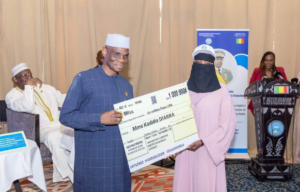
The Senegalese government has entered a new phase following the official handover of duties from outgoing Prime Minister Ousmane Sonko to his successor, Ahmadou Aminou Lo, in a meticulously organized ceremony in Dakar. The transition, closely monitored by political leaders and business communities, was framed as a commitment to maintaining the republic’s continuity under the leadership of President Bassirou Diomaye Faye.
Smooth handover designed to ease concerns
The transfer of leadership was marked by careful planning. Both leaders emphasized the importance of preserving ongoing initiatives and the momentum of reforms initiated since the Faye-Sonko administration took office in March 2024. For the incoming Prime Minister, Ahmadou Aminou Lo, the challenge lies in navigating a complex governmental structure where fiscal, social, and economic decisions will shape the credibility of the executive branch.
Ousmane Sonko, a prominent figure within the Pastef party, departs from the Prime Ministry but remains a key player in the political landscape. The handover served as an opportunity to reaffirm the cohesion of the presidential team and dispel rumors of internal tensions. The measured tone of the event contrasted sharply with the more contentious periods witnessed in Senegal’s recent political history.
Ahmadou Aminou Lo: the technocrat at the helm
The new Prime Minister inherits a packed agenda, including administrative reforms, implementation of the Senegal 2050 vision, renegotiation of mining and oil contracts, and engagement with international donors. His background as a seasoned economist and institutional expert is seen as a strategic signal to the country’s financial partners.
The presidential roadmap prioritizes economic sovereignty, local processing of natural resources, and tighter control over public spending. Balancing the demands of a youthful and impatient population with fiscal discipline will be one of the new leader’s most pressing challenges. The International Monetary Fund, whose ongoing discussions with Senegal remain under close watch, will be looking for clear signals of coherence from the new administration.
Public continuity, behind-the-scenes shifts
While the handover presented a unified front, it also signaled a subtle political realignment. By stepping back from day-to-day governance, Ousmane Sonko is positioning himself to strengthen the party’s internal structure and prepare for future electoral challenges. Observers interpret this move as an effort to clearly delineate the roles between governing the state and leading the Pastef, avoiding any overlap.
This strategic repositioning coincides with the presidential majority’s push to make its mark on public policy. Long-awaited initiatives in digital sovereignty, endogenous financing, and fiscal reform now await concrete implementation. The appointment of Ahmadou Aminou Lo, framed as a choice rooted in administrative rigor, will need to quickly translate into tangible decisions, particularly in energy and infrastructure sectors.
Diplomatically, the change at the Prime Ministry is not expected to alter Senegal’s foreign policy stance. Dakar continues to prioritize diversifying its partnerships, reinforcing historical ties while exploring new opportunities within BRICS and Gulf nations. Diplomatic observers present at the ceremony commended the orderly transition, viewing it as a sign of stability in a West African region plagued by institutional instability.
The coming weeks will reveal whether the new Prime Minister can assert his leadership style without disrupting the delicate balance of power. The collaboration between a prominent political figure now stepping back and a technocrat assuming the premiership presents a delicate test. The first cabinet meetings and budget announcements will be closely scrutinized for clues about the administration’s direction.