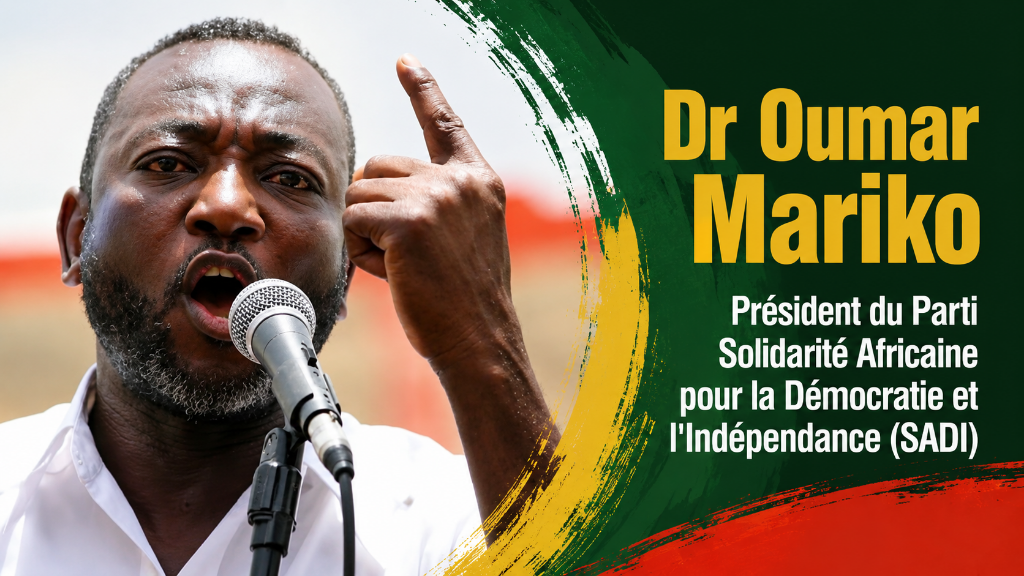
The political climate in Mali has grown increasingly tense, with authorities intensifying their suppression of dissent. On May 30, the residence of Dr. Oumar Mariko, a prominent opposition figure currently living in exile, was subjected to a thorough search by heavily armed, masked individuals in Bamako.
The operation, which unfolded over nearly three hours, concluded with the confiscation of numerous documents. This incident occurs against a backdrop of escalating repression by the transitional government, which has intensified following recent battlefield losses in the northern regions to rebel and terrorist factions.
A night of intimidation and forced entry
The tranquility of the upscale neighborhood housing the leader of the Solidarité Africaine pour la Démocratie et l’Indépendance (SADI) party was shattered in the early hours of May 30. A squad of masked gunmen stormed the premises, breaching the main door to access locked rooms. Though no physical harm came to the occupants, the psychological impact was severe. The assailants conducted a meticulous search before seizing a trove of personal and administrative documents. For those close to Dr. Mariko, the message was unmistakable: an attempt to silence a persistent critic, even from abroad.
Military setbacks fuel paranoia in Bamako
This raid is not an isolated incident but rather a symptom of growing unease within the military junta. On May 25, a coordinated offensive by the Forces Libérées de l’Azawad (FLA) and the Jama’at Nusrat al-Islam wal Muslimin (JNIM) dealt a crushing blow to government forces. Strategic villages and the symbolic city of Kidal were lost, shattering the official narrative of a fully regained territory. With the military strategy in tatters, the transitional authorities appear increasingly paranoid, perceiving internal betrayals behind every setback.
A systematic crackdown on dissent
To divert attention from military failures and consolidate power, the transitional regime has launched a sweeping crackdown on dissent. The repression now extends beyond traditional opposition figures to include civil society activists, journalists, and even ordinary citizens who voice criticism. Reports indicate a surge in arbitrary detentions, often carried out by plainclothes operatives, followed by secret imprisonments. The raid on Dr. Mariko’s home exemplifies this strategy of intimidation, aiming to crush any form of opposition—whether domestic or abroad.
Mali at a critical crossroads
The search of Dr. Oumar Mariko’s residence underscores the authoritarian drift plaguing Mali. By resorting to systematic repression and targeting opponents to compensate for territorial losses, the authorities in Bamako are distancing themselves further from the national dialogue essential for stability. As security tightens and public frustration mounts over economic hardships, the strategy of fear is proving ineffective. The nation’s priority should not be silencing dissenting voices in Bamako but uniting to confront the existential threats looming over its future.