From the Ukrainian frontlines to Burkina Faso’s classrooms: a fighter’s warning
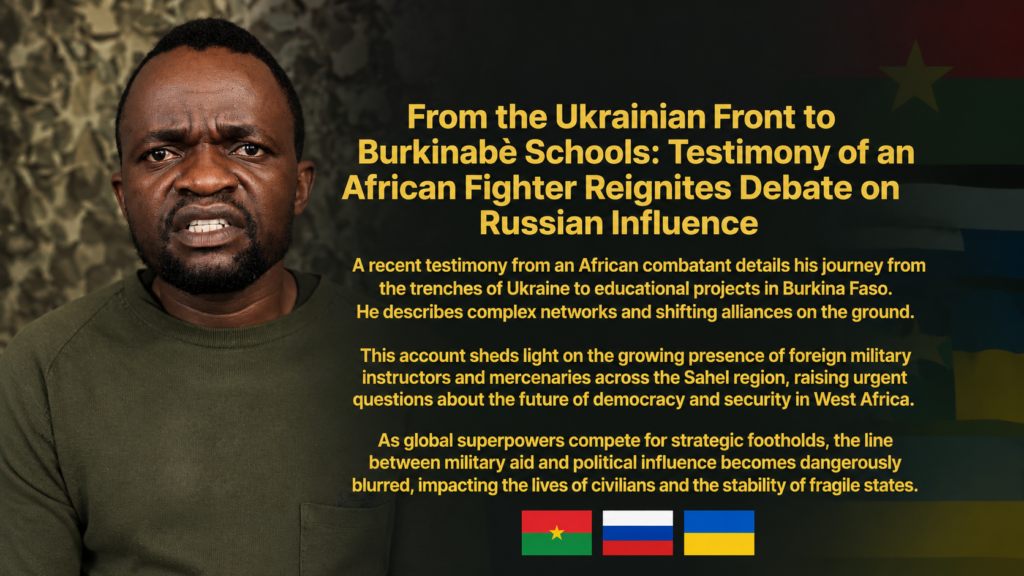
A recent arrest in Ukraine has brought to light the harrowing experiences of African mercenaries recruited into the conflict, casting a spotlight on Moscow’s expanding influence across the continent. Among those detained is Tatenda Tarwire, a Zimbabwean national who fought alongside Russian forces. His testimony, widely circulated, paints a grim picture of the realities behind foreign recruitment: brutal combat, staggering casualties, and families left in the dark about the fates of their loved ones.
While Tarwire’s account is deeply personal, it reflects a broader trend. Over the past several years, Russia has intensified its diplomatic, military, and economic engagements across Africa, capitalizing on shifting global power dynamics following its invasion of Ukraine. Burkina Faso is no exception to this trend, with a new educational reform set to introduce Russian language instruction in schools starting in the upcoming academic year.
Education reform or strategic alignment?
Officially, the decision aims to broaden Burkina Faso’s international partnerships, enhance academic opportunities for students, and foster exchanges with the Russian Federation. Yet the move has sparked intense debate. Critics argue that the reform is not merely about language but signals a deeper strategic alignment between Ouagadougou and Moscow. Others, however, defend it as a legitimate sovereign choice to diversify partnerships without implying political realignment.
Russian, like English, Chinese, or Arabic, is undeniably a language of global communication, scientific research, and professional mobility. The controversy lies not in the language itself but in the geopolitical context surrounding its adoption. With Russia embroiled in a prolonged war and actively pursuing influence campaigns on multiple continents, the timing of this reform raises legitimate questions.
The human cost behind foreign recruitment
Tarwire’s experience serves as a stark reminder of the dangers faced by African fighters lured by promises of payment, training, or overseas opportunities. Reports have documented cases where recruits entered conflicts with little understanding of the realities they would face, often with devastating consequences for both fighters and their families.
A call for informed, transparent debate
As Burkina Faso moves forward with this educational shift, citizens deserve clarity. Key questions must be addressed: What are the precise objectives of this linguistic cooperation? What agreements govern it? What opportunities does it offer Burkinabè youth, and what safeguards protect the national education system from external interference?
Amidst the controversy, one truth remains undeniable: Burkina Faso’s future hinges on the quality of its education, the diversity of knowledge accessible to its youth, and the ability to cultivate critical thinking. Decisions on education must be made with transparency, grounded in facts, and aligned with the long-term interests of the nation and its people.