Russia’s Africa Corps has revised its military approach in Mali, pulling forces away from the northern regions to prioritize protection of the capital, Bamako, and the ruling junta. The shift includes increased aerial support and intelligence-sharing with Malian troops stationed elsewhere in the country.
«Overall, their role has become more cautious,» noted Benedict Manzin, a senior Middle East and Africa analyst with the British intelligence firm Sybiline. «They are avoiding direct engagements to minimize losses and maximize operational impact.»
Taking over from the Wagner Group in mid-2024, the Africa Corps now deploys around 2,000 personnel, many of whom are former Wagner fighters. This contingent is significantly smaller than Wagner’s peak force and roughly half the size of the French-led Barkhane counterterrorism mission, which was expelled from Mali in 2022.
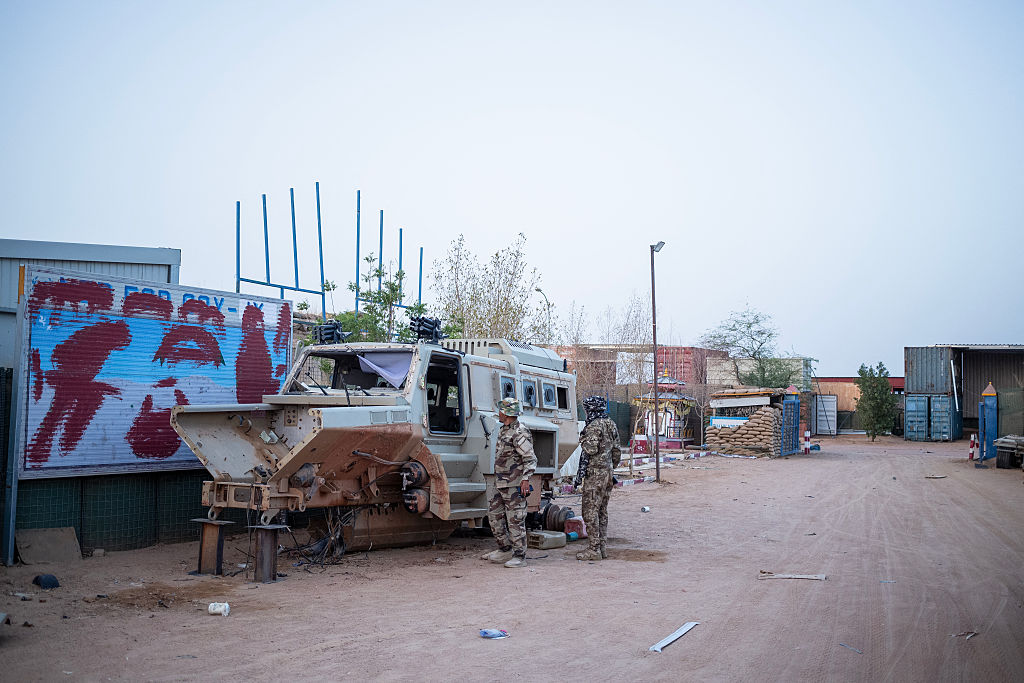
The Africa Corps’ decision to concentrate near Bamako followed the late April loss of Kidal to the Front de libération de l’Azawad (FLA) and the Group for the Support of Islam and Muslims (GSIM). After the fall of the northern stronghold, Russian-backed forces launched retaliatory airstrikes, targeting infrastructure and forcing civilians to flee. These strikes were conducted in support of the Malian Armed Forces (FAMa), now the primary ground force in the region.
«Observers note a growing reliance on air power,» Manzin explained. Recent strikes have included the use of Russian-made cluster munitions in the Kidal area, violating Mali’s obligations under international conventions banning such weapons.
«They have fewer resources to spare,» Manzin added. «They avoid deploying personnel in high-risk areas where they could be easily neutralized.»
Analyst Jacob Boswall, tracking recent communications from the Africa Corps on social media, confirmed a strategic pivot toward central and southern Mali. Operations are now concentrated near Bamako, with limited presence in the north.
Following the withdrawal from Kidal, the Africa Corps launched an intensified propaganda campaign, publishing over 500 posts on Telegram and other platforms in the weeks after the defeat, according to Boswall’s observations.
In addition to airstrikes, the Africa Corps has taken on a logistical role, helping to break supply blockades imposed by the GSIM. Russian-backed fighters and aerial support now escort convoys entering landlocked Mali from Côte d’Ivoire, Guinea, and Senegal, shielding them from GSIM attacks.
Despite the Africa Corps’ efforts to reduce exposure on the battlefield, the GSIM has adapted by deploying drones to target Russian positions. Social media videos released by the GSIM show drone footage of strikes on Africa Corps bases in Sévaré, resulting in casualties and damage to Russian aircraft.
In response, the Africa Corps has launched its own armed drone strikes against GSIM positions in recent weeks. One such strike targeted a fuel depot in the Tombouctou region, according to analysts at Africa Terrorism Tracker.
Since late 2021, Mali has spent nearly $1 billion on Wagner and Africa Corps fighters. However, Manzin warns that the government’s strategy has backfired, leading to the loss of northern territories and the expansion of GSIM influence across the Sahel. «The approach taken by the Malian state is unsustainable and risks long-term instability,» he said. «Harsh tactics against civilians have only driven communities into the arms of armed groups, strengthening the GSIM’s position.»